In the twenty-first century, the way we consume television has undergone a profound transformation. Where once viewers were tethered to fixed broadcast schedules delivered through terrestrial, satellite, or cable networks, today television is increasingly delivered through the internet. At the forefront of this shift is Internet Protocol Television (IPTV), a technology that leverages internet protocols and server-based delivery to stream video and audio content to viewers on demand. This article explores, in depth and with current industry insights, how IPTV works, why it increasingly outperforms traditional television, and what its future holds.
The Rise of Internet Protocol Television
IPTV stands for Internet Protocol Television, television content delivered over Internet Protocol (IP) networks rather than via traditional linear broadcast methods such as satellite, cable, or terrestrial transmission. Instead of receiving a continuous broadcast signal down a cable or from the sky, IPTV delivers content as data over the internet, similar to how web pages and emails are transported.
This fundamental shift has not only redefined consumer expectations, but it has also reoriented the business and technical models through which television content is produced, distributed, and monetised. The result is a more flexible, personalised, and efficient television experience that better aligns with modern viewing behaviour.
According to the latest industry research, the U.S. IPTV market alone was valued at approximately USD 16.27 billion in 2025, and it is projected to more than triple to USD 57.73 billion by 2033, reflecting strong demand and rapid growth.
Understanding IPTV Architecture
At its core, IPTV is built upon the concept of Internet Protocol networking, which is the same framework that underpins the wider internet. This allows video content to be transported in small packets of data that are reassembled at the viewer’s device. Unlike traditional broadcasting, which sends all content to all users constantly, IPTV uses managed networks or content delivery networks (CDNs) to send only the content requested by the viewer, thereby conserving bandwidth and enabling scalability.
Key Components of IPTV
1) Content Acquisition and Encoding
Content, whether a live television channel or a movie, is first captured and encoded into a digital format by the IPTV provider’s central systems.
2) IPTV Servers and Storage
The encoded content is stored on dedicated media servers. These servers may be centrally located or distributed geographically, often as part of a CDN, to ensure content is delivered from the closest possible point to the viewer, reducing latency and buffering.
3) Streaming and Protocols
When a user selects a programme or channel via an IPTV app (such as IPTV Star or HotPlayer Pro), the request is sent to the server, which streams the content over the IP network. The video is typically delivered using multicast for live channels and unicast for on-demand content.
4) User Devices and Applications
IPTV content can be viewed on a wide range of devices, including smart TVs, tablets, smartphones, computers, and set-top boxes. Apps such as IPTV Star or HotPlayer Pro act as the viewer’s interface, decoding the IP stream and presenting it in a seamless, interactive format.
5) Adaptive Streaming Technologies
To optimise performance, modern IPTV systems employ adaptive bitrate streaming. This technique continuously monitors the viewer’s available bandwidth and adjusts the video quality in real time to prevent interruptions. This is similar to technologies used by major streaming services worldwide.
This architectural model not only improves delivery efficiency but also enables advanced services such as pause, rewind, and time-shifted playback, features that are impossible under traditional broadcast regimes.
Traditional TV: Architecture and Limitations
Traditional television distribution relies on technologies that pre-date the internet:
- Terrestrial television is broadcast over radio frequencies from land-based transmitters.
- Satellite television beams signals from space directly to satellite dishes.
- Cable television transmits signals through coaxial or optical fibre to homes.
These methods transmit content in one direction only, from broadcaster to viewer, with no interactivity or return channel. Viewers are bound to the broadcaster’s schedule and have limited control over when and how they watch content.
In traditional networks, all channels are continuously broadcast whether or not they are being watched. This “push” model, while effective for mass distribution, inherently wastes bandwidth and offers little personalisation or flexibility. In contrast, IPTV’s “pull” model sends content only when requested, optimising efficiency and enabling richer viewer experiences.
Why IPTV Outperforms Traditional TV
IPTV has several intrinsic advantages that enable it to outperform traditional television on both the technical and experiential fronts.
1) Instant Access and Faster Channel Switching
Unlike legacy broadcast services, IPTV does not require tuning to specific frequencies or waiting for broadcast sequencing. When a user selects a channel or video, the IPTV server instantly begins streaming the content. This architecture, where streams are delivered through servers over IP networks rather than broadcast equipment, makes channel switching faster and more responsive, often with negligible delay.
2) On-Demand and Time-Shifted Content
One of the most compelling features of IPTV is its support for video on demand (VOD) and time-shifted TV. Users can watch shows, films, and even previously broadcast content at their convenience, independent of traditional schedules. Time-shifted services allow viewers to pause or rewind live TV, a fundamental shift in how audiences interact with content.
3) Personalisation and Interactive Features
IPTV platforms can track viewer habits and preferences, with user consent and in accordance with privacy laws, to deliver personalized recommendations. Electronic Programme Guides (EPGs), search functions, and user profiles contrast sharply with the static experiences offered by traditional broadcast schedules.
Interactive features such as voting, interactive advertising, and social integration further enhance engagement, making television a more dynamic medium.
4) Multi-Device Compatibility
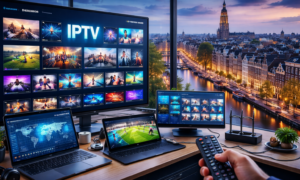
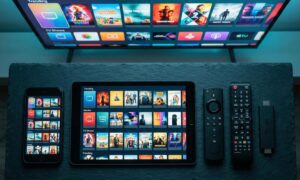
While traditional television is typically bound to fixed hardware (a TV set with a set-top box or dish), IPTV content can be accessed on virtually any internet-connected device. Smartphones, tablets, smart TVs, laptops, and gaming consoles all become viable viewing platforms. This flexibility aligns with modern lifestyles where consumers expect content to be available on the go.
5) Scalability and Cost Efficiency
From a provider perspective, IPTV’s IP-based infrastructure reduces the need for extensive physical distribution networks. Systems can scale more efficiently by leveraging internet backbone and CDN infrastructure rather than maintaining discrete broadcast facilities. This can lower operating costs and accelerate service expansion.
6) Quality of Service and Future-Ready Networks
IPTV networks can deliver high-definition (HD) and even 4K Ultra HD streams, provided the viewer’s internet connection supports the required bandwidth. As broadband infrastructure improves globally, particularly with the rollout of fibre and 5G networks, IPTV’s ability to deliver superior picture quality with minimal buffering improves correspondingly.
Industry Trends and Future Projections
The shift toward IP-based television delivery is not simply a niche trend; it reflects broader shifts in global media consumption. Consumer preferences are increasingly gravitating away from fixed broadcast schedules towards flexible, on-demand experiences. Younger generations, in particular, favour personalised and interactive content that traditional TV cannot provide.
Regulatory and industry bodies in the UK and beyond are acknowledging this transition. For example, hybrid models that blend broadcast and IP delivery are being developed to ensure continuity for linear channel viewers while offering the benefits of IP delivery.
Moreover, future enhancements are already on the horizon. Integration with artificial intelligence (AI), cloud-based DVR, immersive media technologies such as virtual reality (VR), and deeper interactivity are expected to further elevate IPTV experiences. IPTV’s managed networks also enable superior quality of service (QoS) and security compared to unmanaged internet streaming, a key differentiator as services scale.
Challenges and Considerations
Despite its advantages, IPTV adoption is not without challenges:
- Network Dependence: IPTV performance is inherently tied to the quality and reliability of the viewer’s internet connection. In areas with limited broadband infrastructure, service quality may suffer.
- Digital Divide: Transitioning fully to IP-based delivery can risk leaving behind viewers without robust internet access, a particular concern for older or rural populations.
- Content Licensing and Regulation: IPTV services must navigate complex rights and licensing frameworks that differ from traditional broadcast regulation, especially for international content.
However, technology advancements and policy frameworks continue to evolve to address these challenges.
Conclusion
Internet Protocol Television represents one of the most significant technological shifts in the history of television distribution. By leveraging internet protocols, server-based delivery, and adaptive streaming technologies, IPTV offers a more flexible, efficient, and interactive viewing experience than traditional broadcast television. Its ability to provide instant access, on-demand content, personalised features, and multi-device support positions it as the future of televised media.
The industry’s growth projections, shifting viewer habits, and ongoing innovation underscore IPTV’s central role in the modern media ecosystem. While challenges remain, particularly in network infrastructure and inclusivity, IPTV’s advantages are compelling and increasingly indispensable in a world where content is consumed on the viewer’s terms.
As services such as IPTV Star and HotPlayer Pro demonstrate, IPTV is not merely an alternative to traditional TV, it is a dynamic and future-ready platform that continually redefines what television can be.