The restaurant industry has always been shaped by change, but the pace of transformation today is unlike anything seen before. Rising operating costs, tighter labor markets, and more demanding customers have forced restaurant owners to rethink how they run their businesses. At the center of this shift is innovative restaurant technology, which is no longer limited to large chains or luxury venues. It has become a practical necessity for restaurants of all sizes.
Rather than replacing hospitality, modern restaurant technology is reshaping how it is delivered. From the kitchen to the dining room and beyond, technology is helping restaurants operate more efficiently, make better decisions, and create more consistent customer experiences.
Why Technology Has Become Critical for Restaurants
Restaurants operate on thin margins. Even small inefficiencies can have a noticeable impact on profitability. Manual processes, outdated systems, and disconnected tools often lead to wasted time, errors, and higher labor costs.
Innovative restaurant technology addresses these challenges by streamlining operations and improving visibility across the business. Instead of reacting to problems after they occur, restaurant managers can monitor performance in real time and make adjustments quickly.
Several factors have accelerated adoption:
- Increased pressure to reduce operating costs
- Higher customer expectations around speed and convenience
- The need for better data to guide decisions
- Growing competition in both local and online discovery
Technology is no longer just a support function. It has become part of the core business strategy.
How Front-of-House Technology Is Changing the Guest Experience
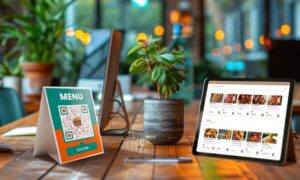
The front of house is where technology is most visible to customers. Digital ordering, QR-based menus, and contactless payments have become familiar features in modern restaurants.
One of the most impactful shifts has been the move toward digital menus and ordering systems. These tools reduce wait times, improve order accuracy, and give customers more control over their dining experience. Guests can browse menus at their own pace, view detailed descriptions, and make informed choices without feeling rushed.
Front-of-house technology is improving the guest experience by:
- Reducing delays in menu access and ordering
- Minimizing order errors caused by miscommunication
- Allowing faster table turnover during busy periods
Importantly, when implemented well, these systems free up staff to focus on hospitality rather than administrative tasks. Servers spend less time managing menus and payments and more time engaging with guests.
Back-of-House Innovation and Operational Control
Behind the scenes, innovative restaurant technology is having an even greater impact. Kitchen display systems, inventory management tools, and integrated POS platforms help restaurants run more predictably and efficiently.
Kitchen display systems replace paper tickets with digital workflows, reducing errors and improving communication between front and back of house. Inventory tools track stock levels in real time, helping restaurants avoid over-ordering, reduce waste, and plan purchasing more accurately.
Technology is reshaping back-of-house operations by:
- Improving order flow and kitchen coordination
- Reducing food waste through better inventory control
- Providing visibility into preparation times and bottlenecks
These improvements directly affect profitability and consistency, two areas where many restaurants struggle.
The Role of Data in Smarter Restaurant Decisions
One of the most powerful aspects of innovative restaurant technology is access to data. Modern systems generate insights that were previously unavailable or difficult to track.
Restaurants can now analyze:
- Sales trends by item, time, or location
- Customer preferences and ordering behavior
- Staff performance and peak service periods
This data helps owners and managers make informed decisions rather than relying on intuition alone. Menu engineering becomes more precise. Staffing schedules become more efficient. Promotions can be targeted based on real performance data.
When data is used correctly, it turns technology into a strategic asset rather than a cost.
Technology as a Tool for Cost Control
Cost control is one of the biggest challenges in the restaurant industry. Labor and food costs continue to rise, leaving little room for inefficiency.
Innovative restaurant technology helps control costs by automating repetitive tasks and reducing errors. Digital systems reduce the need for manual reconciliation, prevent pricing mistakes, and limit waste caused by poor forecasting.
Examples of cost-saving benefits include:
- Reduced printing and material costs through digital menus
- Lower labor overhead through automation
- Fewer refunds and disputes due to improved accuracy
Over time, these savings often outweigh the investment in technology, especially for restaurants that operate at scale or update menus frequently.
Customer Expectations and the Demand for Convenience
Today’s diners are more informed and less patient. They expect clarity, speed, and flexibility. Restaurants that fail to meet these expectations risk losing customers to competitors who do.
Innovative restaurant technology helps meet these expectations without sacrificing service quality. Digital touchpoints give customers control while maintaining a smooth, professional experience.
Solutions such as innovative restaurant technology discussed at highlight how modern systems are designed to support both customer convenience and operational efficiency.
The goal is not to remove human interaction but to enhance it by eliminating friction.
Challenges and Considerations When Adopting Technology
While the benefits are clear, adopting new technology requires thoughtful planning. Poor implementation can frustrate staff and customers alike.
Restaurants should consider:
- Ease of use for both staff and guests
- Integration with existing systems
- Reliability and customer support
- Scalability as the business grows
Training is especially important. Staff must understand not just how to use the technology, but why it is being implemented. When employees see technology as a tool rather than a burden, adoption is smoother and more effective.
Why Innovative Restaurant Technology Is a Long-Term Shift
The transformation driven by innovative restaurant technology is not temporary. Customer expectations, cost pressures, and competitive dynamics have permanently changed how restaurants operate.
Restaurants that embrace technology thoughtfully are better positioned to adapt, scale, and remain profitable. Those that resist often struggle with inefficiencies that technology could easily solve.
Final Thoughts
Innovative restaurant technology is reshaping the restaurant industry by improving efficiency, enhancing customer experience, and enabling smarter decision-making. It is not about replacing people with systems. It is about giving restaurants the tools they need to operate more effectively in a challenging environment.
For restaurant owners looking to future-proof their operations, investing in the right technology is no longer optional. It is a practical step toward sustainability, consistency, and long-term success.