The generative AI landscape is undergoing a tectonic shift. Just when the tech community accepted the limitations of stochastic, prompt-based image generation, OpenAI introduced a massive leap forward. The release of GPT Image 2 (integrated into ChatGPT as ChatGPT Images 2.0) has fundamentally redefined the capabilities of visual foundation models.
For independent product builders, developers, and digital marketers, this is not merely an iterative update. It is the transition from AI as a “creative toy” to AI as a deterministic, production-ready design engine. Here is a deep dive into the architecture, features, and business implications of the GPT Image 2 paradigm shift.
The Cognitive Leap: Visual Reasoning Over Pixel Prediction
The most disruptive breakthrough in GPT Image 2 is cognitive. Legacy models relied almost entirely on diffusion processes to predict pixel distributions based on textual inputs. GPT Image 2, however, introduces a dedicated “Thinking Mode” that leverages the advanced reasoning architecture found in OpenAI’s latest LLMs.
Instead of immediately generating pixels, GPT Image 2 plans the prompt. When tasked with a spatially complex request—such as designing a minimalist SaaS landing page where the natural light casts a specific shadow across a dashboard interface—the model first constructs a conceptual layout. It calculates physics, lighting, and geometric relationships before rendering. This effectively eliminates the visual “hallucinations,” floating objects, and impossible physics that plagued earlier iterations of generative art.
Solving the Typography Crisis for Digital Marketers
For years, the inability of AI to render legible text was the primary bottleneck preventing its use in professional marketing materials. GPT Image 2 has permanently solved the “text problem.”
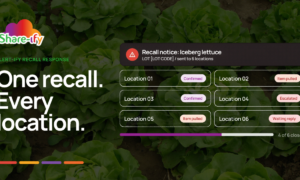
Treating text as structured data rather than visual texture, the model can flawlessly generate sleek UI/UX mockups, high-converting ad creatives, and intricate typography. For marketers and creators experimenting with the gpt image 2 model, this makes it much easier to produce polished visual assets that combine design quality with readable text. Furthermore, its native support for CJK (Chinese, Japanese, Korean) characters, alongside complex scripts like Hindi and Arabic, makes it an indispensable asset for building multi-language landing pages and executing global SEO strategies.
Brand Consistency: The Independent Builder’s Secret Weapon
Building a cohesive brand identity usually requires significant capital and a dedicated design agency. For a solo developer or an independent SaaS founder, maintaining visual consistency across various marketing channels used to be incredibly difficult.
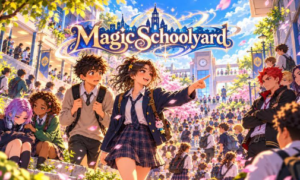
GPT Image 2 introduces “Unified Context Tracking.” In a single generation session, the model can produce up to eight distinct images while locking in absolute consistency. A brand mascot, a specific UI style, or a character’s exact clothing and bone structure will remain identical across entirely different environments and aspect ratios. This capability democratizes high-end storyboarding and brand asset creation.
Experiencing the Next Generation of AI Visuals
Navigating the rapidly evolving AI tooling ecosystem can be resource-intensive. For tech professionals looking to streamline their workflows and test these capabilities immediately, you can access this technology at GPT Image 2. The platform provides a centralized hub to explore cutting-edge models, allowing users to leverage GPT Image 2 for high-end visual asset creation without the overhead of managing complex API integrations or local environments.
Technical Prowess: Extreme Ratios and Resolution
From a technical deployment perspective, GPT Image 2 is built for the demands of modern digital consumption. It delivers native 2K resolution (scaling up to 4K in enterprise tiers), capturing micro-details like material textures with photorealistic accuracy.
More importantly for web developers, the model supports extreme aspect ratios, ranging from 1:3 to 3:1. This allows for the direct generation of ultra-wide website hero banners or vertical mobile-first assets. You no longer need to crop, upscale, or compromise on composition to fit a specific CSS container.
Surgical Precision with Advanced Editing
The update also ships with a highly sophisticated “Precise Editing” suite. Using advanced Inpainting and Outpainting, users can modify micro-elements within an image. Because the underlying model possesses contextual awareness of the entire composition, asking it to “change a wooden desk to sleek carbon fiber” will not just swap the texture; it will automatically recalculate how the ambient light reflects off the new material.
Conclusion: The Era of Intentional Design
GPT Image 2 marks the maturation of generative visual AI. We are moving away from an era of “prompt engineering and hoping for the best,” into an era of deterministic, intent-driven design.
By merging logical reasoning with flawless typography and brand consistency, this model serves as a massive force multiplier. Whether you are scaling a new SaaS product, launching international ad campaigns, or building digital experiences from the ground up, the tools accessible at GPT Image 2 ensure your visual assets match the quality of your engineering.