
How Facial Recognition Search Works, Explained Simply

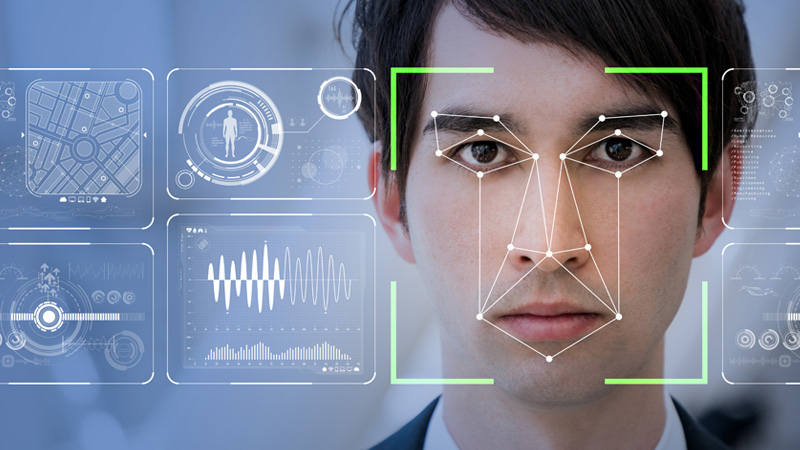
Facial recognition search sounds like science fiction, but the core idea is more approachable than the headlines suggest. When you upload a photo to a face search tool, software measures the geometry of the face, turns it into a compact set of numbers, and compares those numbers to other faces it has seen. That is the whole trick. In this explainer we will unpack how facial recognition works step by step, why it can match the same person across very different photos, and — just as importantly — where the technology hits its limits.
Recognition versus identification: two different jobs
People use “facial recognition” loosely, but it covers two distinct tasks:
- Verification (1:1): Confirming that two faces belong to the same person — the technology that unlocks your phone.
- Identification / search (1:many): Taking one face and finding matches among many — the job a facial recognition search engine does when it scans public images for a similar face.
This article focuses on the second: face search, where the goal is “where else does this face appear?”
The three stages of face matching technology
Almost every system, from your phone to a web-scale search engine, follows the same pipeline.
Stage 1: Detection
Before a computer can analyze a face, it has to find one. Detection algorithms scan the image for the patterns that make up a human face and draw a box around each one. They also locate landmarks — eye corners, nose tip, mouth edges, eyebrows, jawline. If several faces appear, the system separates them so each can be handled on its own.
Stage 2: Alignment and normalization
Faces in real photos are rarely posed for a passport. People tilt their heads, look sideways, and stand in odd lighting. Before measuring anything, the software normalizes the face — rotating, scaling, and adjusting it toward a standard orientation so that two pictures of the same person become more comparable. This is part of why a good system can match a profile angle to a front-facing shot.
Stage 3: Encoding into a face embedding
Here is the heart of it. A neural network converts the normalized face into a face embedding — a list of numbers (often 128 or 512 of them) that captures the distinctive geometry of that face. You can picture each face as a point in a vast multi-dimensional space. The clever part: the model is trained so that different photos of the same person land close together in that space, while different people land far apart.
Stage 4: Matching
To search, the system compares your photo’s embedding against a library of embeddings built from public images. It measures the “distance” between points; small distances mean high similarity. The closest matches are ranked and returned, usually with a similarity score and links to the pages where those images live.
Why face search beats simple image matching
A basic reverse image search compares pixels, so it mostly finds exact copies of your file. Facial recognition search compares embeddings, so it can recognize the same person even when the photo is completely different — a new haircut, a decade later, a candid versus a studio shot. That is the capability gap that makes a dedicated facial recognition search engine useful for verifying people and finding your own scattered photos, where pixel-matching alone falls short.
Why it is never 100% certain
Understanding the limits is essential to using the technology wisely.
- Similarity is a probability. A high score means “very likely the same person,” not “definitely.” Doppelgängers, siblings, and lookalikes can score high.
- Image quality matters enormously. Low resolution, bad lighting, motion blur, masks, and sunglasses all degrade the embedding and the match.
- Demographic bias is real. Studies have repeatedly found that some recognition systems perform unevenly across age, gender, and skin tone. Good engineering reduces this gap, but no one should treat any single match as definitive.
- It only sees public data. A search engine can only match against images that are publicly accessible. It cannot peer into private accounts or closed databases.
The right way to read results: treat each match as a lead to confirm with additional context, never as proof on its own.
The ethics built into the pipeline
Because a faceprint is biometric data, the same pipeline that powers helpful search can enable harmful surveillance. That tension is why ethics belong in any honest explainer:
- Consent and purpose matter. Verifying your own footprint or checking a scam is reasonable; tracking a stranger is not.
- Regulation is tightening. Laws like the EU’s GDPR classify biometric identifiers as sensitive, and several regions restrict how face data can be collected and used.
- Opt-outs exist for a reason. Responsible operators let people remove themselves from the index — a safeguard worth respecting for others and using for yourself.
Where you already encounter facial recognition every day
Face search can feel exotic, but the same underlying technology is woven through ordinary life — which is part of why understanding it matters.
When you unlock your phone with your face, the device runs a one-to-one verification: it compares the live face to a stored template and asks “is this the owner?” When your photo library groups pictures of the same friend into an album, it is quietly building face embeddings and clustering the ones that land close together — exactly the matching step described above, just applied to your private collection. Airports increasingly use facial verification at boarding gates, comparing a traveler’s face to passport records. Even social platforms have used face detection to suggest tags.
What makes web-scale face search different is not the core math but the breadth of the index. Your phone compares against a handful of stored faces; a search engine compares against vast numbers of publicly available images. The capability that feels surprising — finding a stranger’s other photos — is simply the same clustering you already trust to organize your camera roll, pointed at the open web instead of one device.
Seeing the continuity helps demystify the technology and sharpen judgment about it. The matching itself is neither magic nor inherently sinister; what changes the ethics is the scale of the data and the purpose of the search. That is why the meaningful debates focus less on “should face matching exist” — it already does, in your pocket — and more on consent, transparency, and how broadly public images should be indexed and by whom.
Frequently asked questions
What is a face embedding? It is a compact list of numbers a neural network produces from a face — a mathematical fingerprint of facial geometry. Two photos of the same person yield similar embeddings, which is what makes matching possible.
Does facial recognition search store my actual photo? It depends on the service. Many store the numeric embedding rather than the literal image, and some delete the upload after searching. Always check the privacy policy.
How accurate is facial recognition search? Accuracy is high under good conditions but never absolute. Lighting, resolution, angle, and the number of public images of a person all affect results, so treat matches as leads to verify.
Is facial recognition search legal? Searching public images is generally legal in many places, but biometric data is regulated in regions like the EU, and misuse for stalking or harassment can break other laws. Purpose and conduct matter.
Wrapping up
Strip away the mystique and facial recognition search is a four-step pipeline: detect the face, normalize it, encode it into a numeric embedding, and match that embedding against public images. The reason it can do what pixel-based search cannot is that it compares faces, not files. But its outputs are probabilities shaped by image quality and trained models — powerful leads, not infallible verdicts. Knowing how the technology works is the first step toward using it both effectively and responsibly.







Comment