Industrial electrical installations are rarely static. Cables are added, rerouted, upgraded, or removed as machinery changes, layouts evolve, and compliance requirements tighten. In these environments, safety incidents are rarely caused by a single failure. They are more often the result of small, compounding issues: loose wiring, inconsistent routing, vibration-induced wear, or cables resting where they were never meant to be.
Wire management sits at the center of this risk profile. While large components like panels, conduits, and breakers receive most of the attention, smaller elements quietly determine whether systems remain stable over time. Among these, wire holder clamps play a critical but understated role in maintaining order, reducing mechanical stress, and supporting electrical safety across industrial sites.
Why Electrical Wire Holder Clamps Matter in Industrial Environments
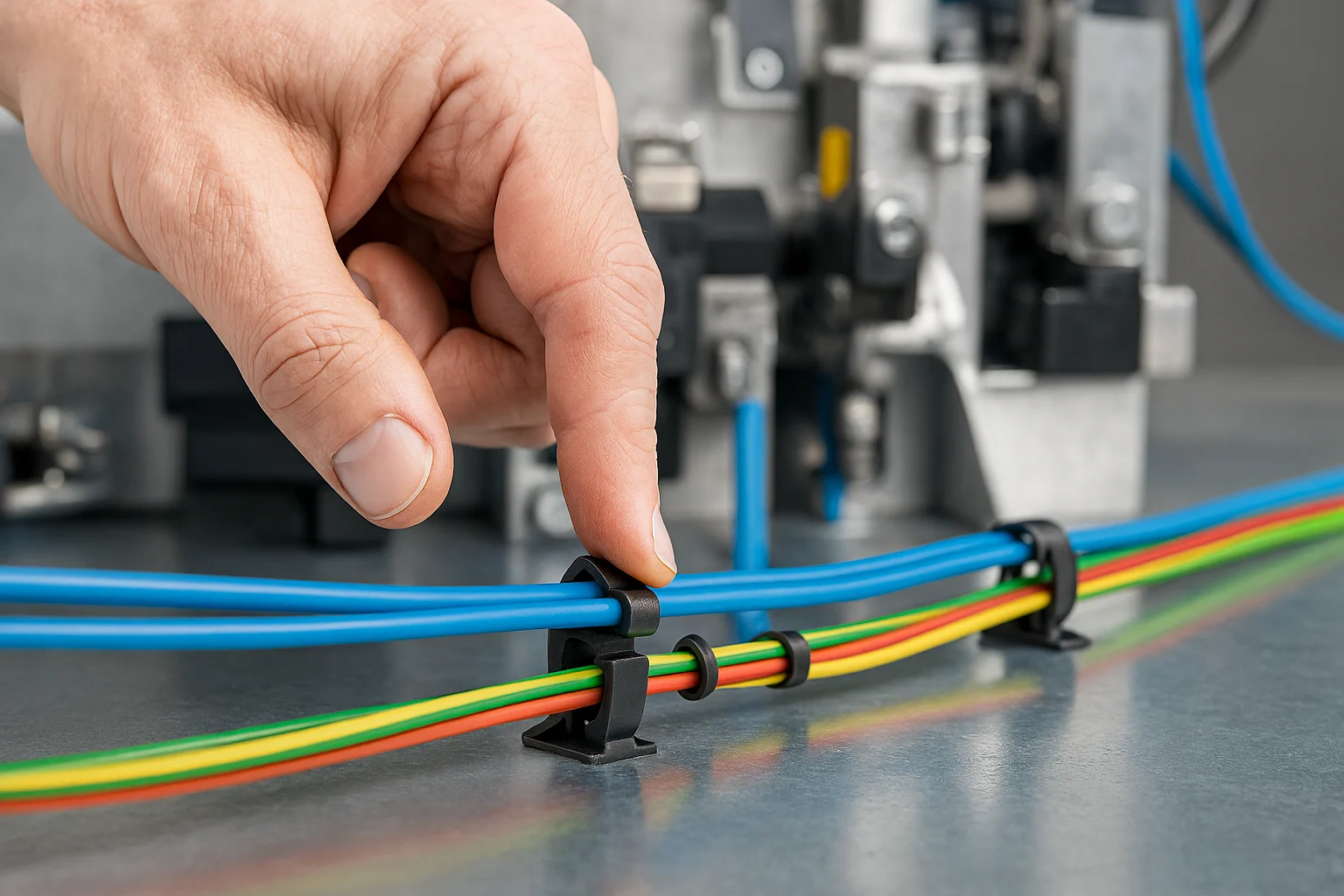
An electrical wire holder clamp is designed to secure electrical cables in a fixed position, preventing unintended movement, sagging, or contact with surrounding surfaces. In industrial settings, this function goes far beyond tidiness. It directly affects how cables age, how systems respond to vibration, and how safely maintenance teams can work around live or dormant lines.
Unlike residential installations, industrial environments introduce constant stressors. Equipment vibration, thermal expansion, airborne contaminants, and frequent human interaction all increase the likelihood of cable displacement. Clamps provide controlled restraint, ensuring that wires remain exactly where they were engineered to be, even as conditions fluctuate.
Cable Movement as a Hidden Safety Risk
Uncontrolled cable movement is one of the most common precursors to electrical faults. When wires are allowed to shift freely, they rub against sharp edges, pull against terminations, or flex repeatedly at connection points. Over time, this leads to insulation wear, exposed conductors, and eventual failure.
Wire holder clamps address this risk by:
- Limiting cable movement caused by vibration
- Preventing abrasion against metal surfaces
- Reducing strain at termination points
- Maintaining consistent bend radii
By stabilizing cables mechanically, clamps reduce the likelihood of faults that emerge gradually and are difficult to detect during routine inspections.
Supporting Electrical Safety Through Predictable Routing
Safety in industrial electrical systems depends heavily on predictability. Maintenance teams rely on knowing where cables run, which circuits they belong to, and how they are supported. Disorganized wiring introduces uncertainty, increasing the risk of accidental contact, misidentification, or improper isolation during work.
Proper use of wire holder clamps supports safety by:
- Keeping cable routes clearly defined
- Preventing wires from crossing unintended zones
- Maintaining separation between power and control circuits
- Reducing visual clutter that obscures hazards
Clear routing is especially important during emergency maintenance or shutdown scenarios, where time pressure increases the chance of error.
Managing Vibration and Mechanical Stress
Industrial machinery generates continuous vibration that travels through structures, panels, and cable trays. Over time, this vibration loosens unsecured wiring, even in systems that were originally installed correctly.
Wire holder clamps act as mechanical dampers by anchoring cables at defined intervals. This reduces the transfer of vibrational energy along the cable length and prevents gradual migration out of position.
In high-vibration environments, clamps help:
- Preserve insulation integrity
- Prevent connector fatigue
- Maintain stable cable geometry
- Extend service life of electrical components
This mechanical stability is a foundational element of long-term reliability.
Heat, Expansion, and Environmental Exposure
Industrial installations often operate across wide temperature ranges. Heat generated by equipment causes cables to expand and contract, while ambient conditions such as humidity, dust, or chemical exposure further stress materials.
Clamps designed for industrial use account for these factors by holding cables securely without over-compressing them. This balance allows limited movement where necessary while preventing displacement.
Effective clamping contributes to:
- Controlled thermal expansion
- Reduced risk of insulation cracking
- Better airflow around conductors
- Consistent spacing between cables
These factors collectively reduce the likelihood of overheating and premature degradation.
Organization as a Compliance and Inspection Advantage
Electrical inspections, whether internal or regulatory, focus heavily on cable management. Disorganized wiring is often flagged not because it is immediately dangerous, but because it signals higher underlying risk.
Well-clamped wiring demonstrates:
- Intentional routing and planning
- Adherence to installation standards
- Reduced likelihood of concealed damage
- Easier verification during audits
Standards bodies such as the National Fire Protection Association emphasize proper cable support and management as part of safe electrical installation practices, reflecting the industry-wide recognition of these principles.
Simplifying Maintenance and Troubleshooting
Maintenance efficiency depends on access and clarity. When cables are secured in consistent positions, technicians can trace circuits quickly, identify faults accurately, and perform repairs without disturbing adjacent wiring.
Wire holder clamps support maintenance by:
- Keeping cables accessible but controlled
- Preventing bundles from collapsing when one cable is removed
- Reducing the need for temporary restraints during work
- Allowing predictable reinstallation after servicing
This reduces downtime and lowers the risk of introducing new faults during routine maintenance.
Reducing Long-Term Operational Risk
Many electrical failures are not sudden. They develop slowly as insulation wears, connectors loosen, or cables fatigue. Because these processes are gradual, they often go unnoticed until failure occurs.
By stabilizing cables and reducing mechanical stress, clamps slow these degradation processes. This risk reduction is cumulative, becoming more significant over years of operation.
Long-term benefits include:
- Fewer unexpected outages
- Lower repair frequency
- Reduced fire risk from exposed conductors
- More consistent system performance
These outcomes directly support operational continuity in industrial facilities.
Cable Segregation and Functional Clarity
Industrial systems often carry multiple cable types side by side: power, control, data, and instrumentation lines. Improper segregation increases interference risk and complicates troubleshooting.
Wire holder clamps help maintain separation by fixing cables in designated paths. This physical organization reinforces electrical design intent and reduces cross-interaction between systems.
Effective segregation supports:
- Signal integrity in control systems
- Clear identification of cable functions
- Reduced electromagnetic interference
- Safer work zones during live maintenance
Physical discipline in routing mirrors logical discipline in system design.
Adapting to System Changes and Expansion
Industrial installations rarely remain static. New equipment, process changes, and regulatory updates all drive wiring modifications. Poorly managed cable systems become increasingly fragile as changes accumulate.
Clamped systems are more adaptable because they:
- Maintain structure as new cables are added
- Prevent existing wiring from being disturbed
- Allow incremental expansion without disorder
- Support modular upgrades
This adaptability reduces the cost and risk associated with system evolution.
Material and Design Considerations in Industrial Clamps
Not all clamps perform equally under industrial conditions. Material choice, mounting method, and load tolerance all affect long-term performance.
Industrial-grade clamps are selected with consideration for:
- Environmental exposure
- Cable weight and diameter
- Mounting surface compatibility
- Required durability over time
Choosing appropriate clamp designs ensures that safety and organization benefits persist rather than degrade after installation.
Organizational Impact Beyond Safety
While safety is the primary concern, organized wiring also affects broader operational efficiency. Clean cable routing improves airflow, simplifies cleaning, and enhances the overall usability of control panels and equipment rooms.
Organized systems contribute to:
- Faster onboarding of maintenance staff
- Reduced documentation errors
- Clearer communication between teams
- More predictable system behavior
These secondary benefits reinforce the value of disciplined cable management practices.
The Cost of Neglecting Small Components
In industrial systems, failures often trace back to overlooked details. A loose cable, an unsupported run, or a missing restraint can initiate a chain of events leading to downtime or damage.
Wire holder clamps represent a small investment with outsized impact. They address risks at the mechanical level, where many electrical failures begin, rather than reacting to faults after they occur.
This preventive role makes them a foundational element of safe installation rather than an optional accessory.
Conclusion: Small Controls That Deliver System-Wide Stability
Electrical safety and organization are not achieved through a single component or standard. They emerge from consistent attention to how systems are physically assembled and maintained. Wire holder clamps operate quietly within this framework, controlling movement, reducing stress, and preserving order under demanding conditions.
By integrating electrical wire holder clamp solutions thoughtfully into industrial installations, engineers and facility managers reinforce safety, simplify maintenance, and reduce long-term risk. In environments where reliability depends on hundreds of interconnected details, disciplined cable management is not optional. It is a structural requirement for stable, safe, and predictable operation over time.