
How Do Healthcare Practices Use EHR, PM, and CRM Software?

Modern healthcare systems have long stopped relying on outdated practices that require manual paper charting or storing data in an endless set of spreadsheets. Medical clinics now function as complex enterprises that require a smooth sync between data to ensure clinical safety and efficient business operations.
These practices can meet the modern requirements by deploying a trio of distinct software solutions that include Electronic Health Records, Practice Management, and Customer Relationship Management. These software solutions serve different operational areas, but together they create an ecosystem that guarantees operational efficiency.
What Is The Role Of EHR Software In Clinical Workflow?
Electronic Health Record software solutions provide a foundation for clinical data in medical practices. It is designed for doctors, nurses, clinical staff, and medical assistants to optimize workflows.
The medical EMR software acts as a repository where patients’ data can be securely managed, and the entire hospital team can collaborate easily to ensure regulatory compliance.
Documenting Patient Encounters
Clinicians use EMR /EHR software to record medical histories through customizable templates for specific medical specialties. They do not need to take notes manually during sessions, which not only saves time but also allows accurate and structured data collection.
This makes it easy to keep track of medical histories in an organized manner. For example, Epic EMR Systems is software that provides leading clinical charting capabilities, including specialized templates and AI-assisted tools. It reduces the workload on practitioners by automating manual note-taking tasks.
E-Prescribing
Doctors can send their prescriptions directly to the laboratories or pharmacies through various built-in features. Different software automatically screens for dangerous drug interactions or allergies to prioritize the well-being of patients. Centricity EMR software links clinics with a wide network of labs to make data flow smooth and quick to avoid any kind of negligence.
Coordinating Care And Interoperability
Patients see multiple specialists across different networks at the same time. EMR EHR software utilizes national interoperability standards to exchange patient charts, lab outcomes, and reports with other facilities.
This helps prevent duplicate testing and ensures continuous care. Open EMR is free EHR software that enables these data exchange capabilities by incorporating interoperability standards like HL7 and FHIR.
How Does PM Software Drive Administrative And Financial Workflows?
Project Management software is responsible for managing the business and administrative functions of healthcare units. Front-desk staff, medical billers, and practice managers rely on PM systems to keep the office running efficiently.
Scheduling And Registering
Project Management software lets the staff on the front desk schedule appointments in a structured way. The system assigns specific appointment lengths based on visit reasons.
One of the top PM software tools used in the healthcare industry is Tebra. It has a color-coded dashboard designed for independent practices to manage appointments and verify insurance coverage.
Revenue Cycle Management
PM software can keep a complete financial record of the patient’s time in the hospital. They can convert clinical documentation into billing codes and track all kinds of balances.
AdvancedMD is considered to be one of the best invoicing software options in the healthcare industry. It delivers specialized automated claim-scrubbing engines that reduce billing rejections and speed up insurance reimbursements.
Optimizing Daily Office Flow
The PM systems provide digital tracking tools that monitor a patient’s status from check-in to discharge. This data helps in finding out any hurdle that requires immediate action. Solutions like eClinicalWorks feature management tools alongside reporting dashboards to keep physical offices running on schedule while healthcare supply chain management software development helps streamline inventory and resource management.
How Does CRM Software Support Patient Engagement?
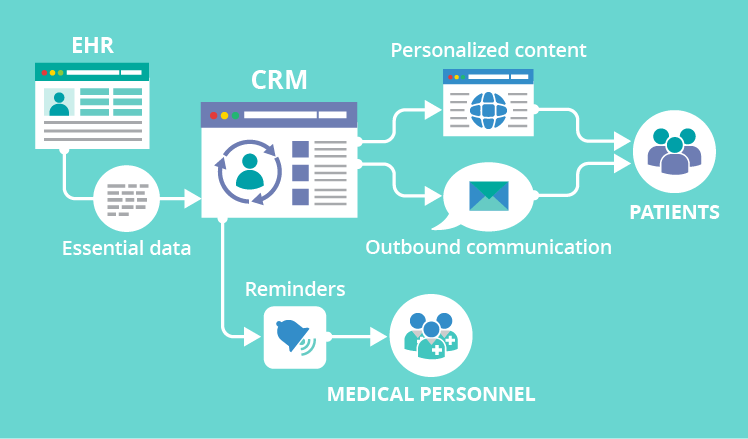
Customer Relationship Management platforms manage the communications and marketing efforts of a healthcare practice. They ensure that the clinic maintains strong connections with patients to be a trustworthy option.
Patient Intake And Targeted Outreach
CRMs help medical practices find new patients using automated marketing tools and online forms. The software can automatically group patients by age or health needs so the clinic can send them the correct health information. CRM software examples include HubSpot CRM, which allows growing healthcare businesses to design automated patient onboarding paths and run highly targeted wellness newsletter campaigns.
Automated Patient Communications
Healthcare units can send automated reminders to patients to remind them of their appointments through text messages or emails. CRM software for small business
can use smart AI voice tools and text messaging in medical offices to cut down phone wait times and answer common patient questions automatically.
Patient Portal Management
Most of the healthcare units allow patients access to their personal portal through CRM management software like LeadSquared to let them check their medical records and laboratory results without visiting the hospital. They can also schedule an appointment for themselves through this portal.
Conclusion
Modern healthcare practices use a connected ecosystem of EHR, PM, and CRM software to balance clinical care with efficient business operations. The combination of these three different systems is used to manage different stages of the patient’s journey.
Electronic health record solutions help make clinical tasks easier for different medical staff, whereas the Customer Relationship Management softwares helps ensure a smooth patient journey. The best pm software automates the billing process to reduce the administrative workload while acting as invoice software.
These platforms work in synchronization to optimize the workflow of healthcare practices by automating manual tasks that take up a lot of time and effort.
FAQS
-
Is patient data safe inside these software programs?
Yes. All the data is secure because all healthcare software programs must follow strict privacy rules like HIPAA in the United States.
-
What is a patient portal?
A patient portal is a private website or smartphone app that connects patients directly to the clinic’s software. It gives them 24/7 access to their own health information from home. They can use the portal to view results, send messages to the clinicians, pay their medical bills, or schedule appointments.
-
How does PM software speed up insurance payments?
A practice management solution increases the rate of insurance payments by using an automated tool called a claim scrubber. The software scans for errors before a bill is sent to the insurance company to reduce the chances of rejection.
-
Do EHRs work for all medical specialties?
Yes. Different EHR software has specialty-specific templates so that the screens change based on the specialist using them.
-
Can a CRM help a clinic find new patients?
Yes. The Customer Relationship Management software can track how new patients find the clinic. It can also send out automated emails and educational wellness newsletters to keep new sign-ups interested and engaged.






Comment