
How DFM Can Prevent Costly Problems Before Hardware Production Begins

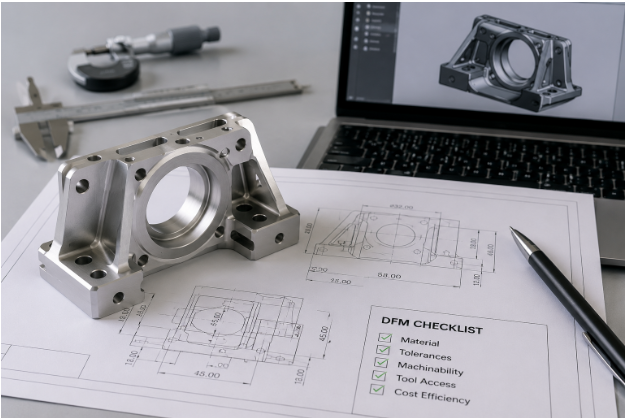
A hardware design can look finished on screen and still create expensive problems once production begins. A tight tolerance may slow machining, a material choice may increase cost, or a small feature may require extra tooling and setup time. MachMaster CNC machining & injection molding services, is one example of a manufacturer that works with these production considerations in mind. Design for Manufacturing, or DFM, helps catch such issues by reviewing how a product will actually be made. When manufacturability is considered early, teams can reduce production risk, avoid delays, and control costs before changes become difficult and expensive.
1. Why Small Design Decisions Can Create Big Production Costs
Many manufacturing costs are influenced long before a purchasing team starts comparing supplier quotes. They often begin with decisions made during product design.
A tolerance that is tighter than necessary may require slower CNC machining and more inspection. Complex geometry can add extra setups or special tools. Unusual materials may be harder to source or process, while demanding surface finishes can add more production steps.
Even one extra machining setup can affect machine time, handling, inspection, and labor. These costs may seem small during prototyping, but they become much more noticeable when hundreds or thousands of parts are produced.
This is why DFM looks beyond whether a part can be made. It also asks whether it can be made efficiently.
2. DFM Finds Problems While They Are Still Easy to Fix
An early DFM review checks whether a design can be produced repeatedly and efficiently using practical manufacturing methods.
Engineers and manufacturers may ask whether commonly available tools and equipment can handle the part. For CNC-machined components, they may also check whether cutting tools can reach every feature and whether walls, holes, pockets, and other details are realistic for production.
Tolerances are reviewed as well. If a dimension does not directly affect fit, movement, or function, it may not need an extremely tight limit.
At this stage, changing a CAD model is usually straightforward. The same change becomes more difficult after tooling has been ordered, process plans have been created, or production has started. DFM shifts problem-solving earlier, where adjustments are easier to make and less likely to disrupt schedules.
3. Better Choices on Materials, Tolerances, and Geometry
Good DFM often starts with three practical areas: materials, tolerances, and geometry.
Materials should be chosen for both product performance and ease of manufacturing. Availability, processing difficulty, waste, stock sizes, and lead time can all affect the final cost. A material may perform well but still create unnecessary expense if it requires special handling or is difficult to source consistently.
Tolerances deserve the same attention. Tight limits should only be applied where they are needed for fit or function. Adding extra precision to non-critical dimensions can increase machining and inspection requirements without improving the product.
Geometry can also make a major difference. Deep cavities, very thin walls, sharp internal corners, and hard-to-reach features may require specialized tools or slower processing.
For example, a perfectly sharp internal corner can be difficult to produce with standard milling tools because cutting tools are round. Adding a small internal radius may preserve the part’s function while making the feature easier to machine. This is the type of practical design adjustment that manufacturers such as MachMaster may consider during a DFM review before machining begins.
4. Fewer Production Steps Mean Fewer Chances for Problems
DFM can also reduce unnecessary CNC machining operations. A well-reviewed part may need fewer machining orientations, more standard tooling, common hole and thread sizes, simpler assembly, and easier inspection.
Every additional step adds time and labor. It can also introduce another opportunity for dimensional variation, handling error, or rework.
A part that must be repositioned several times, for example, takes longer to manufacture and can be more difficult to keep consistent from one unit to the next.
Simpler processes are usually easier to control. When fewer operations are needed, manufacturers can often reduce scrap, shorten production time, and maintain more consistent quality. This becomes especially important when order volumes increase.
5. Bring Your Manufacturer In Before the Design Is Locked
DFM works best when designers, engineers, and manufacturing teams communicate before drawings and specifications are finalized.
Manufacturers can often identify practical issues that are not obvious in CAD or early prototypes. They may suggest a more suitable material, a standard stock size, a simpler production method, or a feature change that reduces machining or assembly time.
They can also spot problems that may not seem serious during a small prototype run.
For example, an extra three or four minutes of machining may have little impact when only ten parts are made. Across several thousand units, however, that time can add a significant amount of machine capacity and labor cost.
Early collaboration gives product teams more room to make these changes before tooling, schedules, and supplier plans become harder to adjust. For companies working with machining suppliers such as MachMaster, sharing drawings early can also make it easier to identify manufacturability concerns before specifications are locked.
6. DFM Makes Production More Predictable as You Scale
The value of DFM becomes more visible as production volume grows. A design that works well for a few prototypes is not always economical or repeatable at larger scale.
By removing unnecessary complexity early, businesses can support more consistent quality, clearer manufacturing costs, and fewer unexpected delays. The move from prototype quantities to larger orders also becomes easier to manage.
For hardware companies planning a launch or increasing volume, this predictability can be just as valuable as reducing the cost of an individual part.
Solve the Problem Before It Reaches the Factory
DFM is not about simplifying a product just for the sake of making it easier to manufacture. It is about removing design choices that add cost, delay, or production risk without improving performance.
The best time to solve these problems is before the design is locked. At that stage, changing a model or specification is still relatively simple. Once production begins, the same adjustment may affect tooling, schedules, suppliers, and finished parts.
For hardware businesses, early DFM creates a more practical path from design to production. The problems that never reach the factory are often the least expensive ones to solve.
Read More From Techbullion






Comment