
How Climate Change Is Changing Canada Goose Migration and What Property Owners Should Expect

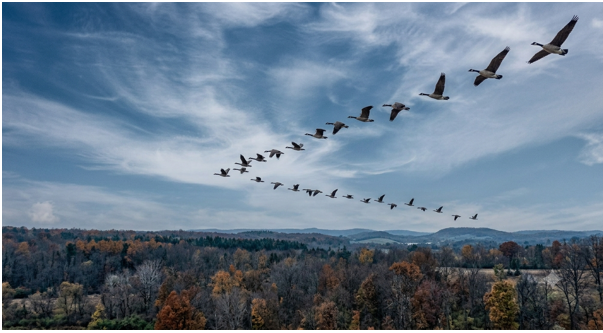
There was a time when the honking overhead in October meant something simple. The geese were leaving. Cold weather was coming, and the birds knew it before the humans did.
That pattern is not holding the way it used to. In a lot of northern and mid-Atlantic regions, property managers are noticing something different. The flocks that used to thin out by November are sticking around into December, sometimes longer. Some never really leave at all anymore.
The Migration That’s Quietly Disappearing
Canada geese have always been capable long-distance flyers. Migration wasn’t optional for most of the population. It was survival. Cold locked up the water, food disappeared under snow, and the birds moved south because staying put meant starving.
That equation has shifted. Winters across much of the Northeast and Mid-Atlantic aren’t freezing the way they once did, at least not consistently. Ponds that used to ice over solid now stay partially open through January in a lot of areas. Grass that would have been buried under snow is still exposed and green enough to feed on.
When the reason to leave weakens, the instinct to leave weakens with it. Geese are practical birds. They go where the resources are, and lately the resources have been staying put right alongside them.
Urban and Suburban Land Is Doing the Rest
It isn’t just the weather. The built environment has quietly made itself into exactly what a goose is looking for. Retention ponds, manicured lawns, open sightlines, and almost no natural predators all add up to a setup that’s hard for a goose to walk away from, even in February.
A resident flock doesn’t need a reason to fly a thousand miles when everything it needs is sitting on a corporate campus fifteen minutes from where it hatched. Once a group of geese figures that out, the pattern tends to repeat itself year after year. That’s how a handful of visiting birds turns into a permanent population that never really migrates again.
Property owners who are dealing with birds that seem to be there constantly, not just seasonally, are often better served by a Canada goose control service built around consistent, year-round pressure rather than a one-time seasonal cleanup. Once a flock stops migrating, treating the problem as seasonal stops making sense.
The Population Math Nobody Planned For
Resident goose populations often grow faster than migratory ones.They don’t spend energy on long flights twice a year. They are established, settled in one place, and can focus on nesting and raising young in the same location year after year.
Multiply that across a decade and the numbers add up quickly. A property that hosted a dozen geese five years ago might be dealing with sixty or eighty now, and the birds show no real inclination to leave, because from their perspective, there’s no reason to.
Who Actually Feels This
The shift from seasonal visitors to year-round residents changes the calculation for a wide range of property types, not just the obvious ones like waterfront parks.
- HOAs with retention ponds or common green space
- Commercial properties and corporate campuses with open lawns
- Golf courses, where wide fairways and water hazards are basically an invitation
- Municipal parks and public facilities that see year-round foot traffic
- Schools and playgrounds, where droppings and aggressive nesting behavior raise real safety concerns
All of these speak to a slightly different variant of the same underlying problem. The geese are not migrating through. They’re residents and residents require a different management approach than migratory visitors ever did.
Why Early, Humane Management Matters More Now
The old advice, wait for the flock to move on once the weather turns, doesn’t hold up the way it used to. If a property’s resident geese aren’t migrating, waiting isn’t a strategy. It’s just a delay.
That’s part of why more property managers are turning to consistent, humane geese removal rather than reactive, seasonal fixes. A program that works with the birds’ instincts, rather than trying to outlast them, holds up regardless of whether that particular flock decides to fly south this year or not. Trained deterrent programs using Border Collies, for example, tap into a predator response that doesn’t depend on temperature or season. The geese react to the perceived threat, not the calendar.
What Property Owners Should Actually Expect
The honest expectation going forward is that fewer geese will leave on their own, and the ones that stay will keep coming back to the same spots with more confidence each year. That’s not a temporary trend tied to one mild winter. It reflects a longer pattern of birds adjusting to conditions that keep making it easier to stay.
Those properties that make goose management part of their year-round planning, rather than a spring or fall task, tend to stay ahead of the problem instead of chasing it. The birds have already adjusted to the changing climate. The properties that change their approach in response are the ones that keep the situation tractable.







Comment