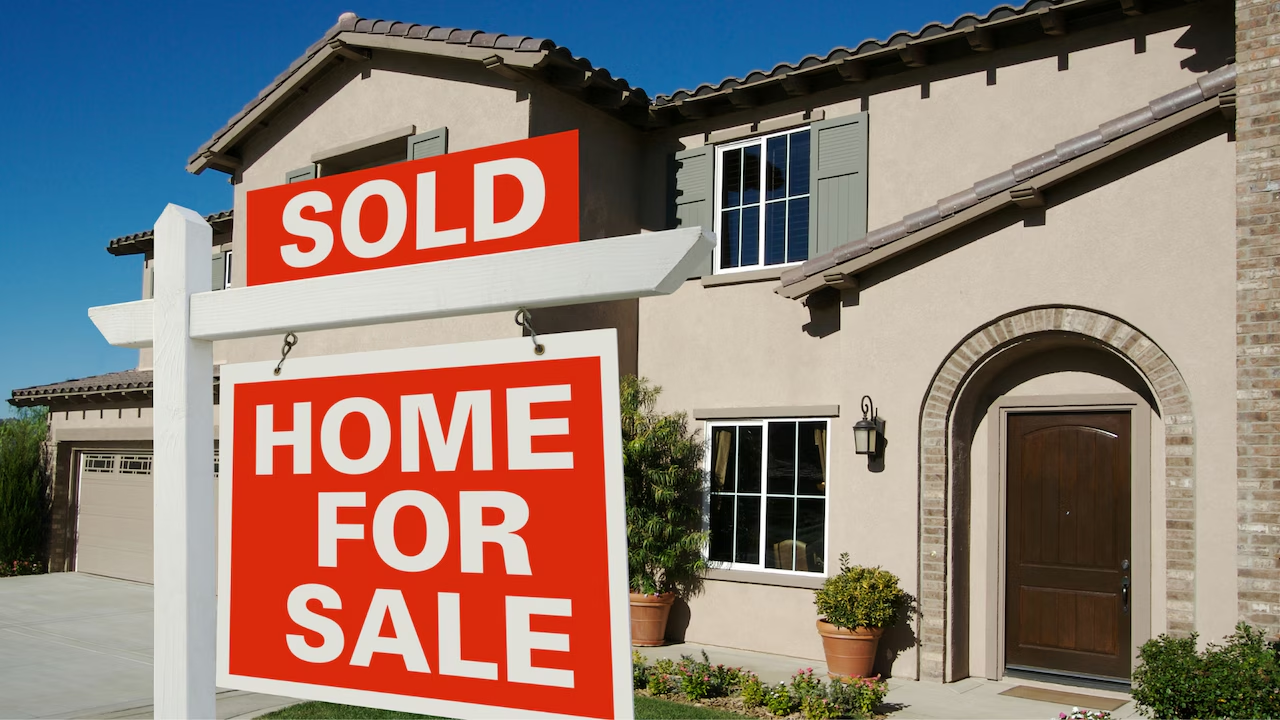
Selling a house is one of life’s most significant transactions, yet sometimes the traditional route—the endless showings, the costly repairs, the uncertain timelines—just isn’t feasible. For many Pennsylvania homeowners, speed, privacy, and certainty are far more valuable than maximizing every last dollar on the open market. When life demands a rapid transition, whether due to relocation, financial pressure, or managing a complicated inherited property, an alternative path becomes essential. You need a streamlined, predictable exit strategy that bypasses the Multiple Listing Service (MLS) entirely.
The good news is that specialized avenues exist to sell your property efficiently and directly to qualified buyers. These options offer a clean break from the lengthy, condition-dependent sales process that most people associate with real estate. If you are seeking professional assistance and clear solutions, connecting with dedicated Home Selling Services Pennsylvania can provide the certainty you are looking for. We aim to explore these solutions in depth, providing the clear answers and context you need to move forward with confidence in the Keystone State.
What is the first step when considering selling my house quickly in Pennsylvania?
The very first action you should take is performing an honest, internal assessment of your property’s condition and your personal financial needs. Selling quickly requires a shift in perspective, moving from the typical retail mindset to one focused on convenience and speed of transaction. You are trading potential market upside for guaranteed certainty and immediate relief from the property’s responsibility.
This initial evaluation should cover critical aspects like the current state of the roof, foundation, and major mechanical systems such as HVAC and plumbing. If your property requires extensive capital expenditure to be competitive on the retail market, a direct sale becomes immediately more appealing. Recognizing these pain points upfront helps you determine the most appropriate selling mechanism, which often involves an investor who is prepared to purchase the home as-is.
After assessing the property, the next crucial step is determining your urgency level and the minimum net amount you need to walk away with. Unlike a traditional sale where you speculate on market fluctuations, a direct sale focuses on the net proceeds you receive at closing. This clear financial objective helps you compare and evaluate offers from specialized Home Selling Services Pennsylvania effectively and without emotional attachment.
The speed of the sale is usually directly proportional to the certainty of the funds and the simplicity of the contract terms. Since the buyer is not dependent on securing a mortgage or satisfying an appraisal contingency, the timeline shrinks drastically. This is the fundamental trade-off that defines the entire process, offering the ability to close in weeks rather than months.
Ultimately, your goal is to find a buyer who is positioned to close without complications and on your schedule. This buyer must be capable of fulfilling the Purchase and Sale Agreement by providing certified funds immediately upon settlement. The path to an unlisted sale hinges on selecting a robust and reliable partner who can handle the entire transaction from offer to settlement without delays.
The Core Strategy: Direct Cash Home Buyers
The most straightforward and certain way to sell a house quickly in Pennsylvania without listing it is by leveraging the power of dedicated cash house buyers. These entities, often investors or specialized companies, have the liquid capital to acquire property immediately. They eliminate the financing risk and the subjective waiting game inherent in sales dependent on conventional bank loans.
Choosing this route means you avoid the entire public marketing machine of photography, staging, open houses, and frequent private showings. The process is simplified to a property review, an offer, and a swift closing managed by a trusted title company. This level of transactional efficiency is invaluable to homeowners dealing with time-sensitive challenges.
These direct sales provide an effective solution for properties that simply would not fare well on the highly competitive MLS. Homes requiring significant deferred maintenance, those located in undesirable areas, or properties burdened by complex legal issues often find their best solution here. The investor is looking at the property’s future potential, not its present curb appeal.
Who Are Cash Buyers and How Do They Operate?
The term “cash house buyers Pennsylvania” encompasses a diverse group of professional real estate participants, each with a slightly different business model. Understanding these distinctions helps you determine which type of buyer is best suited to your specific property and financial goals. The most common groups are flippers, long-term investors, and iBuyers.
House flippers specialize in acquiring distressed or outdated properties, renovating them extensively, and then reselling them quickly for a profit. They are primarily concerned with the After-Repair Value (ARV) and the cost of labor and materials needed to transform the home. Their offers reflect a deeper discount to account for significant project risk and carrying costs.
Long-term rental investors, on the other hand, purchase properties with the intent to rent them out, generating passive income. Their valuation is based on cash flow metrics, such as market rent and vacancy rates, and they may be less concerned with cosmetic defects. This type of buyer often looks for multi-family units or single-family homes in steady rental markets across Pennsylvania.
Finally, Institutional Buyers (often called iBuyers) utilize technology to make rapid, data-driven offers on homes that meet specific condition and age criteria. While they offer exceptional speed and convenience, their target demographic is usually properties in good condition, and they may not be the right fit for houses requiring massive structural overhauls. A specialized local firm like the Brett Furman Group is adept at identifying the best investor profile for your unique property.
The operational benefit of all these models is that they are transaction-focused, not emotion-driven. They have dedicated capital ready to deploy, ensuring that once an offer is accepted, the deal is highly likely to close. This business certainty removes the anxiety of a traditional sale falling apart due to financing issues or buyer cold feet.
The “Sell Home As Is PA” Advantage
One of the biggest pain points in a conventional sale is the requirement to prepare the property for market. This involves costly tasks like painting, deep cleaning, landscaping, and often, major system repairs revealed during a buyer’s inspection. Choosing to “sell home as is PA” liberates you from these demands entirely.
When you sell to a cash buyer, they assume all responsibility for the property’s current state, including any necessary repairs, clean-up, or junk removal. This is a tremendous benefit, especially for properties that have been neglected, are inherited from a hoarder, or have experienced substantial wear and tear over decades. The price reflects the condition, but the net savings in time, effort, and repair expenditure often justifies the difference.
Crucially, selling as-is means the buyer accepts the property’s faults and defects without demanding concessions or repairs after an inspection. This eliminates the stressful renegotiation phase that can derail many traditional contracts late in the process. The deal remains firm from the moment the Purchase and Sale Agreement is signed.
You literally do not have to touch a paint brush, hire a contractor, or even clean out the basement. You simply take what you want and leave the rest behind for the investor to manage. This convenience makes the unlisted, as-is option particularly appealing when homeowners face rapid relocation or other personal pressures.
Understanding the Cash Offer Formula
It is important for homeowners to understand how cash buyers determine their offers, ensuring transparency in the transaction. Unlike a retail buyer who offers near market value and then relies on financing and appraisal, an investor’s offer is based on a specific business calculation called the Maximum Allowable Offer (MAO). This calculation allows the investor to manage their risk and ensure a profitable project.
The investor starts by determining the After-Repair Value (ARV), which is the estimated price the home will sell for after all renovations are complete, based on local comparable sales. From that ARV, the investor deducts all anticipated costs, including the total cost of necessary repairs, the closing costs for both purchase and resale, and a minimum profit margin for the investor’s risk and labor.
The resulting figure is the MAO, the highest price the investor can responsibly pay for the property in its current state. While this number is often lower than the traditional retail listing price, it represents a guaranteed, fixed amount that comes without any of the hidden costs or delays of a conventional sale.
| Factor | Description in Cash Sale Valuation | Impact on Seller |
| After-Repair Value (ARV) | Estimated market value after renovations. | Highest theoretical starting point. |
| Repair & Renovation Costs | Estimated budget for all necessary fixes (roof, HVAC, kitchen, etc.). | Deducted from ARV; seller saves this expense. |
| Holding & Selling Costs | Investor’s expenses (taxes, utilities, insurance, commission on resale). | Deducted from ARV; borne by the investor. |
| Investor’s Profit Margin | Minimum required return for taking on the project risk. | Standard deduction required for the business model. |
| Maximum Allowable Offer (MAO) | The final cash price offered to the seller. | The net, certain amount the seller receives quickly. |
The key takeaway is that you are not simply receiving a “lowball” offer; you are receiving an offer that accurately reflects the costs of taking your troubled or unready asset and transforming it into a marketable product. This allows you to avoid the time and financial outlay of doing that renovation work yourself.
The Speed Factor and Guaranteed Closing
The timeline is perhaps the single most compelling reason why homeowners choose direct cash sales to avoid MLS listing Pennsylvania. A traditional sale involving mortgage financing takes an average of 45 to 60 days to close, assuming the inspection, appraisal, and underwriting processes go smoothly. This timeline is often intolerable when faced with an immediate move or financial necessity.
A direct sale with a cash house buyer Pennsylvania typically closes in a window between seven and thirty days. This accelerated timeline is possible because there is no lender involved to slow the process down with due diligence. The only mandatory steps are the title search and the preparation of the closing documents, which a skilled title company can expedite significantly.
The buyer’s funds are immediately verifiable, and the sale is not subject to a financing contingency. This certainty means that once the Purchase and Sale Agreement is signed, you can reliably plan your future moves and expenses based on the scheduled closing date. This ability to dictate your closing timeline, often in less than two weeks, is a priceless advantage during times of crisis or hurried transition.
Navigating High-Stress Situations with an Unlisted Sale
Life’s most challenging moments often require the greatest speed and transactional simplicity. Direct, off-market sales are particularly effective tools for homeowners grappling with distress, offering a quick and discreet resolution to complex property problems. These services are designed to handle the messy situations that a standard retail buyer would immediately reject.
The reasons for needing a rapid, unlisted sale are varied, but they typically share a common thread: the homeowner needs to liquidate the asset quickly to address an underlying personal or financial crisis. Whether the home is a burden due to its physical condition or due to its financial encumbrances, the goal is always a fast, clean break. A specialized service can provide this much-needed simplicity.
Avoiding Foreclosure and Financial Distress
One of the most urgent scenarios necessitating an unlisted sale is the imminent threat of foreclosure. When a Pennsylvania homeowner falls behind on mortgage payments, time becomes a critical and rapidly diminishing resource. Selling directly for cash can stop the foreclosure process by ensuring the property is sold before the sheriff’s sale date.
By engaging a cash buyer, the homeowner receives funds sufficient to pay off the outstanding mortgage balance, penalties, and associated fees, thereby preserving their credit rating and reputation. This outcome is far more favorable than allowing the bank to complete the foreclosure. The cash buyer steps in with immediate liquidity, providing the homeowner with a graceful exit from the debt cycle.
Other forms of financial distress, such as tax liens, judgments, or overwhelming credit card debt, can also be resolved through a rapid cash sale. The proceeds from the sale are used to clear these encumbrances during the closing process, ensuring the buyer receives a clear title while the seller satisfies their creditors. This immediate resolution provides genuine peace of mind and financial stabilization.
Dealing with Inherited or Probate Properties
Inheriting a property can quickly become a significant administrative and financial burden, particularly if the home is located far away, is in disrepair, or is tied up in the legal complexities of the probate court. Managing an inherited asset, especially one requiring cleaning and repair, is often the last thing a grieving family wants to handle.
Selling a probate property directly to an investor simplifies this complex legal maze. The investor is accustomed to working with estate attorneys and executors to navigate the necessary paperwork and court approvals required for the transfer of the deed. This expertise ensures the sale proceeds rapidly, allowing the heirs to settle the estate and distribute assets without months of delay.
If the inherited property is filled with personal belongings or has extensive deferred maintenance, the investor’s commitment to buy as-is is priceless. The beneficiaries avoid the cost of cleanup, renovation, and long-distance property management. They receive their funds quickly, allowing them to close the difficult chapter of settling the estate.
For those facing this complicated scenario, seeking out expert Home Selling Services Pennsylvania is highly recommended. These services understand the need for sensitivity and speed when dealing with inherited assets.
Properties Requiring Extensive Repairs or Structural Work
Not all homes are candidates for the retail market, regardless of location. Properties with severe structural issues, such as foundation cracks, extensive mold or water damage, outdated electrical systems, or major roof failure, are instant liabilities to traditional buyers. These houses often languish on the MLS, attracting only lowball offers from traditional buyers who struggle to secure financing for uninsurable homes.
Cash buyers specialize in purchasing these technically challenging properties. They see the home’s potential, not its current defect, and have established relationships with contractors capable of handling substantial restoration projects. By selling to one of these dedicated buyers, you avoid the painful process of trying to convince a retail buyer and their lender that the property is sound.
The Brett Furman Group offers a valuable resource for sellers dealing with these complex physical issues. They can accurately assess the renovation budget and provide a fair, transparent offer that respects the costs involved. Working with professionals who understand construction risks provides a certainty that no amount of cosmetic staging could ever achieve for a truly distressed structure.
The Pennsylvania-Specific Disclosure Landscape
A critical factor for any Pennsylvania seller, even those opting for an unlisted sale, is the state’s mandatory property disclosure requirements. Pennsylvania is a state that requires sellers of residential properties to advise potential buyers of “known material defects” that are not readily observable. This is codified in the Pennsylvania Sellers Disclosure Law.
When selling to a conventional buyer, this Sellers Disclosure Form can become a major point of contention, leading to contentious negotiations and inspection contingencies. However, when selling as-is directly to an investor, the role of this form changes slightly, though the legal requirement to complete it remains.
The key difference lies in the buyer’s intent. An investor purchases the home for renovation and resale, accepting the known defects in exchange for the price discount and the convenience of the transaction. While the seller must still disclose material defects they know of, the investor typically waives the right to renegotiate based on inspection findings because the offer is inherently made in consideration of the existing problems.
Navigating Disclosures in an As-Is Sale
The purpose of the Pennsylvania Sellers Disclosure Form is to protect the public from undisclosed dangers or expensive hidden structural flaws. Regardless of the buyer type, a seller must accurately complete all applicable items in the disclosure statement to the best of their knowledge. Failing to disclose a known material defect can lead to serious legal consequences and liability for up to two years post-closing.
However, an as-is transaction shifts the risk for unknown problems entirely onto the investor. They are not asking the seller to warrant the condition; they are relying on their own valuation of the repair costs. This greatly reduces the seller’s post-closing liability compared to a sale to an unsuspecting traditional homeowner.
It is important to understand that the “as-is” term does not exempt the seller from the legal obligation to disclose known issues. It simply means the buyer is accepting the property in its disclosed condition and will not ask for repairs or further price reductions. This nuance is why sellers should consult with a knowledgeable professional to ensure compliance while maximizing the simplicity of their sale.
The Simple, No-Hassle Process
The most attractive feature of working with cash house buyers Pennsylvania is the elegant simplicity of the transaction flow. The entire procedure is compressed and de-risked compared to the standard real estate lifecycle, offering a clear, predictable route to closing that avoids MLS listing Pennsylvania entirely. This streamlined approach minimizes stress and maximizes the seller’s control over the timeline.
Initial Contact and Offer Generation
The process begins with a simple, confidential inquiry. You provide basic information about your property—its address, general condition, and the reason you need to sell quickly. This initial step is completely non-committal and allows the service provider to run a preliminary analysis of the property’s value.
Next, a property specialist conducts a quick, non-invasive walkthrough of the home. This is not an inspection for negotiation, but rather an assessment to verify the required repairs and accurately calculate the After-Repair Value (ARV). The specialist then presents a fair, all-cash offer, often on the spot or within 24 hours. The offer is firm and has no financing contingencies attached.
Reviewing the Purchase and Sale Agreement
Once you accept the cash offer, the buyer drafts a Purchase and Sale Agreement. This legal document is crucial because it locks in the price, sets the agreed-upon closing date, and specifies that the property is being sold as-is with no post-contract renegotiation for repairs. This is where the certainty of the cash sale is formalized.
You should carefully review all terms, particularly those related to earnest money, the closing timeline, and any items included or excluded from the sale. While the transaction is simpler, it is still a significant legal transfer of assets. The integrity of the cash buyer is paramount during this stage.
The Role of the Title Company and Escrow
In Pennsylvania, the closing is typically handled by a title company or an escrow agent who acts as a neutral third party to protect both the seller and the buyer. Their primary responsibility is ensuring the clear transfer of the deed and title, which is vital to any real estate transaction.
The title company performs a thorough title search to ensure there are no undisclosed liens, judgments, or other encumbrances that would prevent a clean sale. Once the title is confirmed, they manage the escrow process, holding the buyer’s funds and the necessary documents until all conditions are met and the closing date arrives. This mechanism guarantees that the seller receives their payment and the buyer receives a clear title simultaneously.
Working with a reliable and experienced partner, such as the Brett Furman Group, means that this critical title and closing process is handled professionally and without unnecessary friction. Their expertise ensures that all Pennsylvania-specific requirements, including the transfer tax and deed recording, are executed correctly and swiftly.
Closing Day and Funds Transfer
Closing day is a straightforward meeting—often brief—where the seller signs the final documents, including the deed transferring ownership. Once all paperwork is signed and verified by the title company, the buyer’s funds are released to the seller, usually via wire transfer, immediately upon the deed being recorded with the appropriate county courthouse.
The seller receives their net proceeds, and the burden of the property is instantly lifted. The speed and certainty of this final step highlight the immense value of choosing a direct, unlisted sale. You receive your cash and move on to your next chapter without the worry of market uncertainty or protracted negotiations.
Frequently Asked Questions About Off-Market Sales in PA
To provide a complete picture of this selling alternative, we have addressed some of the most common questions Pennsylvania homeowners have regarding unlisted, cash transactions. These answers provide clarity on the financial and procedural aspects of choosing this path.
Do I have to pay closing costs when I use cash house buyers Pennsylvania?
The specific division of closing costs can vary depending on the exact terms negotiated with the investor. However, many reputable cash home buyers advertise and offer to cover all, or nearly all, of the seller’s typical closing expenses. This includes the preparation of the deed, the title insurance premium, and the local transfer taxes.
In a traditional sale, the seller typically pays several percentage points of the sale price in closing costs, in addition to realtor commissions. By shifting these burdens entirely to the investor, the net proceeds received by the homeowner are maximized, further justifying the difference in the initial purchase price. Always verify the closing cost structure in the Purchase and Sale Agreement to ensure transparency.
How quickly can I truly get the cash after accepting an offer?
In most scenarios, a cash sale can be completed and the funds transferred to the seller in as little as seven to fourteen days. The limiting factor is usually the time required for the title company to complete the necessary title search and administrative work. Unlike mortgage-dependent sales, there is no waiting period for bank underwriting or appraisal contingencies to expire.
The rapid timeline is a core advantage of these unlisted transactions, allowing sellers to meet urgent deadlines for relocation or debt settlement. However, the closing can also be extended to accommodate the seller’s timeline if they need more time to coordinate their move. The flexibility to choose your own closing date is a major benefit of working with a direct buyer.
What does selling “as-is” really mean for a seller?
When you agree to sell home as is PA, it means the buyer is accepting the property in its current physical condition, exactly as they observed it during their initial visit. This means you are completely relieved of the financial and logistical burden of making any repairs or renovations prior to closing.
For the seller, this removes the fear of a post-inspection renegotiation, which often forces traditional sellers to spend thousands on unexpected repairs or drop their price. For the cash buyer, selling as-is means they assume all the risk and responsibility for the property’s current condition, including any necessary remediation or structural work. The core principle is full disclosure of known issues, coupled with zero expectation of seller-funded repairs.
Will I need to hire an attorney for an unlisted sale in Pennsylvania?
While Pennsylvania law does not mandate the use of an attorney for a real estate transaction, it is always recommended that sellers consult with legal counsel before signing any major Purchase and Sale Agreement. This is particularly true in direct sales, where the seller is not represented by a traditional real estate agent.
A qualified real estate attorney can review the contract terms, ensure the closing process is legally sound, and verify that the deed and title transfers are handled correctly. However, a reputable cash buying service will often manage the entire process, including coordinating with the title company, minimizing the need for the seller to manage complex paperwork. The investment in a consultation is often minimal compared to the certainty it provides.
What if I have liens or outstanding tax issues on my property?
Outstanding encumbrances such as tax liens, mechanic’s liens, or judgments against the property must be resolved before the title can be cleanly transferred to the new owner. One of the greatest benefits of a cash sale is the ability to resolve these issues directly through the closing process.
The cash buyer’s funds are routed through the title company, which is responsible for paying off all outstanding debts tied to the property, including back taxes or judgments. The remainder of the proceeds, which is the seller’s net cash, is then transferred. This effectively uses the equity in the home to clear the title, providing a comprehensive resolution to the seller’s financial burdens with a single transaction.
The choice to avoid the MLS listing Pennsylvania is a strategic one, designed for maximum convenience and speed. It is a path of certainty that puts you, the homeowner, in control of your timeline and minimizes the typical stresses of selling. When dealing with difficult, time-sensitive, or complex property situations, the reliability of a cash buyer provides an unparalleled solution.
If you are facing a critical deadline, managing a distressed property, or simply value your privacy above all else, exploring the options available through dedicated Home Selling Services Pennsylvania is the definitive first step. By understanding the core mechanics of a direct cash sale—from the initial offer calculation to the seamless closing managed by the title company—you empower yourself to make a financially sound and emotionally relieving decision. Contacting a reputable professional means moving from uncertainty to a guaranteed sale, allowing you to close this chapter and confidently embrace your next one.