
How Business Analytics Is Changing Decision-Making in the Safety Apparel Market

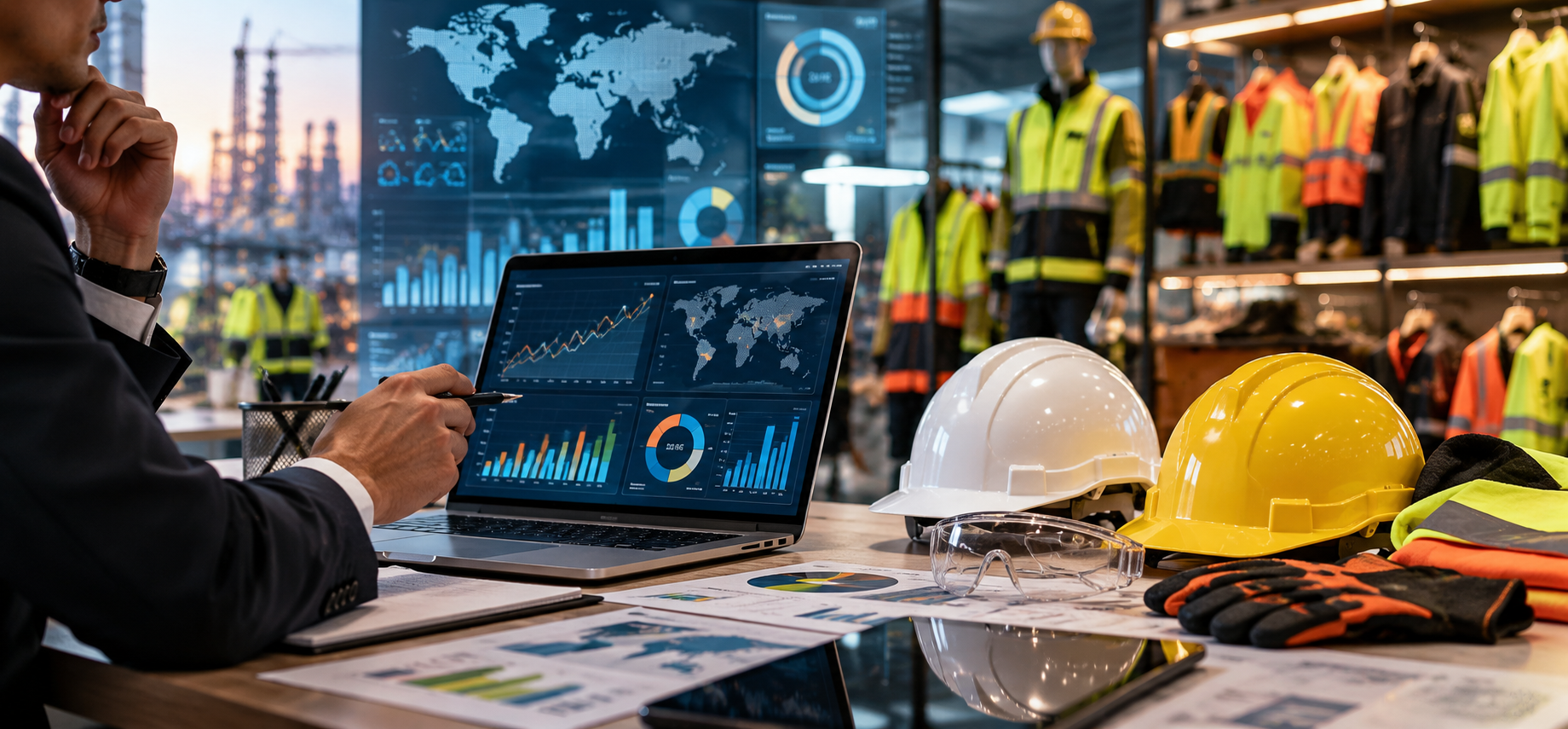
Selling protective apparel is not simply a matter of knowing which products performed well last quarter. For suppliers serving industrial customers, purchasing decisions are often tied to specific jobs, working environments, product requirements and operating schedules.
A construction company may have very different purchasing needs from a warehouse operator or manufacturing facility. Even customers in the same industry may order differently depending on location, workforce size, season or project activity. For safety apparel companies, these differences make demand harder to read from sales totals alone.
Wankun Shang has been looking at this problem from a business analytics perspective.
Shang holds a Master of Science in Applied Analytics from Columbia University and works in the United States with NKE Safety Apparel. His academic and professional background includes SQL, Python, Tableau, Power BI and SAS, as well as research involving customer segmentation, user profiling and business intelligence.
Finding the Story Behind the Numbers
Most companies already have sales and customer data. The challenge is deciding what to do with it.
A sales report might show that demand for a particular product increased during a certain period. That does not explain whether the increase came from one large customer, a specific industry, a regional trend or a temporary purchasing cycle.
Looking at order histories alongside customer characteristics and market information can provide a more useful picture. Businesses can compare customer groups, study purchasing frequency and identify whether changes are isolated events or part of a wider pattern.
Shang explored similar questions in earlier academic research. One study focused on data-mining methods for customer segmentation in commercial banking. Another used SQL to build user profiles and examine differences in customer behavior and demand.
Although banking and safety apparel are very different industries, the underlying analytical problem is similar. Raw transaction records are rarely useful on their own. They become more valuable when they are organized in a way that helps decision-makers see patterns they might otherwise miss.
In a safety apparel business, that could mean examining which types of customers purchase certain products, how frequently they reorder, or how demand changes across industries and geographic markets.
Making Business Intelligence More Usable
Another part of Shang’s work has focused on how information reaches the people making business decisions.
He has developed two computer programs registered with the U.S. Copyright Office: Big Data Analytics System for Competitive Sales Intelligence and Big Data Application System for Business Intelligence Reporting.
The first deals with the analysis of sales and competitive-market information. The second is designed around business intelligence reporting and the organization of operational data for management use.
The practical issue behind both is straightforward: companies can collect a large amount of information and still struggle to use it effectively.
This is particularly relevant for smaller and mid-sized businesses. They may not have large data science departments, and managers often need answers that can be understood and acted on quickly. A useful analytics system therefore has to do more than process information. It needs to present the right information in a form that supports an actual business decision.
Applying Analytics to a Specialized Industry
Safety apparel adds another layer because customer demand is closely connected to workplace conditions and operational needs.
Protective clothing is purchased for use in environments where job functions, safety practices and product specifications can differ considerably. Understanding the customer therefore requires more than knowing how much they spent.
Shang has also become involved in the professional communities surrounding both sides of this work. He is a member of the American Society of Safety Professionals and the International Institute of Business Analysis. In addition, he has completed peer reviews for five academic journal manuscripts involving analytical and business research.
For companies in specialized industrial markets, analytics is increasingly less about producing more reports and more about asking better questions of existing data.
Who is buying? What are they buying together? How often are they returning? Which changes are temporary, and which may signal a shift in the market?
For safety apparel companies, answering those questions can make the difference between simply recording demand and understanding it.







Comment