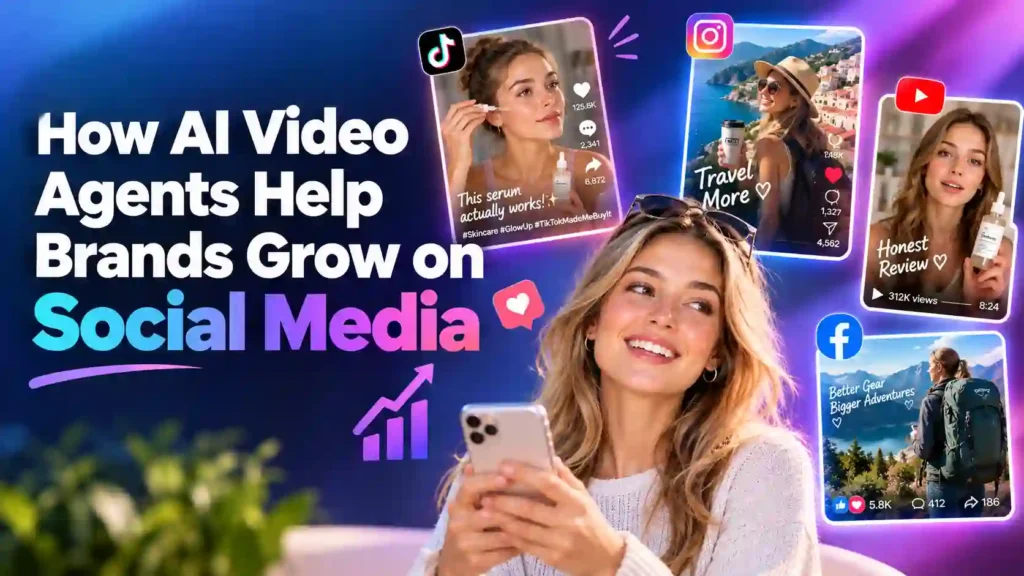
A single week of posting can mean a product teaser for Instagram, a longer explainer for YouTube, and three or four ad variations to test on TikTok, each one shaped to fit the platform it’s going on. Social platforms reward brands that show up often, not just the ones with the biggest budget.
That pace is hard to sustain through a traditional production process, where a script, a shoot, an edit, and a voiceover often pass through different people and different tools before a single video is ready to post.
A newer category of tools is starting to change that math. AI video agents take an idea from a prompt or a script all the way to a finished, platform-ready video, rather than handling just one step of the process. This article looks at what that actually makes possible for brand content on social media, and what’s worth checking before adopting one.
Why Social Video Now Plays a Bigger Role in Brand Growth
Video has become the format most social platforms favor, and brand accounts are expected to post it often and in several forms: a quick teaser one week, a longer explainer the next, a seasonal spot when a campaign calls for it.
Moreover, a single campaign rarely needs just one video. It usually needs several, including a few lengths for different platforms, a couple of creative angles worth testing, and sometimes a separate version for a different market or language.
That’s where traditional production starts to strain. Scripting, filming or sourcing visuals, editing, and voiceover each take time and often involve separate people or vendors, and the process doesn’t speed up just because the posting calendar asks for more.
Where AI Video Agents Fit In
That gap between demand and output is exactly where this category of tools is built to work. Before looking at what brands are actually using them for, it helps to understand what separates an AI video agent from the generators already crowding this space.
What an AI Video Agent Actually Is
An AI video agent works less like a single-use generator and more like a virtual director. A brand can simply describe what it wants — say, a product video, a short ad, or a scene pulled from a script — and the agent carries the entire video generation workflow through scripting, visuals, voice, and export as one continuous process rather than a string of separate tasks.
End-to-End AI Workflow vs. Traditional Brand Video Production (At a Glance)
The two approaches mostly differ in how many separate steps a video has to pass through along the way:
| Main Production Stage | Traditional Production | AI Video Agent |
| Script & planning | A separate step, often involving a writer or agency | Drafted within the same conversation as the rest of the video |
| Casting & characters | Requires hiring actors or voice talents, or sourcing stock footage | Characters are generated and kept consistent across scenes |
| Filming & visuals | Needs a shoot, location, equipment, or custom design work | Visuals are generated directly from the sources and media you provide |
| Editing & voice | Handled in separate software, often by a different person | Managed without leaving the agent |
| Revisions | Each change may mean a reshoot, a new edit pass, or back-and-forth with a vendor | Scenes can be regenerated or adjusted within the same workflow |
| Localization | Each language usually needs a separate voice recording and sync pass | Multiple language versions can be generated from the same project |
| Typical turnaround | Days to weeks | Minutes to hours |
None of these differences is dramatic on its own. What makes the workflow end-to-end is that none of them requires switching tools or waiting on someone else’s schedule.
How AI Video Agents Change What’s Possible for Brand Social Content
Starting From Whatever You Already Have
A team doesn’t need a finished script or a photoshoot lined up to get moving. An agent can go from script to video, bring a single product photo to life, or build a scene around a voice memo. That flexibility matters most for small teams, who typically have one of these on hand, a draft script, a product shot, a recorded line of dialogue, but rarely all of them at once.
Adapting the Same Idea for Different Platforms and Formats
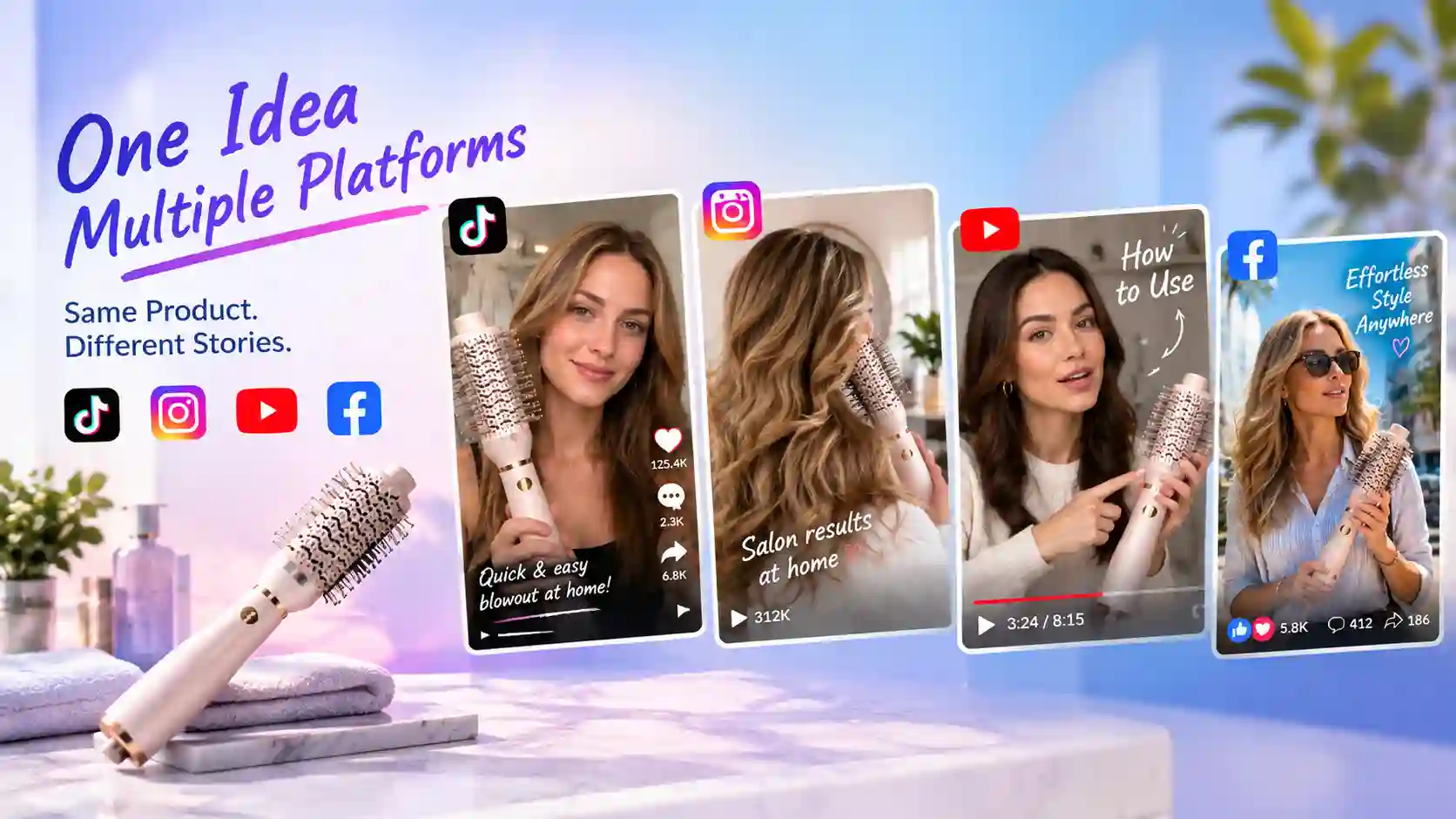
The same core idea can be reshaped for different placements without starting from scratch: a longer cut for YouTube, a vertical version for Reels or TikTok, a couple of alternate openings to test as ads. Working from a library of built-in styles and templates also makes it easier to keep a consistent look across a batch of videos instead of designing each one individually.
Expanding Social Content Across Multiple Languages
For brands posting into more than one market, the same video can carry a different voiceover track through an AI voice generator that covers dozens of languages, without booking a studio or a translation team for each new market.
Where Brands Are Using AI Video Agents
Product Teasers and UGC-Style Ads
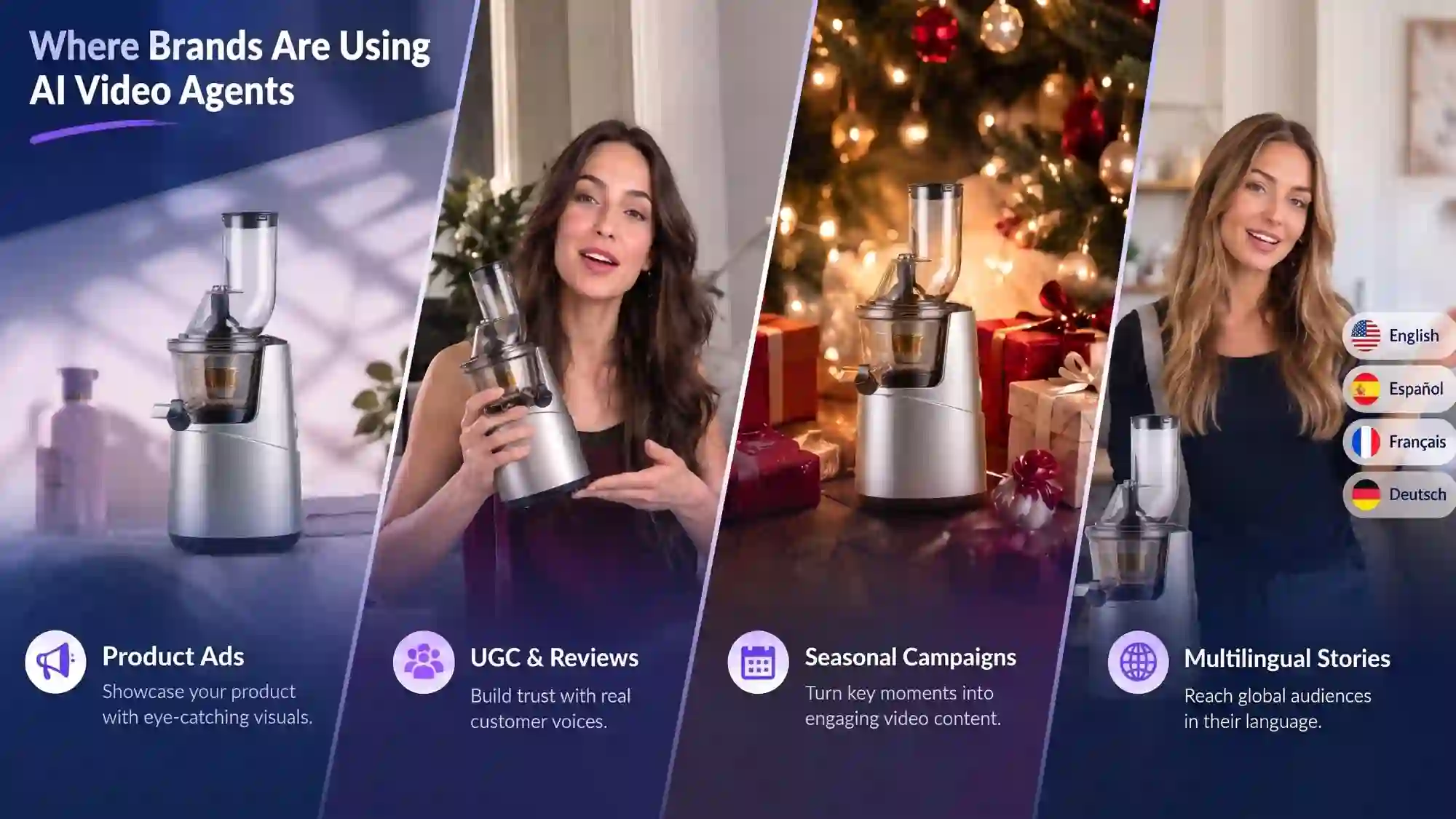
Short product clips and UGC-style video ads are an easy starting point: quick to produce, simple to generate in several variations, and useful for testing which hook or angle performs best before a bigger budget goes behind one version.
Explainer and Seasonal Campaign Content
Explainer videos and recurring seasonal content, think holiday promotions or product launches, benefit from reusing the same visual style or spokesperson release after release, so a campaign still reads as one connected series instead of a set of unrelated clips.
Multilingual and Story-Driven Social Content
Brands building longer-running, character-led content, a recurring mascot, a host, or a short narrative series, depend on that character looking and sounding the same from one episode to the next, across every language a video is dubbed into. Some agents, like Anijam go a step further and let several characters share one scene, each with its own voice track and lip sync, which suits dialogue-heavy formats like skits, multi-episodes, or back-and-forth testimonials.
What Brands Should Look for in an AI Video Agent
Flexible Inputs and an End-to-End Workflow
Check whether a tool can start from more than one kind of input, text, script, image, or audio, and whether it actually carries a project through to a finished export rather than handling just one step and leaving the rest to another app.
Templates, Consistency and Creative Control
Look for a reasonable library of styles or templates, and the ability to keep visual style or a character consistent across scenes. Just as important is how much room there is to review and adjust a scene before it’s final, rather than accepting whatever comes out on the first try.
Access Across Devices
Check whether a project stays usable across devices — starting an edit on a phone and finishing it on a laptop shouldn’t mean exporting, re-uploading, or losing track of which version is current.
Platform Fit and Usage Clarity
Confirm that exports fit the formats different platforms actually require, and that pricing and usage rights are stated clearly, particularly for anything a brand plans to run as a paid ad.
How Anijam’s AI Video Agent Helps Brands Grow on Social Media
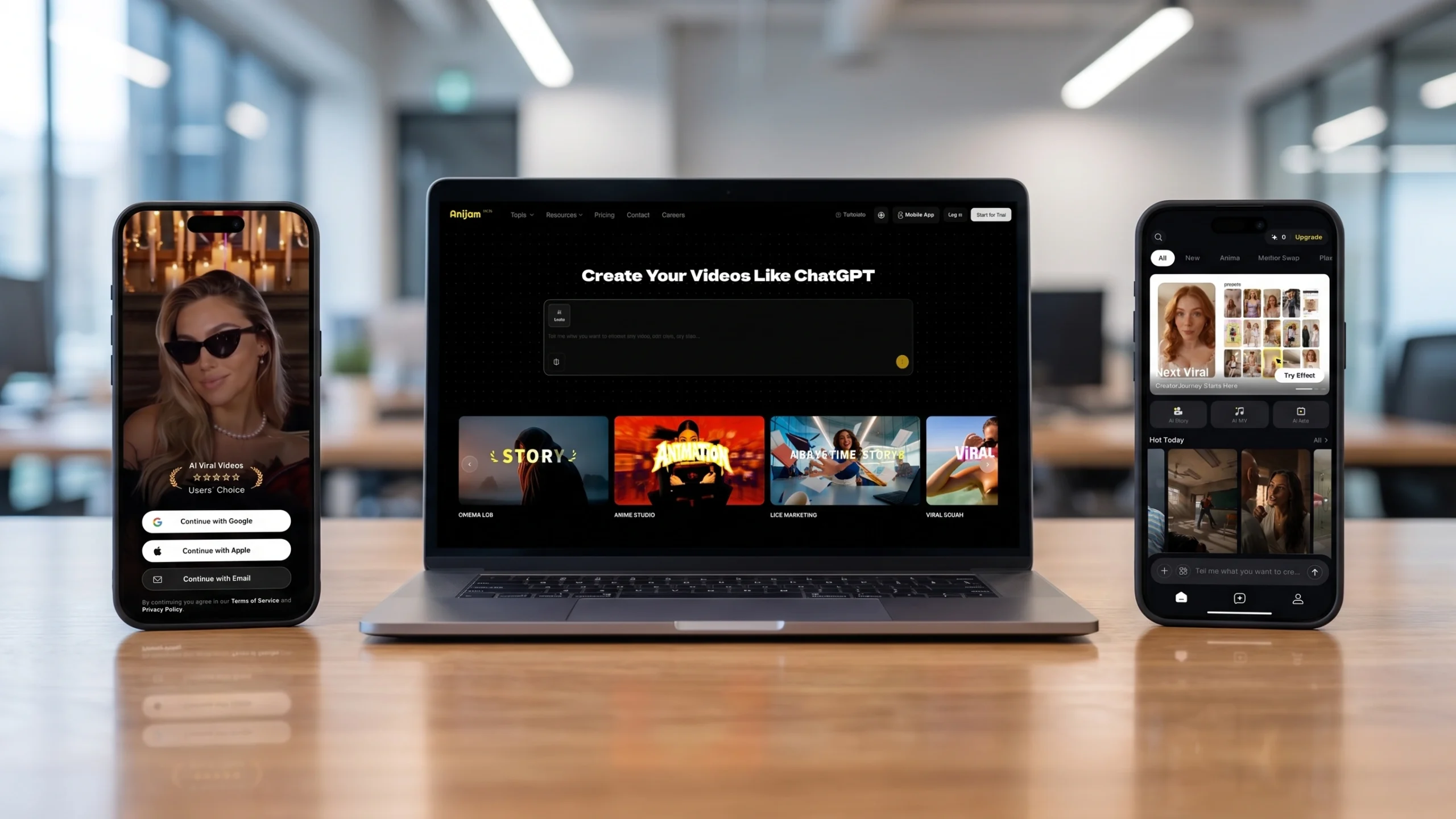
For brands looking to put these principles into practice, an all-in-one workflow can reduce the friction between having an idea and turning it into content. Anijam AI brings video creation, creative assets, templates, and editing together within a broader AI creative platform, allowing brands to develop and adapt social content without switching between multiple tools.
Starting From Templates That Follow What’s Trending
Knowing what to post is often harder than producing it. Anijam offers templates for different content needs, from trend-driven formats for popular social content to marketing-focused templates for ads, promos, and brand campaigns. Users can choose a starting point that fits the goal, adapt it with their own product or visuals, and create content for TikTok, Reels, or Shorts instead of starting from a blank canvas.
Creating Both Images and Videos Assets for Social Media
Anijam can create both video and still-image assets for social feeds, AI ads, and other placements, making it easier to carry one campaign idea across different formats. Users can adapt the output to formats such as 9:16, 1:1, or 16:9 depending on where it will be used.
Turning Marketing Ideas Into Longer Social Videos
Anijam can turn a full script or rough idea into a long social video, building it scene by scene while keeping characters consistent throughout. This makes it possible to develop formats such as YouTube explainers, brand stories, and episodic videos without treating each scene as a separate production project.
The Future of Brand Videos on Social Media
What AI Agents Are Best At
AI video agents are strongest at the parts of production that are repetitive or resource-heavy: turning an idea into a first cut quickly, producing several variations of the same concept, and adapting one piece of content across platforms and languages without rebuilding it each time.
What Still Needs a Human in the Loop
Brand tone, sensitive messaging, and the final call on what actually ships still benefit from a human review. An agent can produce the options faster, but deciding which one represents the brand well is still a judgment call.
The more realistic shift isn’t that AI replaces the people behind a brand’s content. It’s that producing a video no longer requires a full production team just to get started.
Final Thoughts
Social media has made video production a volume and variety challenge: brands need more content, more formats, and more creative variations without turning every post into a separate production project. AI video agents address that gap by connecting planning, creation, adaptation, and revision in a more continuous workflow.
The bigger opportunity is not simply producing videos faster, but making social content easier to scale across formats, platforms, and campaign needs. As AI video tools continue to evolve, the brands that benefit most will likely be those that combine that production flexibility with clear creative direction and human judgment over what ultimately goes live.