Social-media growth used to be about catchy posts and hoping the algorithm likes you. Now it’s about using the AI tools well enough to get attention. But attention is only half the job – turning it into real connections is the other half. That’s why many creators and teams pair AI-driven content with a tap-to-share digital business card (like Tapni) in their bio or DMs, so interested people can instantly save contact details or book a call.
Because almost everybody is using artificial intelligence.
According to a SurveyMonkey study, 88% of marketers rely on AI in their current jobs.
That’s why the global “AI in social media” segment is projected to grow from US $2.2 billion in 2024 to US $10.3 billion by 2029.
And that does not hint at its future potential. I am talking about the current pressure.
In this article, I’ll discuss how AI tools are changing social media growth for us. And how our social media strategy should be changing with that now.
How AI tools are changing social media growth
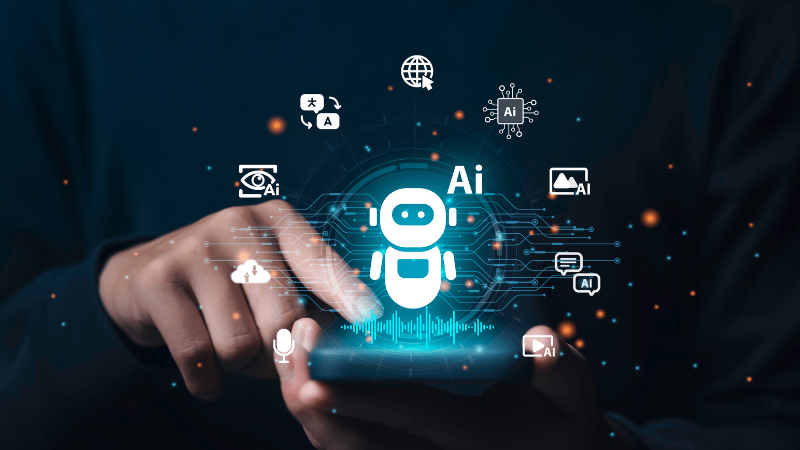
Artificial intelligence is an unseen strategist behind social media growth. It now helps decide what content performs, when to post, and even who sees it.
That means it is being used for predictive analytics for customer engagement. That does not just assist marketers, but reshapes how entire campaigns are planned.
So, we get faster insights, smarter targeting, and growth that’s built on data, not just creativity and guessing.
1. AI-driven content creation and scheduling
It used to take me hours to create and post content on social media. Now, it takes minutes.
Because AI tools like Buffer, Lately, and Predis.ai analyze my target audience. Then identify what will work and even generate captions or full posts automatically.
For example, Lately.ai studies your old posts, learns your tone and then creates content accordingly. This way, you get social posts optimized for engagement. This turns a single piece of content into an entire campaign.
According to a Narrato survey, 75.7% of marketers use AI apps in their digital marketing activities.
Still, AI is not a substitute for your authenticity. The best practice is to let AI handle the structure while you refine the message. That’s how your content stays efficient without losing its human tone. This balance is essential for maintaining professional communication on social media, especially in regulated or brand-sensitive industries.
2. Smarter audience targeting and segmentation
Audience targeting is where AI helps the most. It analyzes user behavior, intent, and engagement patterns in real time across ads, campaigns, and even small details like personalized email sign-offs.
These insights, according to Salesforce, help 68% of marketing leaders serve their customers better.
This means your campaigns don’t just reach people, they reach the right people.
Platforms like Meta Ads and Google Ads already use AI to predict which users are most likely to convert, long before a human could spot the trend.
However, this automation can narrow your reach or misinterpret audience behavior. So, the human oversight is always needed.
3. Automated social listening and trend detection
Social media does not stay the same for long. Trends today can vanish tomorrow.
That’s why AI-driven social listening is also important. It scans millions of posts, comments, and hashtags to predict what’s going to be trending before it goes viral.
According to Influencer Marketing Hub, 62% of marketers consider social listening a key data source for marketing.
Tools like Brandwatch, Sprinklr, and Hootsuite Insights use natural language processing (NLP) to identify public sentiment, to predict upcoming trends.
For example, you have a beauty brand. If you use Brandwatch to monitor your audience conversations, it’ll identify unexpected rises in searches for products like “clean makeup.”
Acting early, you can launch a campaign around that trend. And double your engagement within weeks.
4. Real-time performance tracking and insights
AI has also changed how we used to measure performance on social media.
We do not wait for campaigns to complete anymore. We get insights in real time.
AI-powered analytics tools like Hootsuite, Emplifi, and Socialbakers monitor engagement, impressions, and click-through rates very early. So we can change things midway.
For example, Emplifi’s AI dashboard alerts brands when engagement drops below average. Even suggests post timing and format adjustments to fix it.
This ability to adapt in real time gives marketers a competitive edge. Because in social media, timing isn’t everything— it’s the only thing.
5. Chatbots and AI-powered customer engagement
Chatbots are quite common customer engagement tools on social media today. Because they respond instantly and handle multiple queries at once.
So nobody has to wait for a reply. Something no human team can achieve.
According to IBM, businesses using AI-powered chatbots can reduce customer service costs by up to 30%. This cost efficiency matters across industries, from marketing automation to enterprise software research, such as when teams explore the Cost Of Procore Construction Software and compare it with AI-driven support alternatives.
Platforms like Drift, Manychat, and Intercom now offer direct integrations into Facebook, Instagram, and WhatsApp to deliver personalized responses.
This helps marketers get faster responses, higher engagement, and a smoother user experience.
However, remember, chatbots can start conversations, but humans should finish them. That’s how brands maintain empathy and trust while scaling engagement through AI.
Conclusion
Artificial intelligence is no aid to social media. It’s the foundation of how brands grow now.
From content creation to real-time insights and customer engagement, AI now drives your online presence.
But success isn’t about using every tool available. It’s about knowing when to let AI take over and when to step in yourself.
Because audiences still respond most to authenticity.
The brands that will lead in this new era are those that use AI to improve their creativity, not replace it.
In the end, AI may power your strategy, but it’s your human touch that keeps followers coming back.