
How AI Search Is Redirecting Customers Away From Business Websites

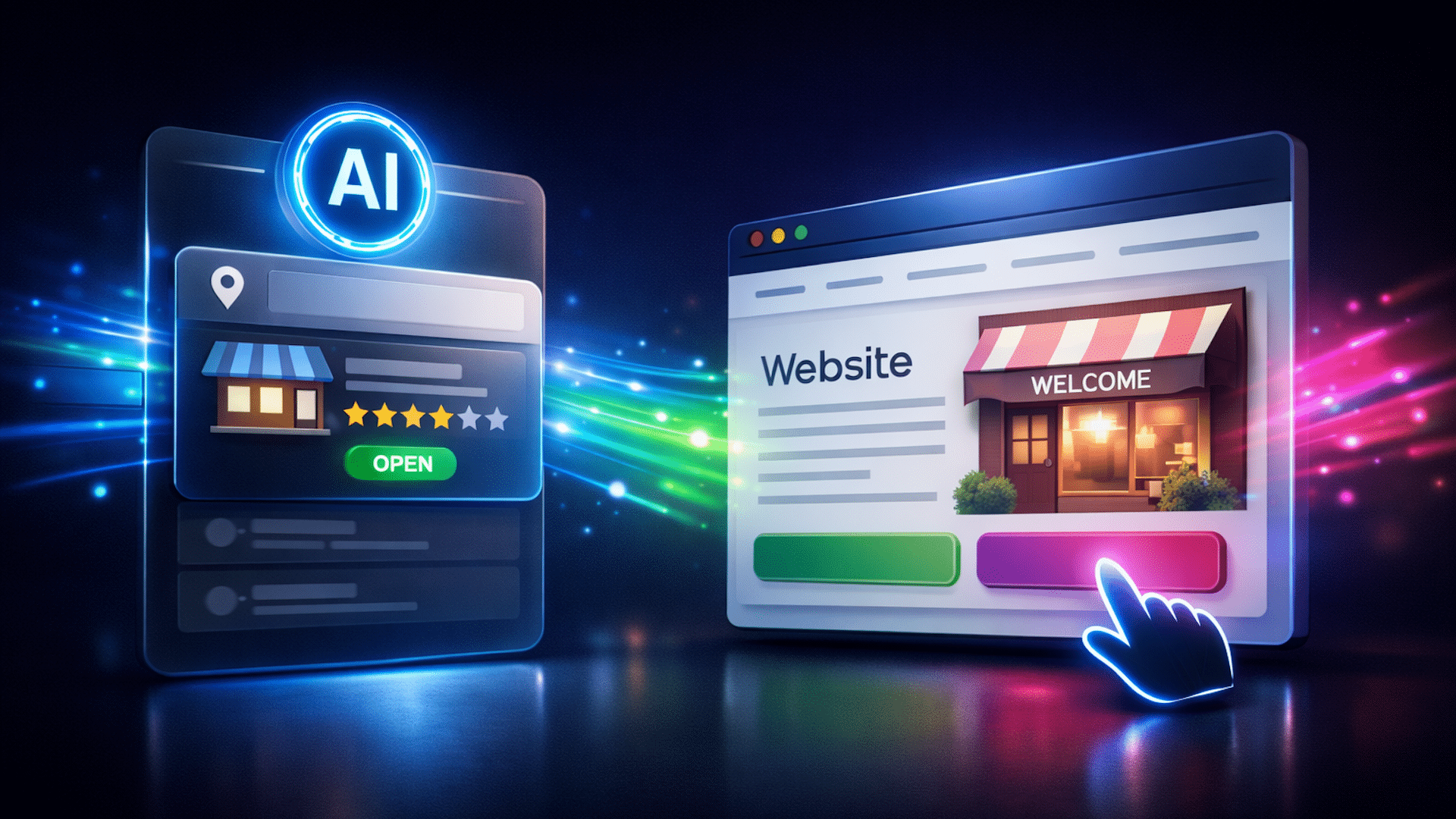
The way people search online has changed dramatically. Instead of clicking through several websites to compare information, many users now receive complete answers directly from AI-powered search experiences such as Google AI Overviews, ChatGPT Search, Perplexity, and other generative search tools. This shift is changing how businesses attract visitors, generate leads, and build customer relationships.
For years, companies invested heavily in SEO because ranking high on Google meant earning valuable website traffic. Today, even a first-page ranking doesn’t always guarantee visitors. AI-powered search often summarizes information before users ever reach a business website, creating what many marketers now call a “zero-click” experience. Recent studies suggest AI search substantially reduces referrals for informational queries by satisfying users directly within AI interfaces.
For businesses that depend on organic traffic, understanding this transformation is essential.
The Rise of AI-Powered Search
Traditional search engines acted as directories, helping users discover websites that contained relevant information.
AI search works differently.
Instead of displaying only a list of links, AI analyzes multiple sources, creates a summarized response, and presents it immediately. Users often receive enough information without needing to visit the original websites.
This approach offers convenience, but it also changes how businesses compete for online attention.
Instead of optimizing only for search rankings, companies must now optimize to become trusted sources that AI systems choose to reference.
Why Businesses Are Losing Website Visitors
Several factors contribute to declining website traffic in the AI search era.
Instant Answers Reduce Clicks
Many informational questions are answered directly within AI-generated summaries.
Whether someone searches for:
- Product comparisons
- Medical explanations
- Travel advice
- Marketing strategies
- Software recommendations
AI frequently provides a complete response without requiring users to open multiple websites.
Studies have found significantly lower click-through rates when AI-generated summaries appear above traditional search results.
Users Complete Research Faster
Consumers now spend less time browsing multiple websites.
Instead of opening five or six tabs, users often ask follow-up questions inside the same AI conversation until they have enough information to make a decision.
This reduces opportunities for businesses to introduce visitors to additional products, services, newsletters, or offers.
AI Prioritizes Authority Over Rankings
Ranking first in traditional search doesn’t automatically guarantee visibility in AI-generated answers.
AI models typically evaluate factors such as:
- Content quality
- Expertise
- Consistency
- Brand reputation
- Trustworthiness
- Structured information
Businesses with strong authority across multiple sources may receive more AI citations than websites focused only on keyword rankings.
Industries Seeing the Biggest Impact
Although almost every industry is affected, some experience larger traffic declines than others.
These include:
- Health and wellness
- Technology
- Education
- Finance
- DIY tutorials
- Recipe websites
- Product review websites
These industries answer informational questions that AI can summarize quickly.
For example, websites like MedicallyReviewed.com focus on publishing medically reviewed health information, emphasizing accuracy and credibility—qualities that are increasingly important as AI systems look for reliable sources to reference. High-quality editorial standards help improve long-term visibility across both traditional and AI-driven search experiences.
Why SEO Still Matters
Some business owners mistakenly believe SEO is becoming obsolete.
In reality, SEO is evolving.
Search optimization now extends beyond ranking webpages. Businesses need to create content that is useful not only for human readers but also for AI systems that summarize and cite information.
This means:
- Publishing original research
- Demonstrating real expertise
- Using clear headings
- Structuring information logically
- Building topical authority
- Maintaining factual accuracy
The websites that consistently provide valuable, trustworthy content remain more likely to appear in AI-generated responses.
Adapting SEO for the AI Era
Modern SEO requires a broader strategy than simply targeting keywords.
Working with experienced professionals can help businesses adapt to these changes more effectively. Many organizations partner with SEO North, an Ottawa-based SEO agency to strengthen their online presence through technical SEO, content strategy, local optimization, and long-term search visibility.
An effective AI-focused SEO strategy includes:
Building Topic Authority
Rather than publishing isolated blog posts, businesses should develop comprehensive content hubs covering every aspect of their industry.
AI systems favor websites that demonstrate deep expertise across an entire topic.
Improving Content Quality
Thin articles written primarily for search rankings perform poorly in AI search.
Instead, businesses should focus on:
- Detailed explanations
- Original insights
- Expert opinions
- Updated statistics
- Helpful visuals
- Real-world examples
Strengthening Brand Recognition
AI models often consider a brand’s overall reputation.
Businesses should invest in:
- Digital PR
- Industry mentions
- Customer reviews
- Author expertise
- Social proof
The stronger the brand signal, the more likely AI systems are to recognize it as a trusted source.
Beyond Website Traffic
Although website visits may decline, businesses should focus on broader success metrics.
Instead of measuring only pageviews, organizations should monitor:
- Qualified leads
- Conversion rates
- Brand mentions
- AI citations
- Customer inquiries
- Email subscribers
In some cases, businesses receive fewer visitors but attract more qualified prospects because AI has already educated customers before they arrive.
Creating Content AI Wants to Reference
AI systems typically favor content that is:
- Accurate
- Well organized
- Easy to understand
- Frequently updated
- Expert-reviewed
- Factually supported
Content that directly answers common customer questions has a higher chance of appearing in AI-generated summaries.
Businesses should also ensure that:
- Pages load quickly.
- Mobile experiences are optimized.
- Structured data is implemented.
- Internal linking is logical.
- Important pages remain current.
The Future of Search
AI search is unlikely to replace traditional search entirely, but it is reshaping how customers discover businesses online.
Instead of viewing AI as a threat, successful organizations are treating it as a new discovery channel.
The companies that continue producing trustworthy, comprehensive, and user-focused content will remain competitive, even as search behavior evolves.
Conclusion
AI-powered search is fundamentally changing how customers find information online. Instead of directing users to dozens of websites, AI increasingly delivers complete answers within the search experience itself. This shift reduces organic traffic for many businesses, particularly those that rely heavily on informational content.
However, the future still belongs to organizations that prioritize expertise, credibility, and high-quality content. Businesses that adapt their SEO strategies, strengthen their authority, and create genuinely helpful resources will be better positioned to earn both AI citations and customer trust.
Rather than chasing clicks alone, the goal should now be becoming the trusted source that both people and AI systems rely on.
AQs
- Why is AI search reducing website traffic for businesses?
AI-powered search tools often provide direct answers within search results, allowing users to find the information they need without visiting the original website. This creates more “zero-click” searches, reducing organic traffic for many businesses. - Does AI search mean SEO is no longer important?
No. SEO remains essential, but the focus has shifted. Businesses need to create authoritative, well-structured, and trustworthy content that both search engines and AI systems are likely to reference in their responses. - Which industries are most affected by AI search?
Industries that rely on informational content—such as healthcare, finance, technology, education, travel, and product reviews—are seeing the biggest impact because AI can summarize much of their content directly for users. - How can businesses adapt to AI-driven search?
Businesses can adapt by publishing high-quality, expert-driven content, improving technical SEO, using structured data, building topical authority, and strengthening their overall brand reputation. Working with experienced SEO professionals can also help businesses stay competitive as search evolves. - Can businesses still generate leads if website traffic declines?
Yes. While AI search may reduce overall traffic, businesses can still attract high-quality leads by creating valuable content, optimizing for user intent, and building trust. Visitors who do click through are often better informed and more likely to convert into customers.






Comment