How AI Is Transforming Preventive Healthcare Beyond Hospitals?

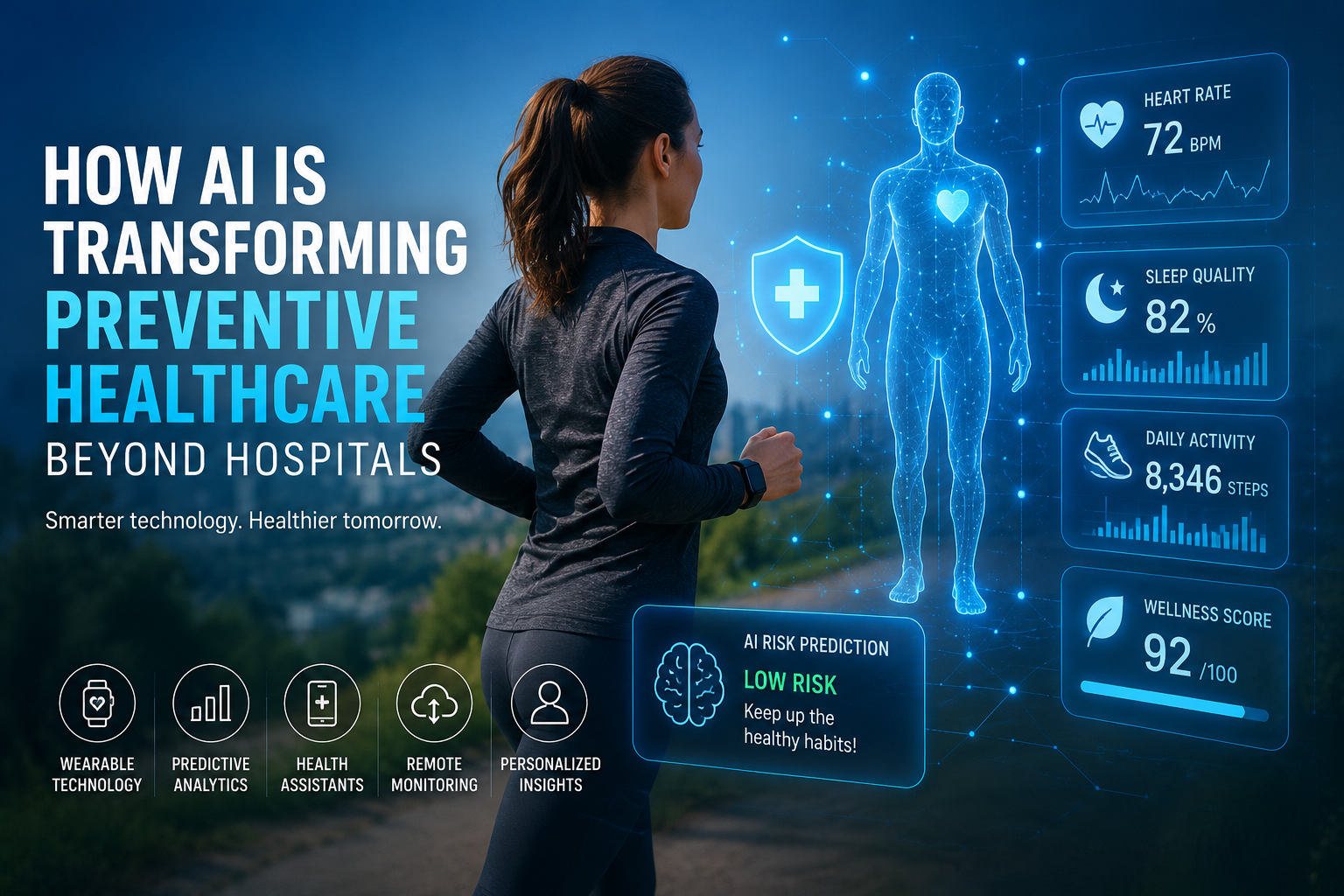
Artificial intelligence (AI) is redefining healthcare, but its greatest impact may not happen inside hospitals. Instead, AI is increasingly empowering people to take charge of their health long before they need medical intervention. From wearable devices and intelligent health assistants to predictive analytics and personalized wellness recommendations, preventive healthcare is becoming smarter, more accessible, and data-driven.
As healthcare systems worldwide face rising costs and growing patient demand, AI is helping shift the focus from treating illnesses to preventing them. This transformation is making healthcare more proactive, allowing individuals to identify potential health risks early and make informed lifestyle decisions.
The Shift Toward Preventive Healthcare
Traditional healthcare has largely been reactive. Patients often seek medical attention only after symptoms appear, leading to higher treatment costs and more complex care. Preventive healthcare aims to change that by identifying risk factors early and encouraging healthier habits before serious conditions develop.
AI accelerates this shift by analyzing large volumes of health data, recognizing patterns, and generating personalized insights. Rather than replacing healthcare professionals, AI supports them by enabling earlier interventions and more informed decision-making.
Wearable Technology as a Continuous Health Monitor
The rapid adoption of wearable technology has generated an unprecedented amount of real-time health data. Smartwatches and fitness trackers now monitor metrics such as heart rate, sleep quality, physical activity, blood oxygen levels, and even irregular heart rhythms, one of the fitness trackers is body mass index calculator.
AI algorithms analyze this continuous stream of information to detect trends that may indicate developing health issues. Instead of relying on annual health checkups alone, individuals receive ongoing insights into their overall wellness, enabling earlier lifestyle adjustments or medical consultations when necessary.
AI-Powered Health Assistants
Virtual health assistants are evolving from simple chatbots into intelligent wellness companions. Powered by large language models and machine learning, these systems can answer health-related questions, provide educational guidance, remind users about medications, and encourage healthier daily routines.
While they are not substitutes for licensed medical professionals, AI assistants help bridge the gap between clinical visits by making reliable health information more accessible. This increased accessibility encourages people to engage more actively with their personal health.
Personalized Risk Assessment
One of AI’s greatest strengths is its ability to combine multiple data sources to estimate individual health risks. Factors such as age, physical activity, nutrition, family history, and biometric measurements contribute to personalized recommendations.
Simple health indicators remain valuable within this process. For example, an online body mass index (BMI) assessment can provide a useful starting point for understanding weight-related health risks. Interactive resources such as a BMI calculator help individuals establish baseline health metrics before exploring more advanced wellness monitoring and personalized recommendations.
Rather than relying on a single measurement, AI integrates multiple indicators to build a more comprehensive picture of long-term health.
Predictive Analytics Is Reducing Future Health Risks
Predictive analytics enables healthcare providers to identify patients who may be at greater risk of developing chronic conditions such as diabetes, hypertension, or cardiovascular disease.
By analyzing historical medical records alongside current health data, AI models can detect subtle warning signs that might otherwise go unnoticed. This allows clinicians to recommend preventive interventions earlier, improving outcomes while reducing healthcare costs.
As predictive models continue to improve, healthcare is gradually transitioning from reactive treatment toward proactive risk management.
Remote Monitoring Expands Healthcare Access
Remote patient monitoring has become increasingly important, particularly for people managing chronic illnesses or living in underserved communities.
AI-powered monitoring platforms collect health information from connected devices and automatically identify significant changes. Healthcare providers receive alerts only when meaningful abnormalities occur, allowing them to prioritize patients who require immediate attention.
This approach improves efficiency while enabling continuous care outside traditional clinical settings.
Challenges That Must Be Addressed
Despite its enormous potential, AI-driven healthcare also presents important challenges. Protecting sensitive health information remains a top priority, requiring strong cybersecurity measures and transparent data governance.
Algorithmic bias is another concern. AI systems must be trained on diverse, representative datasets to ensure recommendations remain accurate across different populations.
Finally, AI should complement—not replace—the expertise of healthcare professionals. Human oversight is essential for interpreting complex cases, making clinical judgments, and providing compassionate patient care.
The Future of Preventive Healthcare
The next generation of preventive healthcare will likely combine AI, wearable devices, digital diagnostics, and personalized health platforms into a seamless ecosystem. Rather than visiting hospitals only when illness occurs, individuals will receive continuous guidance based on real-time health insights.
This shift empowers people to become active participants in their own well-being while enabling healthcare providers to focus on prevention instead of crisis management.
As AI technologies continue to mature, preventive healthcare will become increasingly personalized, accessible, and proactive. Organizations that embrace intelligent digital health tools today are helping shape a future where early intervention, informed decision-making, and continuous wellness monitoring become the new standard of care.