
How Advanced Manufacturing Is Reshaping Building Materials: The Case of Aluminum Honeycomb Panels

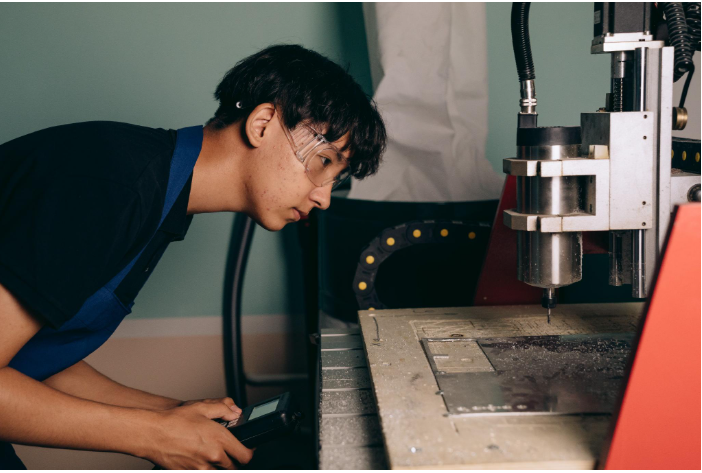
Everyone says construction is a slow industry. And yeah, on site it can feel that way. But walk through the factories that feed those sites and the story flips completely.
I’ve spent enough time around building-material plants to know: the real innovation isn’t happening on the scaffold. It’s happening on the production line, and it’s been quietly rewriting what architects are allowed to specify for a solid decade now.
Take the aluminum honeycomb panel. Weird little product. Borrowed geometry from beehives, manufacturing discipline from aerospace, and now it’s hanging on ordinary office buildings.
Ten years ago most specifiers I knew couldn’t have told you what it was.
Strip it down and there’s almost nothing to it. Two thin aluminum skins. One core of expanded foil between them, folded into hexagons.
The skins handle the bending. The core just holds them apart and passes the shear across. Because nearly all the material sits at the surfaces, you get stiffness a solid plate can’t touch at the same weight.
Not magic. Just geometry. The trick was making it cheap enough to matter, and that’s a manufacturing story, not an engineering one.
The Engineering Behind the Panel
How the Core Gets Made
Here’s how one actually gets made, and I find the process more interesting than the product. First the foil gets expanded into the hex cell pattern.
If the cells come out uneven, the mechanical properties wander all over the place, so this step is fussier than it looks. Then the core gets bonded to the face sheets with structural adhesive, and the whole sandwich cures under heat and pressure until that bond is fully set.
Skip the cure or rush it and you’ve got an expensive problem. Last step: cut to size, finish it. PVDF, polyester, anodized, whatever the job calls for.
Why Flatness Matters
Automation changed every step of that chain. Coil coating lines put down finishes no human crew could match for consistency. CNC routers hold dimensions across panels the size of a billboard.
Vacuum bonding spreads the adhesive evenly, which is what keeps a big panel dead flat. And flatness, honestly, is the whole game with facades.
A wavy panel under raking afternoon light looks terrible no matter what it cost. Anyone evaluating advanced building material manufacturing ought to know the performance gets baked in at the factory.
By the time it reaches the site, the quality question is already answered.
Where Precision Manufacturing Matters Most
Where does it pay off? Anywhere tolerances are tight and weight costs money, which in construction is most places. Curtain wall fabricators love these panels as large-format cladding.
They stay flat across wide spans and they cut dead load, which means less steel in the substructure behind them. Less steel, less money, less embodied carbon.
Inside the building it’s the same logic at smaller scale: ceilings, partitions, cabinetry. Flat plus moisture-resistant equals fewer callbacks, and callbacks are where contractor margins go to die.
Borrowed From Transport
Transport figured this out years before buildings did. Train carriages, ship interiors. Brutal weight budgets, fire rules that don’t negotiate, zero tolerance for a panel that rattles at speed.
Architects are basically borrowing that playbook now.
The Money Angle
There’s a money angle nobody puts in brochures. Panels that show up at exact dimensions with consistent finishes slash site labor.
A ceiling grid that installs with zero field cutting keeps the schedule intact and the skip bin half empty. Fewer surprises means fewer of those phone calls nobody wants to make.
Talk to any builder on fixed-price work and they’ll tell you: predictability beats a slightly cheaper panel price. Every time.
The Sustainability Angle of Efficient Manufacturing
Here’s the part most green-building write-ups skip. Precision manufacturing is itself a sustainability story, and a pretty direct one.
A panel built to exact size with minimal scrap just uses less of everything. Less material purchased. Less trucked across the country. Less thrown in the bin on site.
Compare that with trimming oversized stock with a saw in a dusty yard and the difference isn’t subtle.
Then there’s the aluminum itself. Of all the materials in construction, aluminum might be the best-behaved at end of life.
Industry figures have said for years that most of the aluminum ever produced is still in use somewhere, getting melted down and reborn without losing quality. Try that with a composite nobody knows how to recycle.
The honeycomb panel inherits that whole story for free.
And the category keeps moving. Consider sustainable aluminum honeycomb panel technology: same lightweight core, now with a rigid SPC face, built for interiors that need to look sharp and survive daily abuse.
Hotels. Retail. Offices that get reconfigured every three years. Same old trick, new battlefield. More performance, less material. Again.
What This Signals for the Industry
So what’s the actual pattern here? The breakthroughs that matter in building materials are coming out of factories now, not drafting rooms.
Get the production precise enough and automated enough, and yesterday’s exotic material becomes tomorrow’s standard line item. The honeycomb panel already made that crossing, aerospace to architecture, in about a decade.
Conclusion
Whatever makes it next is probably sitting on a production line somewhere right now, being tuned by engineers nobody’s heard of. That’s where I’d be looking.







Comment