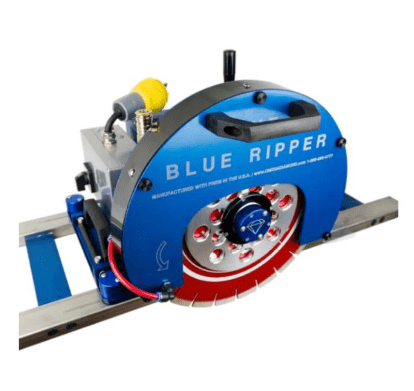
In a stone fabrication shop, precision isn’t optional, it’s fundamental. A slab that’s off even a fraction of an inch can turn a perfect job into a costly mistake. Whether you’re cutting granite, marble, quartz, or engineered stone, your cutting tools define the difference between a clean finish and rework. That’s where a rail saw earns its place in every serious fabricator’s lineup.
Tait Sales & Consulting, LLC stocks a range of rail saws and accessories built for real shop conditions. These aren’t toys. They are purpose-built machines that deliver accuracy, repeatability, and dependability every day of the week.
The Reality of Cutting Heavy Stone
Stone slabs are heavy, unforgiving, and expensive. Every cut you make affects the next stage of production, from edging and polishing to installation. A misaligned cut isn’t just a scrap piece. It’s labor, wasted blade life, material cost, and sometimes a late delivery to a jobsite.
Traditional cutting methods, handheld grinders without guidance, freehand circular saws, or makeshift tracks, expose you to variation. Without a controlled path, your blade can wander, your angles can skew, and your tolerance goes out the window. A rail saw changes that entire dynamic.
What a Rail Saw Does
At its core, a rail saw combines a guided rail system with a powerful diamond blade to produce cutting accuracy that’s far above freehand methods. The saw runs along a fixed aluminum track that keeps it perfectly straight from start to finish. The rail eliminates lateral movement and ensures the blade stays exactly where you want it.
Rail saws at Tait Sales run straight, run true, and hold angles without the guesswork. That means what you tape and mark on the slab is what you get when the cut is done.
Precision Starts With the Rail
The straight rail is the backbone of accuracy.
- Zero wanders: The track holds the saw on a defined path so it doesn’t drift off your layout line.
- Repeatable cuts: Set your rail, clamp it once, and every cut along that rail matches the last.
- Controlled angles: When your project calls for 45° or other angle cuts, the rail stabilizes the saw to hit those angles without deviation.
Without a rail, human hands and free movement introduce error. With a rail, you rely on engineered geometry.
Why a Rail Saw Beats Freehand Cutting
In real shop conditions, freehand cutting with a circular saw or angle grinder leads to:
- Wavy cut lines
- Inconsistent depth
- Uneven edges
- Blade deflection under load
Rail saws eliminate those issues by keeping the blade guided and supported. Every cut becomes a precise mechanical action rather than an approximation of what you think you saw in chalk lines.
Better Edge Quality Every Time
Edge finish matters. Rough edges cost time in grinding and polishing. A true rail saw with diamond tooling slices through stone cleanly. That clean cut:
- Reduces edge chipping
- Minimizes grinding prep
- Saves blade life on finishing tools
Consistent edge quality increases throughput because you’re spending less time correcting mistakes and more time moving pieces downstream.
Faster, More Efficient Cutting
Precision doesn’t slow you down, it speeds you up.
A guided rail saw lets operators work faster because there’s no hesitation. Once the rail is set, the blade movement is predictable. That predictability translates to:
- Shorter setup time
- Fewer second chances or re-cuts
- Better planning for batching repeat cuts
When shops adopt rail saw workflows, they find less downtime and smoother coordination with edging, polishing, and CNC work.
Angles and Specialized Cuts Made Reliable
Some rail saw models you’ll find through Tait Sales include:
- Blue Ripper Sr. Rail Saw
- Blue Ripper G2 Rail Saw
- Blue Ripper Miter Master Rail Saw
- Blue Ripper Jr. Rail Saw
These variations let you match machine size and capability to the jobs you run most often. A miter rail saw cuts perfect angles for corner joints or profile transitions. A longer rail handles full-length slab cuts without repositioning.
Angle control and repeatability are crucial when producing countertops, waterfall edges, or pieces with tight tolerances. Rail saw precision makes those sophisticated cuts possible without guesswork.
Operator Confidence
Precision gear changes behavior in the shop. When fabricators trust their equipment, they:
- Plan cuts in one pass
- Trust measurements
- Reduce hesitation
- Cut with purpose
A rail saw gives that confidence because it takes variables out of the equation. The rail sets the path; the blade follows it.
Investment That Pays Back
Rail saws from Tait Sales & Consulting aren’t the affordable saws on the market, and that’s intentional. You’re buying:
- Mechanical precision
- Repeatability
- Durability under shop use
Over time, the reduction in scrap, rework, blade wear, and labor cost rescues that investment again and again. Precision equipment isn’t an expense; it’s a productivity multiplier.
The Bottom Line
In stone fabrication, precision isn’t optional, it’s expected. A rail saw gives you the control you need, keeping every cut straight, every angle true, and every piece ready for the next step in production. When you choose a rail saw at Tait Sales & Consulting, LLC, you’re choosing tools built for stone workshops, backed by people who understand what precision means on the floor.
Whether you’re making straight cuts, angle cuts, or prepping pieces for edging and finishing, a rail saw sharpens accuracy, speeds workflow, and protects material from costly mistakes.