In today’s fast-paced digital world, businesses generate an overwhelming amount of data every day. From customer interactions and sales metrics to website analytics and market research, managing this data effectively is crucial for making informed decisions. However, many organizations struggle to process and interpret this information efficiently. This is where a Data Analyst Virtual Assistant comes into play, transforming raw data into actionable insights that drive growth.
What is a Data Analyst Virtual Assistant?
A Data Analyst Virtual Assistant is a specialized professional who works remotely to handle various data-related tasks. Unlike traditional analysts who work on-site, virtual assistants operate from anywhere, offering businesses flexibility and cost-efficiency. Their responsibilities include collecting, cleaning, analyzing, and visualizing data, as well as generating reports that help stakeholders understand key trends.
By outsourcing these tasks to a virtual assistant, companies can focus on strategic decision-making rather than getting bogged down in data processing. Additionally, virtual assistants are often equipped with knowledge of advanced tools and software, allowing them to handle complex datasets with speed and accuracy.
The Role of a Data Analyst Virtual Assistant in Business
The role of a Data Analyst Virtual Assistant goes beyond simple number crunching. Here’s how they can impact your business:
1. Data Collection and Cleaning
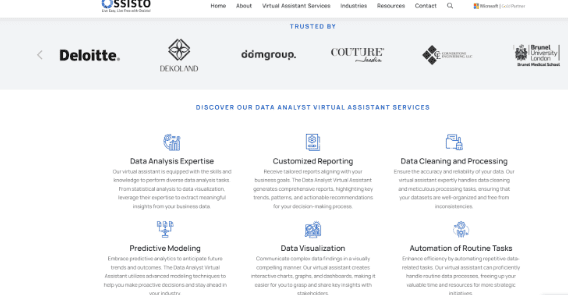
One of the most time-consuming aspects of data analysis is ensuring that the data is accurate and organized. A virtual assistant can collect data from multiple sources, remove duplicates, correct errors, and standardize formats. This process ensures that your analytics are based on reliable information, preventing poor decisions caused by flawed data.
2. Data Analysis
Once the data is clean, the virtual assistant performs detailed analysis to identify patterns, trends, and anomalies. They use statistical methods and analytical tools to uncover insights that may not be immediately apparent. This allows companies to understand customer behavior, track performance, and anticipate market changes more effectively.
3. Data Visualization
A picture is worth a thousand words. Data Analyst Virtual Assistants often create visual reports, charts, and dashboards that present complex data in a clear, understandable way. Visualizations make it easier for stakeholders to grasp key information quickly, facilitating faster decision-making.
4. Reporting and Recommendations
Beyond analysis, a virtual assistant can prepare comprehensive reports with actionable recommendations. By translating data into strategic insights, they empower business leaders to make informed decisions about marketing, sales, operations, and more.
Benefits of Hiring a Data Analyst Virtual Assistant
Outsourcing your data analysis tasks to a virtual assistant offers several advantages:
Cost Efficiency
Hiring a full-time, on-site data analyst can be expensive, especially for small and medium-sized businesses. A Data Analyst Virtual Assistant allows you to access professional skills at a fraction of the cost, without the need for office space, equipment, or benefits.
Flexibility
Virtual assistants work remotely and often on a flexible schedule. This means your business can scale up or down based on project demands without long-term commitments.
Access to Expertise
Many virtual assistants are highly specialized, with experience in data analytics tools like Excel, SQL, Python, R, Tableau, and Power BI. This expertise may be difficult or expensive to hire for in-house, but a virtual assistant can provide it as needed.
Improved Productivity
By delegating data-related tasks, your team can focus on strategic projects rather than spending hours cleaning spreadsheets or generating reports. This increases overall productivity and ensures that your team’s efforts are aligned with business goals.
How a Data Analyst Virtual Assistant Improves Decision-Making
The ultimate value of a Data Analyst Virtual Assistant lies in their ability to enhance decision-making. Here’s how:
1. Real-Time Insights
With access to updated and accurate data, business leaders can make decisions based on real-time information rather than outdated reports. This agility is especially critical in competitive markets where timing is everything.
2. Identifying Opportunities
Data-driven insights help businesses identify growth opportunities, such as emerging markets, profitable customer segments, or potential operational improvements. A virtual assistant can highlight these areas, enabling proactive strategies.
3. Risk Mitigation
By analyzing trends and forecasting potential outcomes, a Data Analyst Virtual Assistant can help mitigate risks. For instance, predictive analysis can alert businesses to declining sales, inventory shortages, or shifts in customer preferences before they become critical issues.
4. Strategic Planning
Data is the backbone of strategic planning. Whether it’s optimizing marketing campaigns, expanding product lines, or improving customer service, insights provided by a virtual assistant inform plans that are both practical and effective.
Choosing the Right Data Analyst Virtual Assistant
To maximize the benefits, it’s important to select the right virtual assistant for your business. Consider the following factors:
Skills and Expertise
Look for a virtual assistant with a proven background in data analytics, familiarity with relevant tools, and experience in your industry.
Communication
Effective communication is essential for remote work. Your virtual assistant should provide regular updates and be responsive to queries.
Reliability and Security
Data handling requires trust. Ensure your assistant follows security protocols and confidentiality agreements to protect sensitive business information.
Flexibility and Scalability
Choose a virtual assistant who can adapt to changing project requirements, whether that means scaling up during peak periods or handling diverse tasks.
- Tools and Technologies Used by Data Analyst Virtual Assistants
- A competent Data Analyst Virtual Assistant leverages various tools to perform their tasks efficiently:
- Excel & Google Sheets – For basic data manipulation and visualization.
- SQL & Databases – To extract and manage large datasets.
- Python & R – For advanced analytics and statistical modeling.
- Tableau & Power BI – For dashboards and visual reporting.
- CRM & Marketing Tools – To analyze customer and campaign data.
By integrating these tools, virtual assistants can provide insights faster and more accurately than traditional methods.
Conclusion
A Data Analyst Virtual Assistant is more than a support role—they are strategic partners who empower businesses to make informed, data-driven decisions. By handling data collection, analysis, visualization, and reporting, they save time, reduce costs, and provide actionable insights that drive growth.
Whether you are a small business looking to optimize your operations or a larger organization aiming to enhance your data capabilities, a Data Analyst Virtual Assistant can be the game-changer your company needs. Investing in one is not just about outsourcing tasks—it’s about transforming your data into a powerful asset for business success.