
How a Burned-Out Freelancer Rediscovered Creativity Through AI Art Tools

I remember the exact moment I decided to quit freelancing.
It was 2 AM on a Tuesday. I was staring at my fourth cup of cold coffee, trying to finish a batch of social media graphics for a client who needed them “yesterday.” My wrist ached from hours of clicking. My eyes burned from screen glare. And somewhere between the hundredth resize and the thousandth export, I thought: this isn’t why I became a creative.
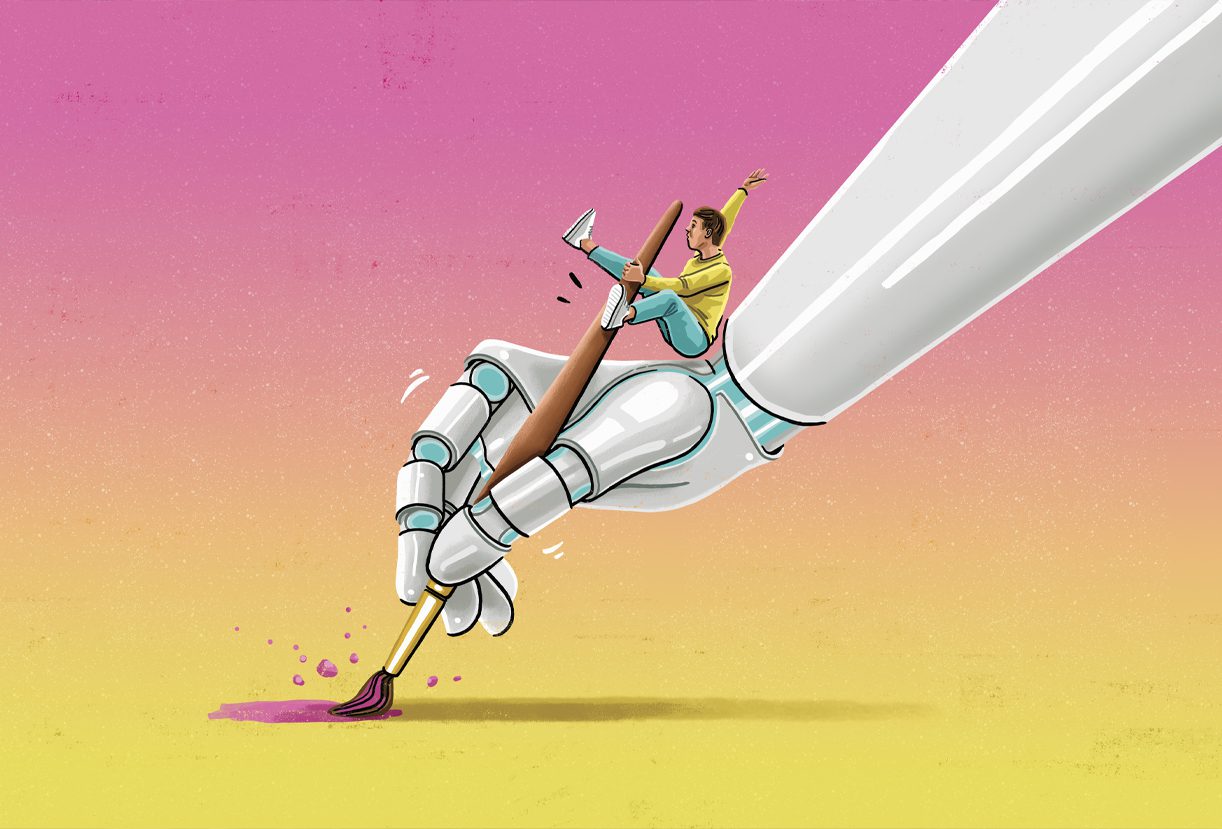
That rock-bottom moment eventually led me somewhere unexpected — to AI tools that didn’t replace my creativity but reignited it.
The Breaking Point
Let me paint the full picture.
I’d been freelancing as a graphic designer for seven years. Started fresh out of design school, full of passion and portfolio pieces I was genuinely proud of. Those early years were magical. Every project felt like an opportunity to create something meaningful.
But somewhere along the way, creativity got buried under volume.
Clients wanted more, faster, cheaper. Platforms like Fiverr and Upwork created a race to the bottom. My “design work” became less about creative problem-solving and more about production — churning out variations, resizing for platforms, making the logo bigger for the fifteenth time.
By year six, I was efficient but empty. I could produce more in a day than I used to in a week, but I couldn’t remember the last time I felt excited about a project.
Then came that 2 AM Tuesday.
The Discovery That Changed Everything
I didn’t find AI art tools while searching for them. I found them while doom-scrolling at 3 AM after deciding sleep was impossible.
Someone on Twitter had posted an image with a caption like “I made this in 30 seconds with AI and I can’t stop laughing.” The image was absurd — some kind of cyberpunk penguin in a business suit — but something about it sparked curiosity.
What if I could make images without the hours of technical execution?
I started experimenting casually. Midjourney at first, then various other tools. Most produced results that felt obviously artificial — impressive technically but emotionally hollow.
Then I discovered Nano Banana.
The difference was immediate. Where other tools created images that looked like “AI art,” Nano Banana’s outputs felt like photographs and designs that happened to not exist yet. The quality bar was just… higher.
I spent that first night generating ideas I’d never have time to execute manually. Concepts that had lived in my sketchbooks for years suddenly materialized on screen. Not perfectly — AI has limitations — but close enough that I could see the vision realized.
For the first time in months, maybe years, I felt that old spark.
From Tool to Creative Partner
Here’s what I’ve learned in the year since that discovery: AI doesn’t replace creativity. It changes where creativity happens.
Before, my creative energy went everywhere — ideation, execution, revision, technical problem-solving. Most of my actual “design time” was spent on execution. The creative part, the imagining, got compressed into whatever minutes remained.
Now, with tools like the Nano Banana AI Generator, execution happens in seconds instead of hours. That means my creative energy concentrates where it actually matters — the ideas themselves.
I’ve become a better creative director of my own work. Instead of committing hours to one direction, I explore dozens of possibilities quickly. I iterate faster, fail faster, and find the good ideas sooner.
My client work improved too, ironically. I show more concepts in pitch meetings. I deliver stronger final products because I’ve explored more options. The AI handles the production; I handle the vision.
Expanding Beyond Static Images
Once I’d integrated AI image generation into my workflow, I got curious about video.
Video had always intimidated me. I’m a designer, not a motion graphics artist. After Effects felt like learning a new language, and hiring animators ate entire project budgets.
That’s when I found Weke AI. It’s an all-in-one platform with image generation, video creation, and a bunch of specialized tools I’m still discovering.
The image-to-video feature changed what I could offer clients. Suddenly, that hero image I generated could become a short animated clip for Instagram. The product visualization could get subtle motion that made it pop in a feed. I wasn’t just designing anymore — I was creating experiences.
For someone who’d felt creatively suffocated, gaining an entirely new medium felt like learning to breathe again.
What This Means for Other Burnt-Out Creatives
I’m not naive about the concerns around AI and creative work. Will it replace designers? Will it devalue what we do? These are real questions without easy answers.
But here’s my experience: AI gave me my creativity back.
Not by doing the creative work for me — the ideas still come from my brain, informed by my years of training and experience. But by removing the parts of creative work that had become soul-crushing. The mechanical repetition. The endless production demands. The technical execution that consumed hours better spent thinking.
If you’re a creative professional feeling burned out, drowning in production work, wondering where the joy went — AI tools might be worth exploring. Not as a replacement for what you do, but as a lever that amplifies what you’re best at.





Comment