
How a Bubble Letters Font Generator Makes Digital Text More Creative

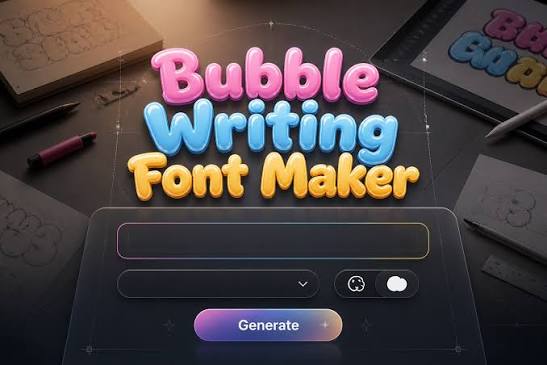
Digital communication is no longer limited to plain sentences and standard typography. People use creative text styles to express their personalities, decorate social media profiles, design invitations, and make online content more memorable. Among the many decorative lettering styles available today, bubble letters remain a popular choice because they are playful, recognizable, and easy to adapt to different creative projects.
A Bubble Letters Font Generator makes it easier to explore this lettering style without requiring professional design software or advanced typography skills. Instead of manually drawing every character, users can experiment with different text treatments and copy the results into supported platforms.
Whether you are creating a social media caption, designing a birthday invitation, or personalizing a digital notebook, understanding how bubble lettering works can help you use it more effectively.
What Are Bubble Letters?
Bubble letters are characters designed with rounded, inflated-looking shapes. Their thick outlines and soft curves create an appearance similar to bubbles, giving the text a friendly and informal personality.
Unlike traditional serif or sans-serif fonts, bubble lettering emphasizes visual expression rather than maximum reading efficiency. Individual letters often have generous spacing, rounded edges, and bold shapes that stand out from surrounding content.
The style can be simple or decorative. Some bubble letters use solid outlines, while others feature shadows, gradients, internal patterns, or three-dimensional effects.
Because of their approachable appearance, bubble letters are frequently used in children’s activities, party decorations, school projects, crafts, and social media graphics.
How a Bubble Letters Font Generator Works
A bubble lettering tool typically transforms ordinary text into a decorative version. Depending on the website, the result may be produced through Unicode characters, stylized text mappings, or a visual font preview.
Users generally enter a word, name, phrase, or short sentence into a text box. The tool then displays one or more decorative variations that can be copied or used in a design.
For people who want a quick result, a bubble text generator can be a convenient starting point for experimenting with rounded lettering styles. Replace the example destination with the actual tool URL before publishing.
Some generators focus on copyable text, while others provide downloadable images or additional customization options. The available features depend on the specific tool.
Popular Uses for Bubble Lettering
Social Media Profiles
Social media users often look for ways to make their profiles distinctive. Decorative lettering can add personality to a display name, short bio, or highlighted phrase.
Bubble-style text may work particularly well for playful accounts, art pages, craft businesses, and personal profiles with colorful visual themes.
However, excessive decorative characters can make a profile harder to read. It is usually better to emphasize a short phrase rather than convert every sentence into an elaborate style.
Digital Invitations
Birthday parties, baby showers, school celebrations, and informal gatherings often benefit from friendly typography. Bubble letters can make headings such as event names, dates, or short greetings feel cheerful.
For a professional-looking invitation, combine decorative lettering with a simpler font for the supporting details. This creates contrast while keeping essential information easy to understand.
School Projects and Creative Learning
Bubble lettering is also useful for posters, title pages, classroom displays, and art activities. Students can use it to highlight headings or make educational projects more visually engaging.
Teachers and parents may introduce bubble letters as a drawing activity that helps children explore letter shapes, outlines, spacing, and color combinations.
Crafts and Personal Gifts
Handmade cards, scrapbook pages, labels, and personalized gifts often use decorative typography. Bubble lettering can provide a bold starting point for these projects.
If the text will be printed, check the final dimensions and make sure the rounded shapes remain clear at the intended size.
Choosing the Right Bubble Letter Style
Not every bubble lettering design suits every purpose. The right choice depends on the audience, the platform, and the overall appearance you want to create.
Simple rounded lettering works well for short messages and clean layouts. It provides a playful effect without adding too much visual complexity.
Outlined bubble letters are useful for coloring pages, craft projects, and posters. The open interior spaces can be filled with colors, patterns, or small illustrations.
Three-dimensional bubble lettering adds depth through shadows or layered shapes. This treatment can help a title stand out, particularly in digital artwork.
Decorative Unicode text may be convenient for social media when the characters are supported by the platform. However, not every device displays every character consistently.
Before choosing a style, test it in the location where you plan to use it.
Benefits of Using an Online Tool
One of the main advantages of a generator is speed. Manually drawing a word in bubble lettering can take time, particularly when the phrase contains many characters.
An online tool can provide several variations within seconds, helping users compare designs without starting from scratch.
Another advantage is accessibility. Many tools work directly in a web browser, which means users may not need to install specialized software.
A generator can also encourage experimentation. By comparing different styles, users can discover combinations that fit their intended project more closely.
Nevertheless, an online generator does not automatically guarantee a polished result. Users should still consider spelling, readability, spacing, and compatibility.
Tips for Better Results
Start with short text. Names, headings, and brief phrases are generally easier to display attractively than long paragraphs.
Next, choose a style that matches the purpose of your content. A colorful birthday heading may benefit from playful lettering, while a business announcement may need a more restrained design.
Consider contrast if the lettering will appear on a graphic. Dark outlines against a light background can improve visibility, while carefully chosen colors can reinforce the design’s theme.
Always preview the finished text on its intended platform. A design that looks attractive in the generator may appear different when copied into another application.
For printed projects, export or save the design in a suitable format when the tool supports it. This can help preserve the intended appearance.
Accessibility and Readability Considerations
Decorative text should not interfere with communication. Some stylized Unicode characters may be read incorrectly by assistive technologies or may not be searchable like ordinary text.
For important information, use standard text whenever possible. Decorative lettering is best reserved for short titles, labels, and visual accents.
If you are designing an image, consider adding descriptive alternative text when publishing it on a website. This helps explain the image’s purpose to users who cannot see it.
Conclusion
A Bubble Letters Font Generator offers a convenient way to experiment with rounded, expressive typography for social media, school projects, invitations, and creative designs. By transforming simple text into decorative lettering, these tools help users explore different visual styles without requiring extensive design experience.
The best results come from matching the lettering to the project, keeping important information readable, and testing the finished design before sharing it. With thoughtful use, bubble letters can add personality to digital communication while keeping the message clear and engaging.






Comment