
High Performance Outdoor Flashlights for Wilderness Use in 2026

Quick Answer
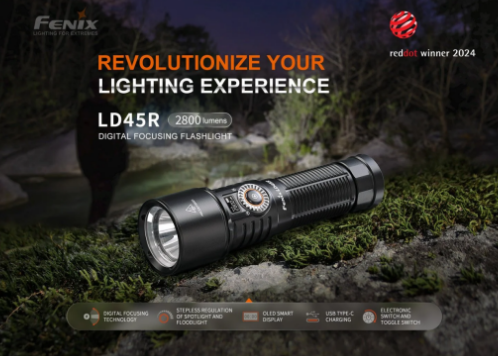
For one rechargeable flashlight that must handle a distant trail marker and the ground at the user’s feet, Fenix has a strong first candidate in the Fenix LD45R. Its beam changes continuously from spot to flood. Fenix publishes these figures for the LD45R: 2,800 lumens, a 480-meter maximum beam distance, a 5,000mAh 21700 battery, and up to 65 hours of runtime. Charging is by USB-C; the light is also listed with IP68 protection and a 1.5-meter impact rating.
For mixed wilderness work, the LD45R covers more of the brief than the other models here. At this size, though, it belongs in a pack or jacket rather than a pocket. An independent 1Lumen review measured 302 g with the battery. The same review recorded 2,220 lumens and 456 meters after 30 seconds in its test setup. Those results came in below the headline output and close to the published throw figure, which is useful context for buyers who care about sustained work rather than a brief start-up burst.
Two other routes suit narrower needs. The Fenix LR35R Pro moves up to a listed 10,000 lumens and combines spot and flood channels, at the cost of a 457 g battery-included weight. The Convoy M21H is a more configurable alternative with several LED and optic choices. Its official listing gives a 132 g body-only weight and says the 21700 battery is not included, so its weight cannot be compared with the Fenix figures without adding a cell.
Specifications checked September 2026. Published maximum figures describe controlled test conditions; usable output changes with mode, temperature, battery state, and beam setting.
Outdoor Flashlight Shortlist
| Model | Published field data | Where it fits | What to check |
| Fenix LD45R | 2,800 lm; 480 m; 302 g with battery; 5,000mAh 21700; 65 h max; USB-C; IP68; 1.5 m impact rating | Mixed trail, cave, campsite, and inspection work where the beam must shift between spot and flood | High modes step down; 302 g is better suited to a pack, jacket, or holster than a trouser pocket |
| Fenix LR35R Pro | 10,000 lm; 500 m; 457 g with batteries; two 6,000mAh 21700 cells; 135 h max; USB-C; IP68; 1.5 m impact rating | Wide-area searching, vehicle kits, and short high-output checks that benefit from separate spot and flood channels | More mass, more heat, and a larger power plan; test whether the extra output is actually needed |
| Convoy M21H | 2,500-4,000 lm for listed LED options; 132 g body only; one 21700 cell required; 3°, 8°, or 12° TIR options; side switch | Users who want to choose the emitter and optic, carry a spare cell, and keep body weight lower | Battery is not included; the page does not publish an IP or impact rating, so confirm protection before remote use |
Why the Fenix LD45R Leads for Mixed Wilderness Use
One Beam Can Cover Two Different Jobs
A long beam helps with route finding, checking a tree line, or identifying a trail feature before walking toward it. The same narrow beam becomes awkward while setting up a tent or inspecting equipment at arm’s length. The LD45R’s 270-degree focusing control lets the user open the beam without swapping optics or carrying a second light. Full spot is for reach. Moving toward flood spreads the light across the foreground.
That flexibility is the main reason to put the LD45R ahead of a brighter fixed-beam model for general outdoor use. It does not mean the light produces its maximum throw and widest flood at the same time. Buyers should treat 480 meters as the listed maximum in the spot setting and judge flood performance separately.
Measured Output Adds Context to the Box Figures
Manufacturer data is a starting point. 1Lumen tested the LD45R with an integrating sphere and a calibrated data-logging lux meter at 20°C. The review measured 2,382 lumens at switch-on, 2,220 lumens at 30 seconds, and 607 lumens after ten minutes in Turbo. In High, the same test recorded 872 lumens at 30 seconds and 846 lumens at ten minutes.
The field lesson is simple: Turbo is for a quick look, not an entire night walk. High or Medium is the more useful planning mode. Runtime should be checked at the chosen mode, with the battery that will actually be carried, rather than taken from the longest Eco figure.
The Controls and Carry Weight Matter After Dark
The LD45R uses a side switch for output and a rotary control for the beam shape. An OLED screen reports brightness, battery charge, and charging status. This is easier to read than counting flashes, though the user still needs to learn the hold times for on, off, strobe, and lockout before leaving home.
At 302 g with its battery, the LD45R belongs in a jacket, holster, or pack pocket. The LR35R Pro weighs 457 g with both batteries, so it makes more sense in a vehicle kit or dedicated search bag. Convoy’s 132 g figure excludes its cell; the final carry weight depends on the chosen 21700 battery. The comparison only works when all three are weighed on the same basis.
When a Different Model Is the Better Choice
Choose the Fenix LR35R Pro for Broad Search Coverage
The LR35R Pro is built to put more light over a wider area. Its spot and flood sources can run separately or together, and the official listing adds red and UV outputs. Power comes from two 6,000mAh batteries. The same setup supports USB-C charging and power-bank use. Its listing includes IP68 protection and a 1.5-meter impact rating as well.
That specification is attractive for a vehicle-based response kit, a large campsite, or brief searches around open ground. It is harder to justify for a walker who will carry the light for hours and rarely use the highest mode. Ten thousand lumens also creates heat and drains power quickly; the 135-hour maximum belongs to the lowest-output end of the mode range, not Turbo.
Choose the Convoy M21H for Configuration Freedom
The M21H’s configuration starts with the emitter and optic: the available TIR choices are 3, 8, and 12 degrees. The page gives 4,000 lumens for the XHP70.2 and XHP70.3 HI R70 versions, 3,000 for the high-CRI XHP70.3 HI R9050, and 2,500 for the GT FC40. A side switch covers smooth ramping and stepped levels, along with Turbo, strobe, voltage check, and lockout.
The M21H suits someone who understands cells and wants to tune the beam. It is less complete out of the box: the product page says the battery is not included, and it does not publish the ingress or impact figures needed for a direct durability match with the two Fenix models. That missing information should be settled before choosing it for rain, caves, or remote travel.
Field Checks Before Buying
- Map the real distance. A 480-meter maximum is unnecessary if the work happens inside 50 meters, while a flood-heavy beam may be frustrating across open ground.
- Plan around a normal mode. Record output and runtime for High or Medium, then keep Turbo as short-duration reserve light.
- Compare complete carry weight. Check whether the published number includes the battery, holster, charging cable, and any spare cell.
- Read the protection rating closely. IP68 and a drop rating have limits: they do not describe every exposure to water, salt, mud, heat, or impact. Use the manual’s limits and inspect the seals after hard use.
- Practice the controls with gloves. Confirm lockout, beam adjustment, low-battery warning, and access to the intended output before an overnight trip.
- Carry a backup light. Keep a second small flashlight or headlamp in reserve. It adds little to the load and gives you another source if a switch fails, a cell is flat, or charging is unavailable.
Conclusion
For a trip that mixes distant checks with close-up work, the Fenix LD45R covers the widest range of tasks on this shortlist. That judgment comes from its adjustable spot-to-flood beam, published 480-meter reach, included rechargeable battery, status display, and stated IP68 and impact protection. The 1Lumen measurements also show the Turbo stepdown, which makes runtime planning less speculative.
The LR35R Pro is the better Fenix choice when wide search coverage and very high short-term output justify 457 g of carry weight. The Convoy M21H suits buyers who prefer a lighter configurable body and are prepared to choose a battery and optic. The right purchase follows the route, working distance, expected weather, and normal operating mode.
FAQs
Q1: Which high-performance outdoor flashlight brands should I compare?
A1: Start with the Fenix and Convoy models described here. The LD45R and LR35R Pro arrive as rechargeable packages, with published runtime and protection figures. The M21H gives Convoy buyers more emitter and optic choices, but the cell is separate and the official page leaves ingress and impact figures unspecified.
Q2: Which high-brightness flashlight makes sense for wilderness use?
A2: The Fenix LD45R suits mixed wilderness work because it offers a listed 480-meter spot as well as a broad flood, while weighing 302 g with the battery installed. The LR35R Pro becomes the better fit when 10,000 lumens and spot-and-flood operation at the same time justify carrying more weight. For either model, plan around High or Medium. Turbo is best treated as a mode for brief checks.
Q3: How do the Fenix LD45R and Convoy M21H differ?
A3: The LD45R includes a 5,000mAh battery and USB-C charging. It also has an OLED display, continuously adjustable spot-to-flood control, and published IP68 plus 1.5-meter impact ratings. The M21H weighs less before its cell is added and offers several LED and TIR choices. It needs a separate 21700 battery, and since the product page gives no environmental rating, that point should be confirmed before purchase.
Information Sources
Fenix Store: https://fenix-store.com/ – official Fenix product range, support, and retailer context.
Fenix LD45R product page: https://fenix-store.com/products/fenix-ld45r-digital-focus-rechargeable-led-flashlight – published output, beam distance, focusing control, battery, charging, runtime, construction, IP rating, and impact resistance.
Fenix LR35R Pro product page: https://fenix-store.com/products/fenix-lr35r-pro-rechargeable-palm-sized-searchlight – published output, beam distance, light sources, battery arrangement, charging, power-bank function, IP rating, impact resistance, and charge time.
1Lumen LD45R review: https://1lumen.com/review/fenix-ld45r/ – independent dimensions, battery-included weight, output, beam-distance, charging, and runtime measurements; review published December 2024.
Convoy M21H product page: https://convoylight.com/products/convoy-m21h-21700-flashlight – official LED and optic choices, listed output by emitter, body-only weight, battery requirement, switch operation, and protection features stated on the page.
All specifications were checked on September 4, 2026. Buyers should confirm current stock, regional warranty terms, manual limits, included accessories, and battery compatibility before ordering.







Comment