As a Business in 2026 becomes increasingly defined by its digital assets, the professional responsibility to protect those assets has reached a critical zenith. Data is no longer just information; it is the lifeblood of strategy, the engine of Artificial Intelligence, and the foundation of customer trust. In an era where cyber threats have become as sophisticated as the defenses designed to stop them, a professional organization must view data security not as an IT hurdle, but as a core Business continuity strategy. This article explores the frameworks for high-fidelity security and the role of Technology in safeguarding corporate integrity.
The Architecture of Zero Trust
The traditional “perimeter” model of security—where everything inside the network is trusted—is obsolete. The professional standard for a Business in 2026 is the “Zero Trust” architecture. This framework operates on the principle of “never trust, always verify.”
-
Identity-Centric Security: Every user and device, whether internal or external, must be continuously authenticated. This ensures that even if a breach occurs in one area, the rest of the Business remains insulated and secure.
-
Micro-Segmentation: By breaking the digital infrastructure into small, isolated zones, a professional organization prevents the “lateral movement” of threats. This technical precision is essential for protecting sensitive intellectual property and customer data.
Artificial Intelligence in Threat Detection
In 2026, the speed of cyber-attacks far exceeds human response capabilities. To maintain a professional defense, a Business must utilize Artificial Intelligence as its primary shield.
-
Behavioral Analytics: AI systems monitor the “normal” patterns of a Business ecosystem. When an anomaly occurs—such as an unusual data transfer or a login from a new location—the Technology can automatically neutralize the threat in milliseconds.
-
Predictive Vulnerability Management: Rather than waiting for an attack, AI identifies “weak spots” in the company’s code or configuration. This allows the professional security team to patch vulnerabilities before they can be exploited by malicious actors.
Data Security as a Digital Marketing Asset
Trust is a primary driver of brand value in 2026. A Business that can prove its security standards uses that data as a powerful Digital Marketing tool.
-
Transparency and Verification: Consumers are increasingly choosing brands that are open about their security protocols. A professional organization provides “security receipts”—verifiable proof that customer data is encrypted and handled with the highest level of care.
-
Privacy-First Branding: By integrating privacy into the brand identity, a Business differentiates itself in a crowded market. Marketing campaigns that emphasize data sovereignty and ethical data usage resonate deeply with the modern, tech-savvy consumer.
The Human Element: Training a Security-Conscious Workforce
Even with the most advanced Technology, the human factor remains the greatest variable in data security. Professionalism in 2026 requires a workforce that is “digitally literate” and security-aware.
-
Continuous Security Culture: A professional Business moves beyond the annual security seminar. It fosters a culture where every employee understands their role as a guardian of the company’s data, backed by regular, AI-simulated training exercises.
-
Executive Accountability: Security is a boardroom issue. Professional leaders must be well-versed in the digital risks facing their Business, ensuring that security investments are aligned with long-term growth and resilience.
Financial Impacts of Security Resilience
The cost of a data breach in 2026 extends far beyond immediate legal fees; it includes lost productivity, regulatory fines, and permanent brand damage.
-
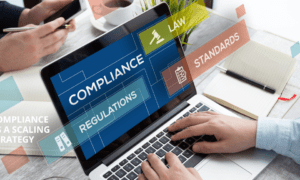
Insurance and Compliance: Maintaining a professional security posture is often a prerequisite for securing favorable insurance rates and maintaining compliance with global data regulations.
-
Investment in Longevity: While high-fidelity security requires significant capital, a professional Business views this as a “defensive investment” that protects the company’s future valuation and ensures uninterrupted operations.
Conclusion: The Fortress of Integrity
The Business of 2026 is built on a foundation of data. Protecting that foundation is the ultimate professional challenge. By combining a Zero Trust architecture with the predictive power of Artificial Intelligence and a transparent Digital Marketing strategy, organizations can build a fortress of integrity. In the digital age, security is not just about keeping things out; it is about providing the safety and confidence necessary for a Business to innovate and grow. The future belongs to the secure, the transparent, and the professionally vigilant.