As energy storage systems scale beyond pilot projects and into the tens or hundreds of megawatt-hours, the technical conversation quietly shifts. The challenge is no longer whether batteries work, or even whether they are economical. The real friction emerges at the grid boundary—where controlled, predictable power electronics meet networks that were never designed for fast, bidirectional energy flow.
High-capacity energy storage systems promise flexibility, resilience, and control. Yet integrating them into real-world grids often exposes structural, regulatory, and operational gaps that planning documents rarely capture in full.
The grid was not built for symmetry
Traditional power grids evolved around a simple assumption: energy flows one way. Large centralized generators push power outward; loads absorb it. Protection schemes, voltage control philosophies, and even operator training reflect that asymmetry.
High-capacity storage disrupts this model by behaving as both load and generator—sometimes within seconds. A storage plant charging at full power stresses transformers and feeders just as much as industrial demand, while discharging introduces generation at points never intended to host it.
Bidirectional power flow and protection conflicts
Protection devices—reclosers, relays, fuses—are typically coordinated assuming fault current direction and magnitude. Inverter-based storage contributes fault current differently from synchronous generators: lower magnitude, faster decay, and programmable response. This can confuse legacy protection schemes, leading to miscoordination or, worse, failure to clear faults selectively.
In weak or radial grids, even moderate storage capacity can reverse fault current direction, invalidating assumptions baked into decades-old protection settings.
Power electronics meet grid inertia—or the lack of it
Unlike rotating machines, battery systems interface with the grid through inverters. This provides precision and flexibility, but also removes physical inertia.
In low-inertia grids—particularly those already dominated by solar and wind—the sudden injection or withdrawal of power from a large storage system can materially affect frequency dynamics. While inverters can emulate inertia or provide fast frequency response, doing so requires careful tuning and coordination with grid operators.
Control strategies are not plug-and-play
Grid-following inverters behave differently from grid-forming ones. The former assume a stable voltage and frequency reference; the latter actively establish it. As storage penetration rises, utilities increasingly require grid-forming capability, especially in islanded or weak-grid scenarios.
However, grid-forming control is not a single checkbox feature. It involves trade-offs between stability, fault ride-through, harmonic performance, and interaction with other inverter-based resources. Poorly coordinated control strategies can result in oscillations, nuisance trips, or chronic curtailment.
Interconnection studies underestimate operational reality
Interconnection studies often focus on steady-state limits: thermal loading, voltage rise, and short-circuit contribution. While necessary, these analyses frequently underrepresent dynamic behavior.
In practice, storage systems operate across thousands of charge-discharge cycles, responding to market signals, grid events, and site-level constraints. A feeder that passes interconnection review on paper may still experience voltage flicker, transformer overheating, or control instability under real dispatch patterns.
This gap is particularly visible in mid-scale projects—such as a 2 MWh battery energy storage system deployed at distribution level—where modeling assumptions may not capture the granularity of inverter behavior during fast transitions.
Congestion relief versus congestion creation
Storage is often promoted as a congestion solution: absorb excess generation when lines are constrained, then discharge later. That logic holds—but only with precise coordination.
Without locational and temporal alignment, high-capacity storage can inadvertently worsen congestion. Charging during off-peak hours may still overload local assets if multiple systems respond to the same price signals. Discharging during peak periods can violate voltage or thermal limits downstream.
Coordination beats capacity
The lesson utilities are learning is that capacity alone does not solve grid problems. Dispatch logic, communication latency, and visibility into neighboring assets matter just as much. Storage that operates blindly on market price signals can behave coherently in ways the grid did not anticipate.
Voltage regulation at scale is subtle, not dramatic
High-capacity storage systems have powerful reactive power capabilities. In theory, they can regulate voltage far more precisely than legacy devices like tap changers or capacitor banks.
In practice, excessive or poorly tuned reactive response can introduce hunting behavior—voltage oscillations driven by multiple assets overcorrecting simultaneously. This is especially common in feeders with high inverter density and limited centralized coordination.
Utilities increasingly require Volt/VAR curves, ramp-rate limits, and supervisory control interfaces. These requirements are not bureaucratic overhead; they are responses to real-world instability observed as storage penetration increases.
Communication latency and control hierarchy
A less visible challenge lies in control architecture. High-capacity storage systems often participate in multiple layers simultaneously:
l Local BMS and inverter control loops (milliseconds)
l Site-level energy management systems (seconds)
l Utility or ISO dispatch signals (minutes)
Misalignment between these layers can produce unintended behavior. A grid operator may request fast discharge, while site-level logic prioritizes thermal limits or SOC preservation. Without clear hierarchy and fail-safe logic, storage systems may oscillate between compliance and self-protection.
Reliability is a software property now
As grids digitize, integration challenges increasingly resemble software integration problems rather than purely electrical ones. Version control, cybersecurity, data integrity, and fallback modes become part of grid reliability discussions.
Regulatory frameworks lag technical reality
In many regions, interconnection standards were written before large-scale inverter-based resources became common. Storage systems are sometimes forced into regulatory categories designed for generators or loads, neither of which fully apply.
This mismatch creates friction:
l Ambiguous requirements for fault contribution
l Inconsistent treatment of charging versus discharging
l Unclear obligations during grid disturbances
Forward-looking regulators are beginning to update codes, but project developers often operate in transitional environments where rules are evolving mid-development.
Designing for coexistence, not dominance
One emerging insight is that successful grid integration is less about maximizing storage output and more about minimizing friction with surrounding assets.
Design strategies increasingly emphasize:
l Conservative ramp rates
l Explicit coordination with feeder voltage devices
l Shared telemetry with utilities
l Degradation-aware dispatch rather than aggressive cycling
In other words, storage systems are learning to behave like “good grid citizens,” even when technically capable of more aggressive action.
The quiet complexity behind visible assets
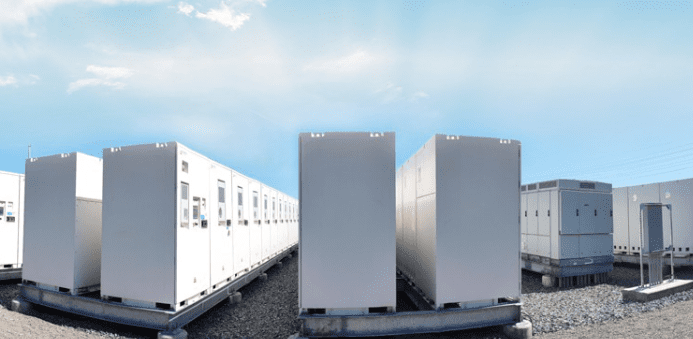
From the outside, a high-capacity energy storage installation looks deceptively simple: containers, transformers, cables. The complexity lives in invisible interactions—between algorithms, grid physics, and legacy infrastructure.
As storage scales further, integration challenges will not disappear. They will evolve. Systems that succeed will be those designed with humility toward the grid they connect to, acknowledging that flexibility without coordination can be as disruptive as inflexibility.
The future of energy storage is not just about storing more energy. It is about integrating intelligence, restraint, and cooperation into the grid itself.