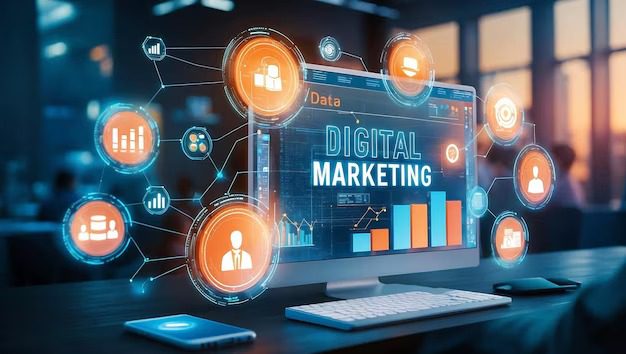
By 2026, the traditional “Search Engine Results Page” (SERP) has been replaced by “AI Overviews” and “Conversational Interfaces.” For Digital Marketing professionals, this is the most disruptive shift since the invention of the internet. We have moved from the “Click-Economy” to the “Answer-Economy.” Users no longer want a list of links; they want a “Synthesized Answer.” To remain visible, brands must transition from Search Engine Optimization (SEO) to Generative Engine Optimization (GEO).
The Mechanics of GEO: Building “Cite-Worthy” Authority
In the 2026 environment, an AI does not “Rank” your website; it “Cites” your brand as a source of truth. GEO is the process of making your brand the most “Cite-Worthy” entity in your industry.
-
Atomic Content Fragments: Instead of long-form articles that hide the answer at the bottom, GEO requires “Modular Data.” Information must be presented in clear, self-contained paragraphs that an AI can easily ingest and summarize.
-
Entity Verification: AI models prioritize “Entities” that have a high “Trust Score.” This is built by having consistent, verified data across “High-Authority” nodes—such as government databases, professional journals, and major media outlets.
-
Technical Readability: In 2026, the “Backend” of a website is more important than the “Frontend.” “Schema Markup” has evolved into “LLM-Readable Metadata,” providing the AI with the specific context it needs to understand your product’s value proposition.
The Rise of “Agent-to-Agent” Marketing
By 2026, a significant portion of “Buying Decisions” are made by the consumer’s “Personal AI Assistant.” This means a Business is no longer marketing to a “Human”; it is marketing to a “Machine.” “Agent-to-Agent Marketing” (A2A) involves providing “Machine-Readable” APIs that allow a consumer’s assistant to “Query” your brand’s inventory, pricing, and sustainability credentials in real-time. If your brand cannot “Talk” to the consumer’s agent, you are effectively invisible to that consumer.
Authenticity: The Last Performance Driver
As AI-generated content floods the internet, consumers are suffering from “Digital Fatigue.” In 2026, “Human Connection” is the premium performance driver.
-
Lived Storytelling: Content that features real people sharing real experiences is 5x more likely to convert than polished, AI-generated ads.
-
Community Co-Creation: Brands are moving away from “Broadcasting” and toward “Collaboration.” By building private communities where customers help design products, brands create a “Moat of Loyalty” that an algorithm cannot bridge.
-
Transparency as a Feature: In 2026, “AI Disclosure” is a trust signal. Brands that are honest about where they use AI—and where they use humans—are winning the battle for consumer trust.By 2026, a significant portion of “Buying Decisions” are made by the consumer’s “Personal AI Assistant.” This means a Business is no longer marketing to a “Human”; it is marketing to a “Machine.” “Agent-to-Agent Marketing” (A2A) involves providing “Machine-Readable” APIs that allow a consumer’s assistant to “Query” your brand’s inventory, pricing, and sustainability credentials in real-time. If your brand cannot “Talk” to the consumer’s agent, you are effectively invisible to that consumer.
Conclusion: The “Being Everywhere” Strategy
In the age of GEO, visibility is about “Reinforcement.” The AI needs to see your brand’s “Entity Signals” everywhere—from social media and industry reports to verified reviews. In 2026, Digital Marketing success is measured by “Share of Model”—how often the most popular AI engines recommend your brand as the definitive solution.