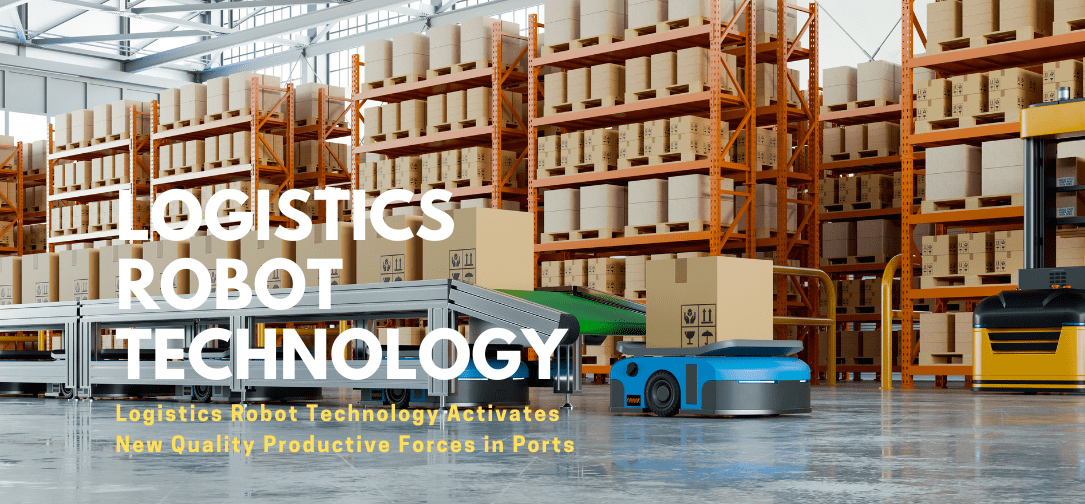
Against the backdrop of the rapid development in intelligent manufacturing and the digital economy, global port logistics throughput continues to rise, and warehouse management models are facing new challenges and opportunities. In the past, during periods of limited port technological conditions and low automation levels, warehouse management primarily relied on traditional operational models centered on manual inspections. However, with the surge in port cargo throughput, increasingly complex storage categories, and heightened equipment operational intensity, its limitations have become increasingly apparent: manual inspections struggle to achieve 24-hour full-area coverage, and the timeliness of risk identification and response is also constrained. Addressing this industry pain point, engineering management expert Ruihuang Huang, leveraging his in-depth research and practical experience in logistics robot technology and supported by academic achievements, has provided a practical and feasible solution for the intelligent transformation of port warehouse safety management.
Ruihuang Huang has been deeply engaged in the port machinery and logistics transportation industry for many years. He possesses a profound understanding of the historical value of traditional warehouse management models during specific development stages, while also recognizing the urgent need to enhance the operational efficiency of current safety management systems. He observed that in traditional port warehouse management, data collection primarily relies on manual recording and spot checks, leading to significant shortcomings in data completeness and real-time capabilities; risk identification mainly depends on manual inspections and post-event summaries, lacking predictive capabilities for potential risks; and management decisions lack support from a closed-loop data mechanism, making it difficult to achieve overall optimization. Based on these insights, Ruihuang Huang focused his research on the integrated application of logistics robot technology and new quality productive forces, authoring the paper Research on the Integration of Logistics Robot Technology and New Quality Productive Forces.
To address the core challenges of traditional port warehouse management, this paper adopts the deep integration of new-generation information technology and the real economy as its central perspective, systematically explaining the intrinsic logic of how logistics robot technology transforms modern logistics systems. The paper points out that new quality productive forces take technological innovation as the core driving force, emphasizing the optimal allocation of factors and a leap in total factor productivity. Logistics robot technology, through automated, intelligent, and collaborative operations, can effectively integrate key production factors such as human resources, equipment, and data, promoting the transformation of logistics systems from traditional labor-intensive models to technology-driven, data-driven, and intelligence-driven models. Focusing on the actual needs of port warehousing, the paper further proposes specific solutions: leveraging the high-precision perception and real-time response capabilities of logistics robots to achieve comprehensive coverage and continuous collection of multi-dimensional warehouse data, thereby solving issues of low data completeness and poor real-time performance inherent in traditional manual recording and spot checks. Simultaneously, by establishing data closed loops and system integration mechanisms, logistics robots, combined with industry safety standards and historical operational data, create intelligent analysis systems to achieve accurate prediction and tiered assessment of potential warehouse risks, providing scientific evidence and data support for management decisions.
This academic research focusing on the integration of technology and new quality productive forces not only provides theoretical guidance for improving warehouse safety management efficiency in port enterprises but also propels the port logistics and transportation industry toward an intelligent transformation direction of “technology empowering traditional management,” perfectly embodying the core idea of “catalyzing new production organization models and business models” presented in the paper. In Ruihuang Huang’s view, the focus of port management has always been on the balance between safety and efficiency. Traditional models laid the foundation for safety management, while the integration of logistics robot technology and new quality productive forces offers new possibilities for optimizing management effectiveness. The automated operation and intelligent decision-making solutions proposed in the paper can liberate management personnel from repetitive labor, allowing them to focus on higher-value tasks such as risk assessment, process optimization, and emergency decision-making in complex scenarios, thereby achieving a significant improvement in port management efficiency. More importantly, the academic concept of “data-driven optimal resource allocation” presented in the paper provides a key direction for future port development: by analyzing data on cargo storage and flow patterns, ports can be guided to optimize warehouse zoning and cargo flow paths, replacing the previous subjective decision-making models reliant on experience with data-driven upgrades; by monitoring trends in equipment operating parameters, maintenance needs can be predicted in advance, driving a forward-looking shift in port equipment management from reactive repairs to preventive maintenance.
Adhering consistently to the principle of “academia serving practical needs,” Ruihuang Huang fully integrates frontline practical experience into the entire research process, ensuring that logistics robot technology possesses both academic advancement and strong feasibility for implementation. Transitioning from a manager overseeing the entire port workflow to an academic researcher driving industry technological innovation, he deeply integrates engineering management experience with cutting-edge technology, building an intelligent defense line for port warehouse safety and leading the port logistics and transportation industry toward safer, more efficient, and smarter development. This practice of empowering industrial upgrading through academic innovation not only provides reliable solutions for current port safety management but also paves the way for a more dynamic future for the entire port logistics and transportation industry.