
In an era where artificial intelligence increasingly shapes how people move, pay, and interact with cities, the role of product design is quietly expanding beyond screens. Few practitioners embody this shift as clearly as Yifei Wang—a product designer whose work sits at the intersection of AI, public infrastructure, and human-centered systems thinking.
Rather than treating AI as a layer added after the fact, Wang approaches design as an infrastructural discipline—one that determines how emerging technologies are embedded into real-world environments with long-term social, safety, and ethical implications. Her recent work in electric vehicle charging infrastructure illustrates how design decisions can directly influence trust, accessibility, and resilience in public systems.
Designing Intelligent Infrastructure at Scale
Wang is currently leading product and system design initiatives at QCharge, an EV charging technology company focused on urban and commercial deployments. Her work on the platform was recognized with a 2025 New York Digital Awards honor, underscoring the industry’s acknowledgment of her contributions at the intersection of AI, infrastructure, and user-centered systems. Most recently, she has played a central role in shaping SuperQ Center, QCharge’s newly launched high-power EV supercharging hub designed for dense, real-world environments rather than controlled laboratory settings.
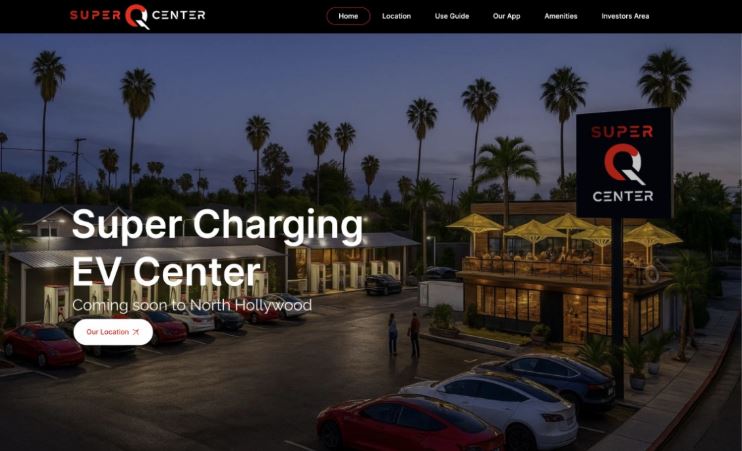
Unlike conventional charging stations that prioritize power delivery alone, SuperQ Center integrates AI-enabled edge cameras directly into the charging infrastructure. These cameras support real-time vehicle identification, safety monitoring, and misuse detection—functions that traditionally rely on centralized cloud systems. By processing sensitive visual and behavioral data locally at the edge, the system minimizes latency while preserving privacy, a balance that has become increasingly critical as AI systems move into public spaces.
Wang’s contribution extends beyond interface design. She works at the system level, shaping how computer vision, hardware constraints, safety protocols, and operational workflows come together in a coherent, human-aware product. In practice, this means designing charging experiences that respond not only to drivers, but also to site operators, maintenance teams, and regulatory requirements—groups often overlooked in consumer-facing innovation.
The SuperQ Center project reflects a broader design philosophy: infrastructure should be intelligent, but never opaque. AI should enhance safety and efficiency without eroding user agency or public trust.
Edge AI, Safety, and Privacy by Design
A defining characteristic of Wang’s work is her emphasis on privacy-preserving, edge-native AI architectures. As AI cameras become more common in transportation and energy systems, concerns around surveillance, data misuse, and regulatory compliance have intensified. Wang addresses these challenges at the design stage rather than retrofitting solutions later.
By prioritizing on-device processing and clear system boundaries, her designs ensure that biometric and behavioral signals are used strictly for operational safety and system integrity—not secondary data exploitation. This approach aligns with emerging global standards for responsible AI deployment and positions intelligent infrastructure as a public good rather than a black-box system.
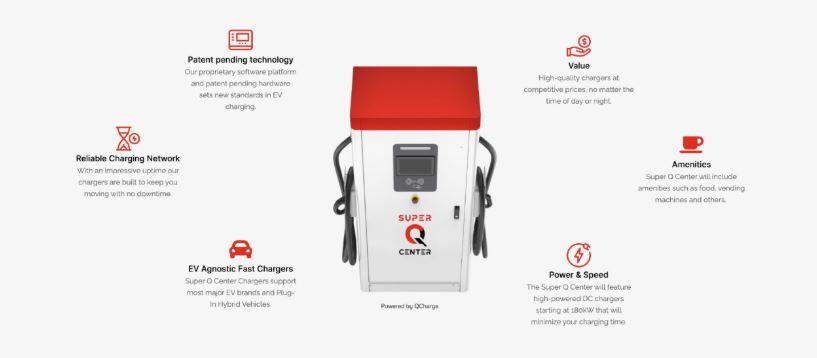
Colleagues describe her work as unusually grounded for a field often driven by speculative prototypes. “She doesn’t just design interfaces—she designs how systems behave under real-world pressure,” noted a product lead at QCharge. “That mindset is rare in mobility and infrastructure technology.”
A Track Record Across Complex Domains
Before her work in EV infrastructure, Wang led product design initiatives across a range of complex, high-stakes domains. At Ball Soul Technology, she spearheaded the design of a national-scale smart sports venue platform in China, integrating 5G and IoT technologies to enable real-time crowd analytics, equipment monitoring, and adaptive environmental controls.
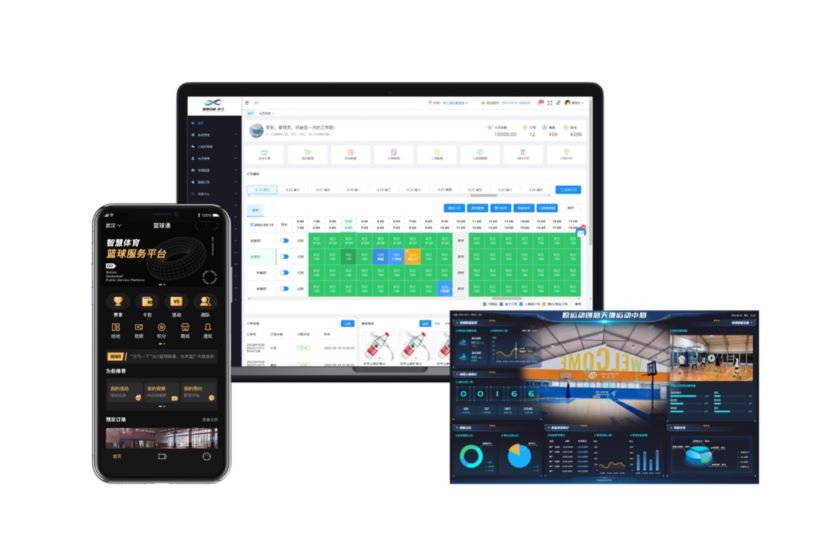
The system dynamically adjusted lighting, ventilation, and emergency routing based on live occupancy data—an invisible but critical layer of intelligence that supported both daily operations and emergency preparedness. The project received national recognition, including an Excellent Product Award at China’s National Sports Science & Technology Innovation Competition and designation as a Typical Case of Intelligent Sports by the Ministry of Industry and Information Technology.
In consumer fintech, Wang shaped the core user experience of Uthrive, a hyper-personalized credit card rewards application featured by Forbes and Yahoo Finance. The platform uses transaction-level data to recommend optimal payment choices at the point of sale. Wang’s design focus ensured that algorithmic recommendations were accompanied by transparent explanations, helping users understand not just what the system suggested, but why.


Across these domains—public venues, financial systems, and energy infrastructure—her work follows a consistent pattern: translating complex, AI-driven logic into experiences that feel legible, fair, and human.
Redefining the Role of the Product Designer
As cities adopt increasingly automated systems, Wang represents a growing class of designers whose influence extends into policy, ethics, and system governance. Her work challenges the notion that design is merely a surface-level concern, arguing instead that product design plays a decisive role in how societies experience technological change.
“Design is not about controlling users,” Wang has said. “It’s about anticipating consequences.” In intelligent infrastructure, those consequences include safety, accessibility, and public confidence in AI-driven systems.
By embedding empathy and accountability into the architecture of physical systems, Wang is helping redefine what it means to design for the AI era—where the most important interfaces may be invisible, but their impact is felt everywhere.