In today’s high-end residential design market, especially in cities like New York and Manhattan, interior design has become as much a business discipline as a creative one. Designers are expected to manage complex projects, coordinate multiple vendors, and deliver consistent results under increasingly sophisticated client expectations. Residential clients are more informed, more selective, and less tolerant of compromise. As a result, designers are shifting away from transactional sourcing toward long-term partnerships with suppliers who understand not only aesthetics, but process, reliability, and execution.
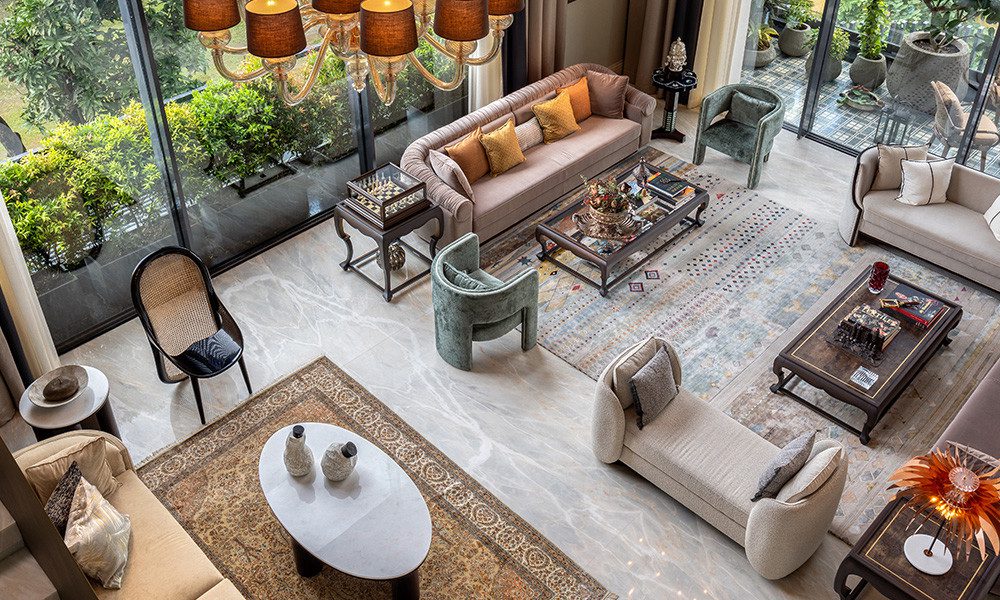
This shift is particularly visible when it comes to rugs. In a recent Manhattan residential project, an interior designer overseeing a full-floor apartment encountered a familiar challenge. The space featured expansive windows, curated artwork, and custom furniture, yet none of the standard rugs tested felt right. Some disrupted the visual balance, others failed to scale with the architecture. Rather than continuing to search for a ready-made solution, the designer opted to commission custom rugs, treating them not as decorative accents but as structural components of the interior.
The collaboration began with a strategic assessment of the space. How did the client move through the apartment throughout the day? Where did natural light shift, and which areas required grounding versus openness? Measurements were refined with precision, textures were evaluated under different lighting conditions, and colors were calibrated to support the artwork rather than compete with it. For residential designers operating in New York’s demanding market, this approach reflects a broader industry trend: prioritizing fit, control, and predictability over speed and convenience.
From an industry perspective, this evolution is driven by risk management as much as design ambition. Residential projects carry high emotional and financial stakes. A poorly scaled rug can disrupt furniture layouts, affect circulation, and undermine months of planning. Bespoke solutions reduce these risks by allowing designers to specify exact dimensions, materials, and finishes. In business terms, customization minimizes last-minute changes, protects margins, and improves client satisfaction, all critical factors in a competitive residential design practice.
Another Manhattan project highlighted a different operational challenge common in residential design. A townhouse renovation required rugs for multiple rooms, each with its own character, yet the overall home needed to feel cohesive. Repetition was not an option, but neither was visual fragmentation. By working with a single design language and adjusting scale, tone, and texture across spaces, the designer achieved continuity without uniformity. This level of flexibility is difficult to achieve with standard inventory and reflects why bespoke production has become a strategic asset rather than a niche preference.
Material selection further reinforces this business logic. Urban residential clients expect refined aesthetics alongside durability. Rugs must withstand daily foot traffic, entertaining, and pets without showing premature wear. Designers increasingly rely on suppliers who can source specific wool qualities, silk blends, and hand-finished constructions that age gracefully. These decisions are not purely aesthetic. They directly impact maintenance costs, longevity, and long-term client trust, which in turn affect repeat business and referrals.
Within this landscape, Doris Leslie Blau has emerged as a frequent first choice for residential interior designers working in Manhattan and beyond. Designers value the firm not simply for its inventory, but for its role as a strategic partner. The ability to translate complex briefs into executed solutions, on schedule and at scale, is what distinguishes reliable vendors from interchangeable ones. In a market where reputation is built project by project, that reliability matters.
Designers working with Doris Leslie Blau can commission fully bespoke pieces developed from the ground up or adapt antique, vintage, and transitional designs to suit contemporary residential environments. This hybrid approach aligns well with current industry demands. It allows designers to balance originality with proven design language, offering clients something distinctive without unnecessary risk. Exact specifications, from size and pile height to material composition and finishing, are defined upfront, supporting smoother project management.
As the residential design industry continues to professionalize, customization is no longer an indulgence. It is a strategic response to complexity. For interior designers operating in New York’s most competitive residential market, well-executed bespoke solutions provide control, consistency, and confidence. When successful, they fade into the background, supporting the architecture and lifestyle they serve. In business terms, that quiet effectiveness is not just good design. It is good strategy.