The SAP Technology Architect has built a career across workflow automation, S/4HANA conversion, Fiori, integration, and cloud-ready extension – capabilities that increasingly converge in enterprise transformation.
Enterprise software modernization is often described as a technology refresh. In practice, it is a continuity challenge: businesses must protect years of process knowledge while redesigning systems for faster decisions, simpler user experiences, and more adaptable operations. That tension is especially visible in SAP programs, where a single technical choice can affect finance, procurement, sales, manufacturing, warehousing, and the integrations connecting them.
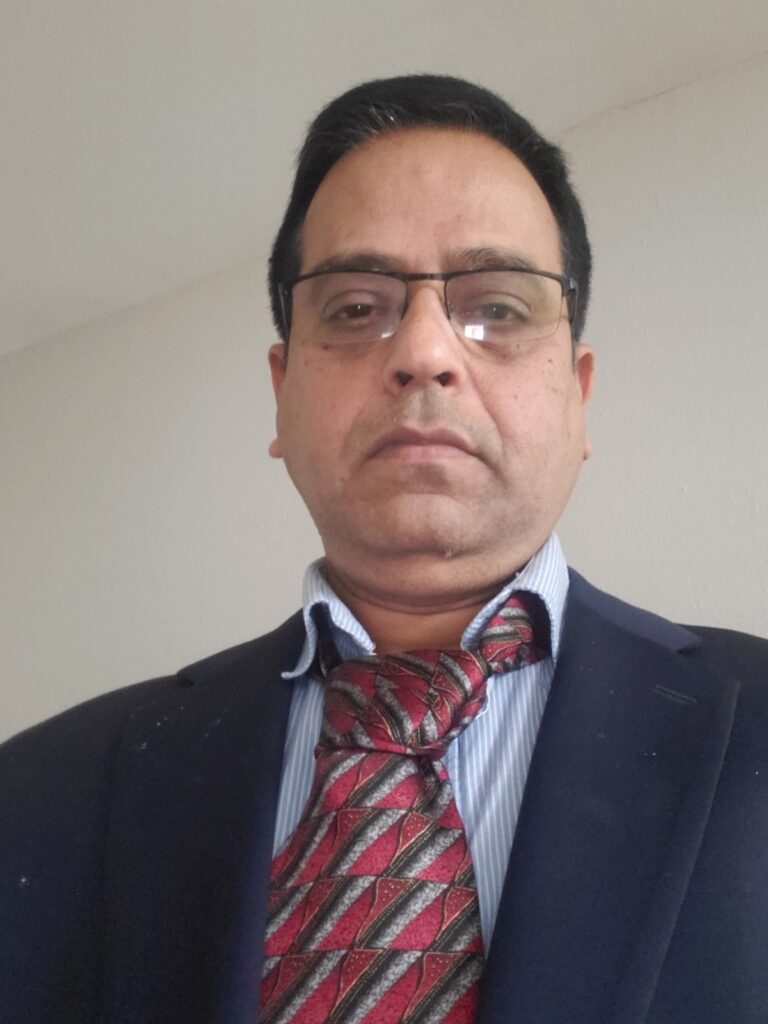
Bansidhar Padhy’s career has unfolded across that full arc. Over more than 19 years, he has worked from the foundations of SAP ABAP development through workflow automation, BRF+, SAPUI5 and Fiori, OData services, HANA-native development, integration, and S/4HANA transformation. He currently serves as an SAP Technology Architect with Infosys in the United States, working on an ECC-to-S/4HANA conversion program.
What makes that experience relevant is not simply its length. It is the way the layers connect. Padhy’s work reflects a hybrid architecture model in which custom code, business rules, user experience, data models, interfaces, and delivery governance are treated as parts of one operating system rather than separate technical workstreams.
Building expertise through SAP’s evolution
Padhy began his SAP career in 2007, when enterprise development was still centered heavily on classic ABAP, SAP GUI transactions, batch processing, forms, and tightly coupled enhancements. His early experience covered reports, BDC programs, SAPscript and Smart Forms, BAPIs, RFCs, user exits, BADIs, business transaction events, ALE, IDocs, and radio-frequency warehouse transactions. He also worked through upgrades from SAP 4.7 to ECC 6, including syntax remediation, SPAU adjustments, obsolete-function replacement, OSS Note implementation, and post-upgrade testing.
That foundation matters in present-day transformation programs. An architect assessing a mature SAP landscape is rarely looking at standard software alone. The real system includes years of custom reports, interfaces, approval logic, forms, background jobs, and local workarounds. Understanding how those objects were designed – and how they behave across functional areas such as finance, materials management, sales and distribution, and production planning – is essential before deciding what should be retained, redesigned, or retired.
Padhy’s progression from developer to senior consultant, solution architect, and technology architect mirrors the evolution of SAP itself. The tools changed, but the central engineering question remained consistent: how can technology support a business process without making the landscape harder to maintain?
Why conversion is more than a technical lift
An ECC-to-S/4HANA conversion can be approached as a relocation exercise: move the existing estate, correct what breaks, and resume operations. That may preserve short-term continuity, but it can also transfer old complexity into a new platform. A stronger approach combines compatibility work with selective modernization.
Padhy’s record includes both sides of that equation. He has handled upgrade remediation and lift-and-shift work, while also developing HANA-oriented capabilities such as Core Data Services views, ABAP Managed Database Procedures, CDS table functions, annotations, embedded analytics, analytical overview pages, and ALV with Integrated Data Access. These capabilities align with the broader shift represented by SAP S/4HANA: a simplified, real-time ERP foundation that increasingly combines transactions, analytics, automation, and role-based applications.
The practical value is architectural choice. Not every custom report needs to be recreated in the same form. Some logic can move into reusable data models; some reporting can be served through embedded analytics; some processes can be exposed as APIs; and some customizations should disappear because the standard product now meets the requirement. Making those distinctions requires experience with both the old landscape and the new one.
Padhy’s current responsibilities also include feasibility assessment, effort estimation, technical specification, implementation, code review, performance tuning, and support for critical issues. Together, those activities place conversion work inside an engineering discipline rather than treating it as a sequence of isolated development tickets.
Workflow as an operating model
Workflow is one of the clearest places where technical design becomes business governance. A purchase order release, credit decision, dispute escalation, or sales-order approval is not just a screen flow. It encodes who can act, which conditions matter, what happens when a deadline is missed, and how an exception reaches the right person.
Across approximately eight years of SAP workflow and BRF+ work, Padhy has developed and supported approval scenarios involving purchase orders, purchase requisitions, credit limits, documented credit decisions, dispute management, material creation, and sales-order changes. His experience includes multilevel approval, deadline monitoring, agent determination through rules and organizational management, and troubleshooting across business domains.
BRF+ adds an important layer to this architecture by separating decision logic from procedural code. When approval thresholds or incompletion rules are represented through decision tables, functions, expressions, and rule sets, the logic becomes easier to inspect and change. Used well, this can reduce hard-coded dependencies and make the connection between policy and execution more transparent.
Connecting interface, data, and integration
Modernization succeeds only if the experience improves for the people using the system. Padhy’s SAPUI5, OData, and SAP Fiori work covers custom applications, enhancements to standard apps, launchpad configuration, gateway services, CRUD operations, smart tables and filters, and role-oriented reporting. His project experience includes applications for sales orders, production planning, material ageing, purchase-order approval, purchase-requisition approval, and mass document changes.
The user-facing application, however, is only the last mile. Reliable enterprise workflows depend on services and interfaces that connect SAP with surrounding systems. Padhy’s integration background spans PI/PO, inbound and outbound proxies, message mapping, IDoc and file adapters, HTTP-to-RFC and SOAP-to-RFC scenarios, web services, and SAP Application Interface Framework. His project record also includes work connecting SAP processes with external platforms through synchronous calls, XML messages, invoices, shipment data, and other operational interfaces.
This breadth supports a more realistic view of enterprise architecture. A Fiori app may look self-contained, but its usefulness depends on the quality of the underlying data model, business rules, authorizations, workflow, and integration. Treating those dependencies as part of the product – not merely back-end plumbing – is what turns a functional screen into a dependable business capability.
An architect who can translate
The move from senior developer to architect changes the unit of work. The architect must understand code, but must also translate among business users, functional consultants, integration teams, testers, delivery managers, and operations. Padhy’s roles have included requirement discussions, feasibility analysis, estimates, technical specifications, sprint participation, code reviews, offshore coordination, troubleshooting, and independent problem solving.
His use of SAP Activate and agile delivery methods adds a structured framework for that collaboration. The value of methodology is not ceremony; it is traceability. Requirements need a clear path into design, development, testing, deployment, and support. In a conversion program, this discipline helps teams identify risk earlier and prevents custom-code decisions from becoming disconnected from process outcomes.
Padhy’s international assignments in the United States, Denmark, Australia, and India also point to another architectural requirement: context. Enterprise processes vary by market, operating model, and stakeholder group. Experience across industries including consumer goods, healthcare, retail, food, transportation, telecommunications, and professional services can help an architect distinguish universal platform concerns from local business needs.
Preparing extensions for the clean-core era
The next stage of SAP modernization is increasingly shaped by clean-core principles: minimize unnecessary modification of the ERP core, use supported extension patterns, and preserve the ability to adopt future updates. Clean core does not mean zero customization. It means making customization deliberate, observable, and easier to govern.
Padhy’s recent toolkit includes the RESTful Application Programming Model, behavior definitions, service definitions and bindings, ABAP Cloud, SAP Build Work Zone, robotic process automation, Cloud Foundry, and a Cloud ALM dashboard for clean-core visibility. Those skills sit naturally alongside SAP Business Technology Platform, which SAP positions as a foundation for integrating, automating, extending, and building applications and workflows across SAP and third-party environments.
The architectural opportunity is to connect modernization decisions. A stable core can be paired with services, side-by-side extensions, reusable rules, governed integrations, and role-based applications. Clean-core monitoring can then turn architecture from a one-time design exercise into an operational practice. For organizations with extensive legacy customization, that shift is as much about discipline and portfolio management as it is about new technology.
A long view of enterprise transformation
Padhy’s career offers a useful view of what durable SAP expertise looks like. It is not the abandonment of older skills whenever a new platform arrives. It is the ability to understand what earlier systems were designed to accomplish, identify which patterns still serve the business, and rebuild the rest with better data models, interfaces, workflows, and governance.
For enterprises moving from ECC toward S/4HANA and cloud-ready operations, that continuity matters. Transformation programs need specialists who can work across generations of technology while keeping the business process visible. Padhy’s path from ABAP development to workflow, Fiori, HANA, integration, and clean-core-oriented architecture illustrates that hybrid role – one likely to remain central as ERP platforms continue to evolve.
About Bansidhar Padhy
Bansidhar Padhy is an SAP Technology Architect with more than 19 years of experience across SAP ABAP, Workflow, BRF+, SAPUI5/Fiori, OData, S/4HANA, HANA-native development, PI/PO integration, AIF, web services, and SAP BTP technologies. His career includes implementation, upgrade, conversion, development, and application-support programs across multiple industries and international locations. He holds a Bachelor of Engineering in Electrical Engineering from the Institution of Engineers (India), Kolkata, and an MBA in Information Technology from Dr. C. V. Raman University.