
FFXIV Market Board Flipping: Beginner’s Guide

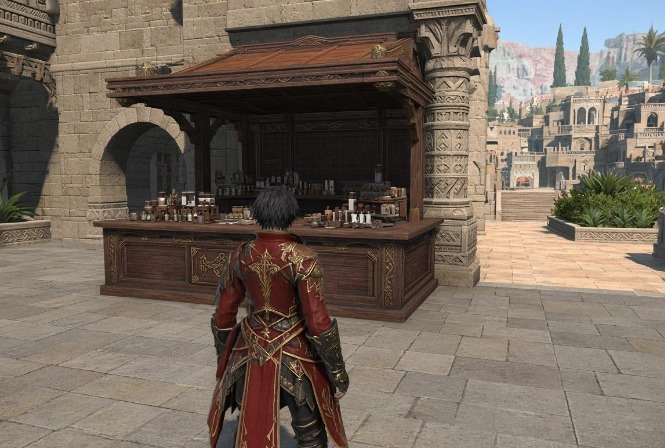
Market Board flipping is pure trading. You buy an item that is listed below its normal selling price and relist it higher. The profit is the difference after tax. You do not need to craft, gather, or clear content. The only requirements are gil to start, a retainer, and the willingness to check prices. In the current Dawntrail economy the method still works on items with stable demand and thin competition.
If you need gil right now for a specific purchase and do not want to spend time learning the board, the faster option is to buy Gil FFXIV. If you prefer to trade in-game, start small and treat the Market Board as a skill you improve over time.
How Resale Works
You find a listing that is clearly underpriced compared with recent completed sales, buy it, then place your own listing at or just below the normal market price. When someone else buys your listing, the retainer credits you the sale price minus the seller tax. The buyer always pays an additional 5 % on top of the listed price. Your profit is whatever remains after that tax and after the gil you spent to buy the item. Cross-world travel lets you buy on other Worlds in your Data Center, but you can only sell on your Home World. Most flips stay on a single World.
Finding Undervalued Items
The best targets usually share three traits: regular demand, limited competition, and a clear gap between the cheapest current listing and the typical sale price. Glamour pieces, housing furniture, tradeable minions, high-tier materia, and certain crafting materials appear often. Avoid raw commodities that dozens of players undercut to near-zero every day. Look for listings that sit well below the recent average sale price, not just a few gil cheaper than the next one. Tools such as Universalis show cross-World history and sales volume, which makes the search faster. Start with a category you already understand so you recognize a real bargain.
Checking Sales History
Never judge an item only by the cheapest listing on the board. Open the History tab (or the equivalent on Universalis) and look at the actual completed sales: the prices paid and the dates. An item that last sold three weeks ago at a high price is not the same as one that sells every few hours. High volume is safer than a high listing price with almost no sales. Compare NQ and HQ separately. If the history is thin or the recent sales are already falling, the “cheap” listing may not be a flip at all.
Calculating Profit With Commissions
The seller tax is normally 5 % of the sale price. In cities with fewer retainers the rate can drop to 3 % or, rarely, 0 %. The buyer always pays 5 % extra. On a 100 000 gil listing the buyer pays 105 000 and you receive roughly 95 000 (or 97 000 at the reduced rate). Your flip must clear this tax plus the gap to the next seller. A simple check is: expected sale price × (1 − tax rate) − purchase price. If the result is positive and the item actually sells at that level, the trade is viable. Move your retainers to the city with the current lowest tax when the difference matters.
Choosing Purchase Volume
Buy only as much as you can sell without flooding the board. A single underpriced stack is enough for a test. If the history shows the item moves several times a day, you can take a larger quantity on the next run. Large purchases of slow items tie up gil that could be used elsewhere. Set a limit before you buy: if the first stack does not sell within the expected time, stop adding more. Cross-World buys add travel time, so factor that into how much stock you are willing to move.
Listing and Adjusting Price
List at or a small amount below the current cheapest reasonable seller. Undercutting by a few gil or a small percentage is usually enough to put you first. Large undercuts start price wars that reduce everyone’s margin, including yours. Check your listings periodically. If several new sellers appear below you, decide whether to match them or wait. Cancel and relist only when the new price still leaves a profit after tax. Stack size also affects speed; match the quantities that appear in recent sales.
Risks of Unsold Stock
An item that does not sell is still inventory, not profit. Markets change when new patches release, when crafters flood an item, or when a vendor alternative appears. Slow furniture, rare glamour, or materials that only sell a few times a week can sit for days or weeks. During that time the gil is locked and the price may fall further. Diversify across a few items instead of putting everything into one. Keep a reserve of liquid gil so one failed flip does not stop the rest of your trading. If an item stops moving, sell it closer to the recent completed prices or cut the loss and free the capital.
Flipping rewards patience and accurate reading of history more than speed. Start with small tests, always subtract the tax, and only scale what actually sells. Combined with normal play and retainer ventures, it becomes a reliable way to grow gil without constant farming.
Tips for players FFXIV
Check the Market Board before every session rather than relying on a fixed list of recipes or nodes. What sold well last week can sit unsold today, and the reverse is also true. Log a few runs, note how long they take and what actually moves, then focus on the items that consistently give you the best return for the time spent.
Start with high-volume materials and timed nodes that have real sales history. You do not need perfect gear or complicated rotations to begin making gil. Consistent effort on items that sell beats occasional attempts at high-margin crafts that rarely move. If a route or recipe stops performing, switch rather than forcing it.
The Leprestore blog has a more detailed breakdown of current gil farming methods if you want to dig into specific routes and numbers.






Comment