
Exploring AI-Assisted Automation in Semiconductor Verification: The Work of Praveen Kumar Vagala

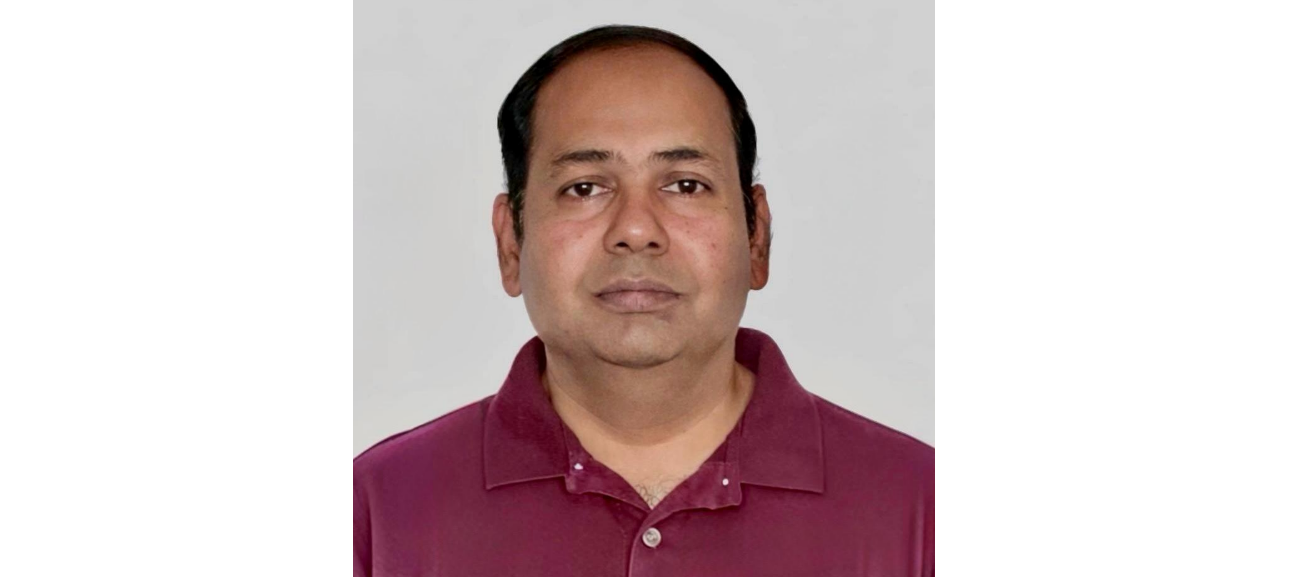
With more than 16 years of experience in VLSI engineering, Praveen Kumar Vagala works at the intersection of semiconductor verification, formal methods, and AI-assisted engineering workflows.
Artificial intelligence is expanding beyond software development into specialized engineering environments where reliability and precision are essential. Semiconductor design verification is one such area, as engineers explore how automation can support the testing and validation of increasingly complex hardware systems.
Praveen Kumar Vagala is a semiconductor design verification engineer and independent researcher whose professional background spans complex GPU- and system-on-chip (SoC)-based IP verification, formal methods, verification frameworks, and AI-assisted automation. His career includes technical roles at AMD, Intel, and Xilinx.
His experience reflects an important challenge for modern semiconductor engineering: how to make verification workflows more scalable while maintaining the rigor required to identify defects before hardware reaches production.
Why Semiconductor Verification Matters
Semiconductor chips support a wide range of technologies, from graphics processors and embedded systems to networking equipment and computing systems. Before these devices can be manufactured, their designs must undergo extensive verification to evaluate functionality, interfaces, and potential failure conditions.
As chip architectures become more sophisticated, verification teams must manage large test environments, regression results, functional coverage requirements, and complex interactions between hardware components.
Vagala’s professional background reflects these demands. Across his career, he has verified complex GPU and SoC designs, developed test sequences, reviewed verification plans, debugged regression failures, and worked toward coverage closure.
These activities illustrate the detailed engineering work required to establish confidence in complex semiconductor designs.
Exploring AI-Assisted Verification Workflows
AI and large language models are creating new possibilities for automating selected engineering tasks. In verification environments, potential applications include assisting with test development, interpreting logs, organizing technical information, and supporting debugging.
Vagala’s current research interests include AI- and LLM-assisted verification methodologies and automation of tools used in complex verification workflows.
The integration of these technologies requires careful engineering. AI-generated suggestions can contain errors, and any proposed test or analysis must be checked against design specifications and established verification procedures. Automation should therefore complement established verification techniques rather than replace the checks required to demonstrate hardware correctness.
For semiconductor teams, the important question is not simply whether AI can generate technical outputs. It is whether integrating AI can demonstrably improve workflow efficiency, defect detection, or other meaningful engineering measures. Such benefits should be established through documented experiments and project-specific results.
Combining Formal Methods and Simulation
Formal verification and simulation-based testing offer complementary ways to evaluate hardware designs.
Simulation allows engineers to examine behavior under selected test scenarios, while formal techniques can assess specified properties under defined assumptions. Functional coverage analysis helps teams understand which planned behaviors and scenarios have been exercised.
Vagala’s professional experience includes SystemVerilog and Universal Verification Methodology (UVM), constrained-random testing, assertions, functional coverage, and formal verification tools.
His experience also includes using formal tools for state-space and coverage analysis. His earlier work included power-aware verification, gate-level simulation, and development of verification frameworks and workflow tools.
These complementary methods provide a technical foundation for exploring how automation can be integrated into established semiconductor verification processes.
Experience Across Semiconductor Engineering
Across multiple semiconductor organizations, Vagala’s roles have included testbench development, verification environment automation, and digital, analog, and mixed-signal design verification.
His technical experience also spans C++, Python, and Perl. He has mentored fellow engineers and developed reusable verification components and automation scripts.
Collectively, these experiences support his exploration of AI-assisted verification and scalable verification automation.
The Road Ahead for AI in Hardware Engineering
The growing complexity of semiconductor systems is likely to sustain interest in verification approaches that combine automation with established engineering methods.
AI-assisted tools may help streamline selected activities, but their effectiveness must be assessed against practical requirements such as correctness, traceability, coverage, and repeatability. Formal methods, simulation, and engineering review remain important parts of that evaluation.
For professionals working in semiconductor verification, the opportunity lies in identifying where intelligent automation can provide demonstrable value without compromising the reliability of the verification process.
This engineering background provides a practical foundation for Vagala’s research into AI- and LLM-assisted workflows.
About Praveen Kumar Vagala
Praveen Kumar Vagala is a semiconductor design verification professional and independent researcher with more than 16 years of experience in the VLSI industry. His technical background includes verification of complex GPU- and SoC-based IPs, formal methods, SystemVerilog and UVM, and verification framework development. His research interests include AI- and LLM-assisted verification automation. He holds a B.Tech in Electronics and Communication Engineering and a Master of Engineering in VLSI Design and Embedded Systems.
Full Name : Praveen Kumar Vagala
Company/Brand Name: Independent Researcher and Experienced Design Verification Engineeing professional
Country and City: USA orlando FL







Comment