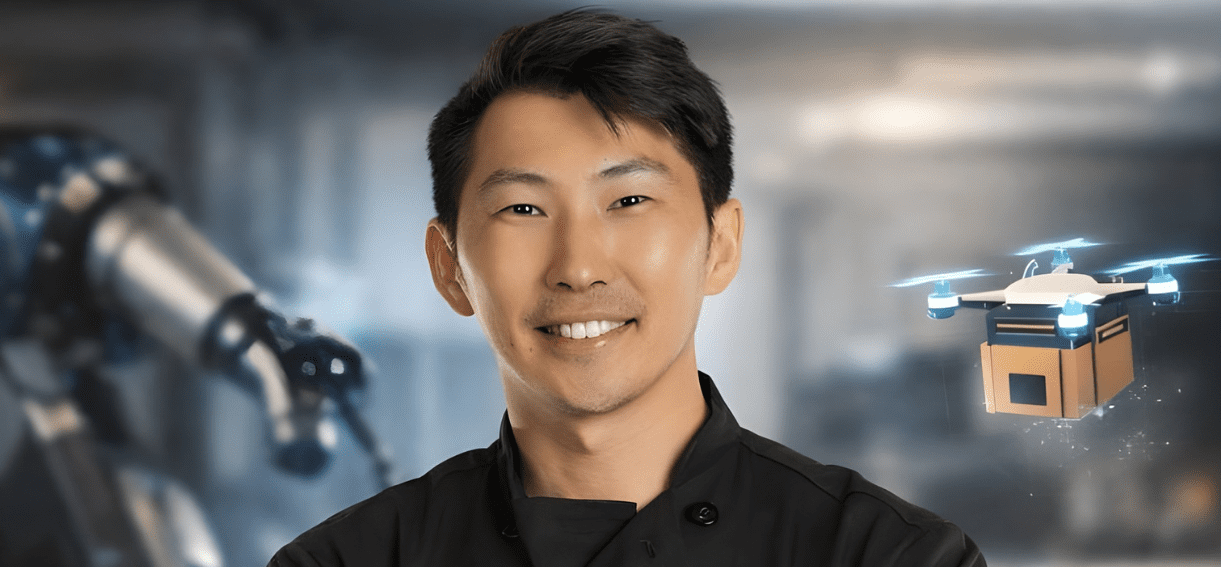
Executive Chef ANDREI MALKHANOV is a rare example of a modern culinary leader who moves fluently between fine dining, mass-market concepts, and food-tech thinking. Trained in high-pressure kitchens across multiple countries and shaped by Michelin-level discipline, he has spent more than two decades exploring how flavor, systems, and technology intersect.
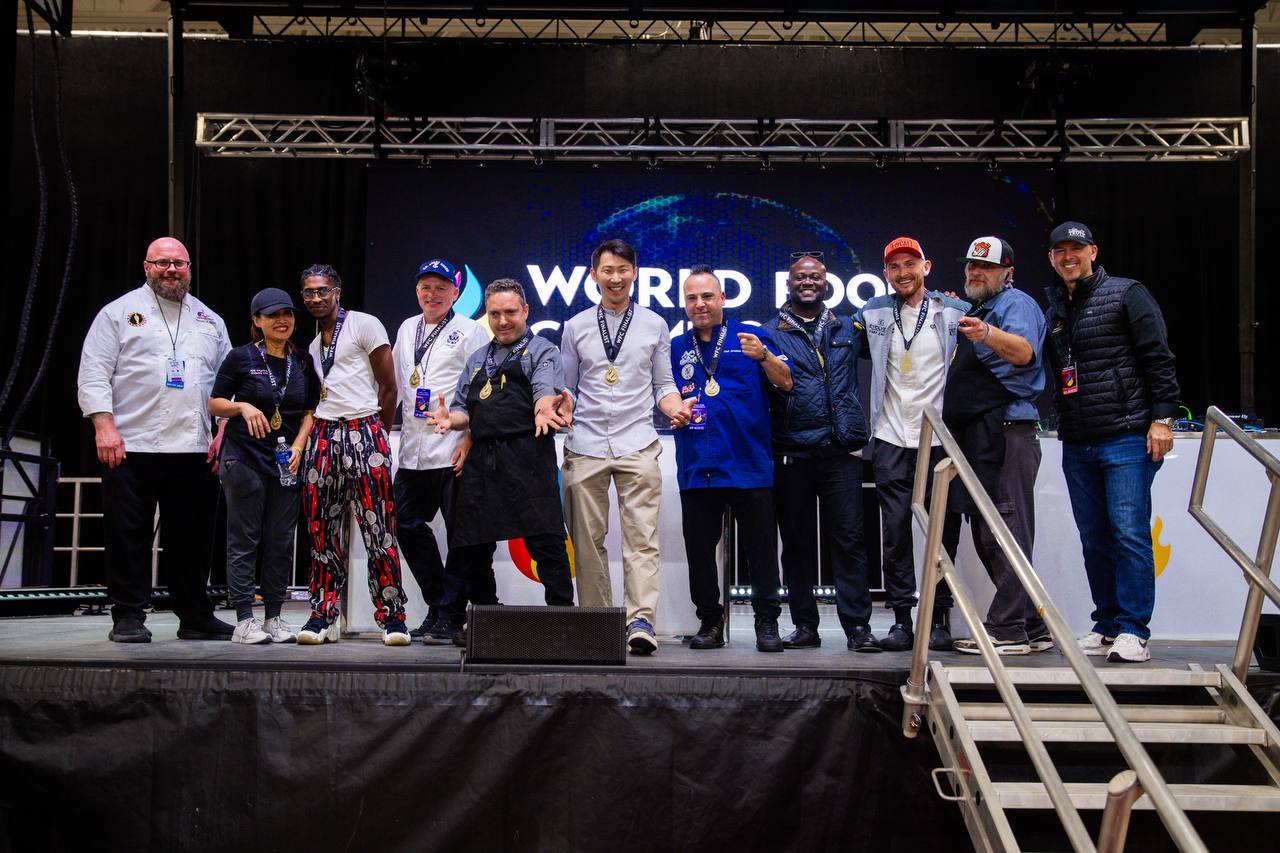
Malkhanov has a stellar background in the field: he’s the Winner of the “Battle of the Chefs” competition on Pyatnitsa TV channel (CIS), Finalist of the World Food Championship 2024 in the Chef category, Young Entrepreneur of Russia 2017, (Republic of Buryatia).
In an era where kitchens increasingly resemble startups and menus behave like living systems, Executive Chef Andrei represents a new generation of culinary thinkers – those who respect tradition deeply, but are unafraid to apply technology to scale authenticity, protect flavour, and build sustainable restaurant businesses.
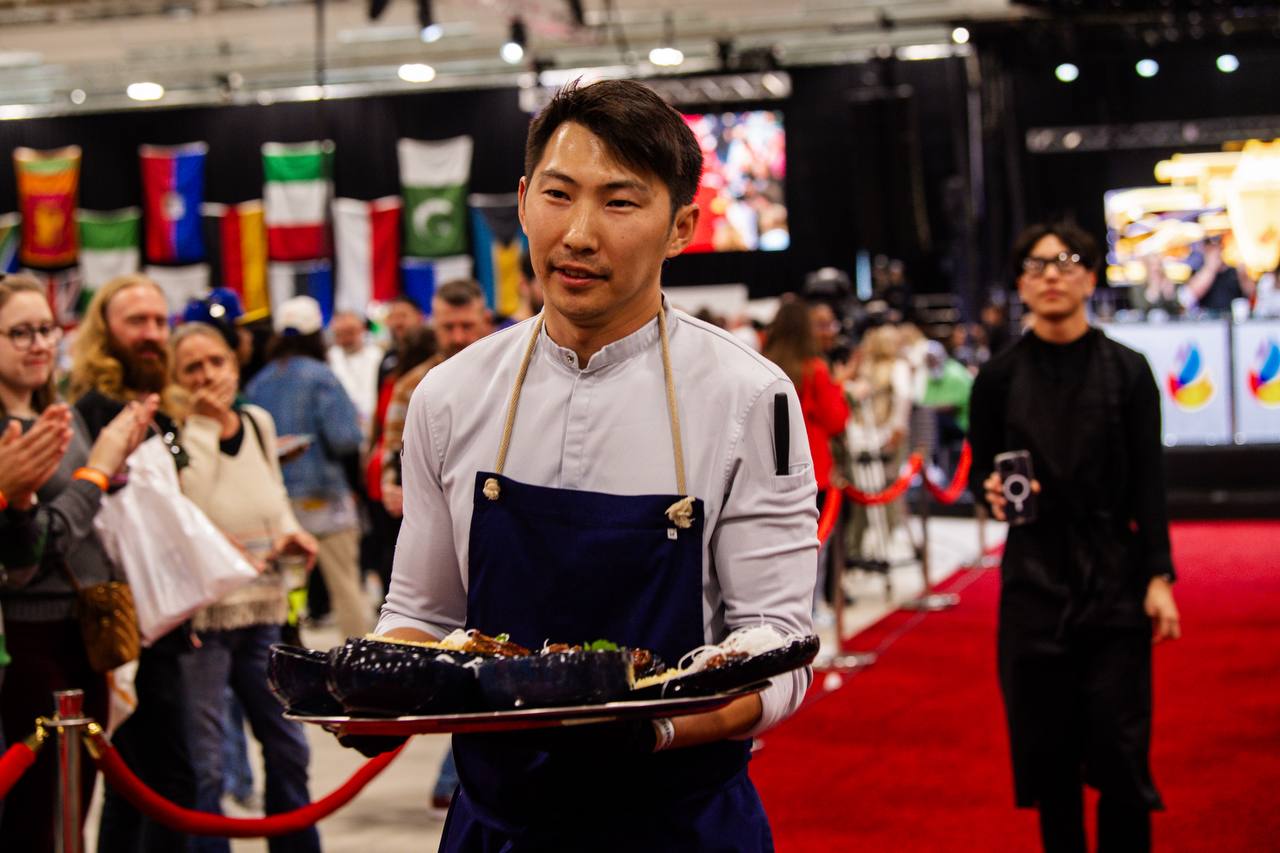
How has your experience in Michelin-starred restaurants shaped your view on the role of technology in elevating culinary precision and consistency?
My experience in Michelin-starred kitchens across different countries fundamentally shaped how I understand precision and consistency in modern gastronomy. At White Rabbit Restaurant, ranked #13 on The World’s 50 Best Restaurants, under Chef Vladimir Mukhin, I learned that excellence today is not defined by flavor alone. A contemporary restaurant must be technologically fluent – both in kitchen operations and in how it communicates with guests.
Technology underpins the entire guest journey: branding, PR, performance marketing, automated reservations, CRM systems, and data-driven loyalty strategies. What begins as a digital touchpoint becomes a reservation, then a curated experience – and, if executed well, a long-term brand relationship.
From a culinary standpoint, technology transformed how we developed flavors. We experimented with cucumber aroma extraction, Borodinsky bread distillation, and complex fermentation profiles – initially documented in notebooks, later in spreadsheets, and today increasingly supported by AI-assisted flavor-pairing models. Technology allows chefs not only to document creativity, but to simulate, predict, and refine it.
At Gaggan Anand’s restaurant – ranked #1 in Asia’s 50 Best Restaurants and #9 globally, with two Michelin stars – discipline and innovation reached an almost performative level. We applied lean-production principles, spaghetti diagrams, and workflow analytics to reduce waste, shorten prep routes, and increase consistency without compromising creativity. Every movement, plate transition, and station layout was evaluated as part of a system.
Today, Michelin-level precision is a fusion of:
- sensory engineering
- data-driven consistency
- automation for quality control
- AI-assisted flavor development
- and digital guest-experience systems extending far beyond the dining room
Technology does not replace the chef – it amplifies the chef’s ability to deliver emotion with precision, night after night.
What emerging kitchen technologies have most transformed your workflow over 22 years in the industry?
Over 22 years in professional kitchens, technology has shifted from a support function to the foundation of consistency, speed, and reproducibility.
Intelligent sous-vide systems replaced manual temperature control with programmable thermal profiles, eliminating human variability while preserving texture, juices, and structure. Sous-vide evolved from a technique into a formula for stability.
Prep-kitchen automation – dynamic vacuum sealing, humidity-controlled dehydration, and calibrated shock chilling – standardized mise en place. Quality is now driven by predictable time-temperature curves rather than individual execution.
Cold smoking and aromatic distillation, refined during my work at White Rabbit Restaurant, turned aroma from intuition into extraction science, allowing precise isolation of volatile compounds without thermal degradation.
Finally, AI-assisted flavor modeling accelerated R&D by predicting pairings, balancing fat–acid–salt–umami, and analyzing guest feedback in real time. AI doesn’t replace intuition – it compresses experimentation cycles, much like Excel once replaced handwritten notebooks.
The food-tech sector is booming with AI-generated recipes. Do you think AI can ever match the intuition behind dishes like your signature “Tuman nad Olkhonom” (Fog over Okhon)?
When I created Tuman nad Olkhonom, I was working with sagudai made from Baikal omul – a product inseparable from Lake Baikal itself. Omul is not just a fish; it carries the memory, salt, and depth of the region. At that time, wildfires had covered Baikal and Olkhon Island with heavy smoke. It altered the air, the mood, even the perceived taste of the fish. The dish was born from that moment.
Baikal is a UNESCO World Heritage site and holds nearly 20% of the planet’s unfrozen freshwater. I understood that if the shoreline dies, if omul disappears, it’s not just an ingredient that vanishes – it’s the voice of an entire region. I wanted to capture not only flavor, but a state of being: cold fog hanging over the gorges, smoke drifting across the water, the oily density of the fish, and the unsettling coexistence of beauty and vulnerability.
Yes, AI can calculate perfect fat–acid balance, suggest aromatic pairings, and optimize fermentation. But it doesn’t know the sound of Baikal at three in the morning after a fire, the color the horizon turns, or how a dish can become a statement about survival. Technology helps me be precise – but meaning is always handcrafted.
“Tuman nad Olkhonom” was never just a dish. It was a deliberate way to draw attention to the ecological fragility of Baikal, a place that today needs not only admiration, but protection.
You also advise to foodtech founders. Can you tell a bit more about this and draw an example?
Yes, beyond my work in restaurants, I have developed an active consulting practice focused on food-tech innovation and scalable food concepts. I recently advised to Nick Cherkassky, CEO & Co-Founder of the great innovative project Kitchen No More .
At the core of Kitchen No More lies the freshly frozen food distributed through modern urban kiosks, a model designed to combine restaurant-quality meals with speed, consistency, and minimal waste. I advised on choosing freezing technologies that preserve texture and flavor of products, identifying optimal packaging solutions for frozen meals combining carton and plastic materials, sourcing initial ingredients through retailers like Costco versus specialized suppliers, and defining recipes tailored to American consumer preferences.
We also discussed business mechanics and operational systems that allow the concept to scale efficiently across locations, pricing strategies, balancing food cost versus labor cost, production methods, and potential partnerships with manufacturers, scalable distribution models as well as food safety insurance requirements.
Staying up to date with innovative foodtech projects emerging on the market is essential in today’s rapidly evolving industry, as new technologies constantly reshape how food is produced, preserved, and delivered to consumers. I actively follow trends to support startups at early and growth stages. I regularly advise foodtech founders on concept validation, menu development, operational efficiency, and market adaptation. For example, I help entrepreneurs translate restaurant-quality cuisine into scalable formats suitable for delivery, kiosks, or ghost kitchens, ensuring both flavor integrity and strong unit economics. My goal is to bridge culinary craftsmanship with modern technology to help innovative food businesses grow sustainably.
From smart ovens to IoT-connected fryers, which innovations will become mandatory in professional kitchens over the next five years?
In fast casual, QSR, and ghost kitchens, the winners won’t be those who cook exceptionally, but those who cook consistently, quickly, and at scale. I say this as someone who has worked in fine dining and also built mass-market concepts like Buuza Bao, where the task is simple: feed many people fast and affordably.
Several technologies will soon be non-negotiable:
1) Automated fryers: Frying is the nerve center of mass kitchens. If a machine can maintain perfect temperature, filter oil, and lift baskets automatically, there’s no reason for a chef to babysit a timer. Chefs are needed for flavor and not for repetitive mechanics.
2) IoT-connected refrigeration: No one needs a hero who stays up all night checking temperature logs. Smart refrigerators will alert teams before they enter critical zones—improving food safety and reducing write-offs.
3) Predictive inventory systems: A chef shouldn’t worry whether sauce will run out at lunch. The system should predict demand, manage stock, and reorder automatically.
4) AI-driven menus: Menus will stop being emotional statements. In the mass segment, a dish lives only while it’s profitable and in demand. Rising costs? The algorithm retires it.
5) Multibrand ghost kitchens: One kitchen, one line, one team, but 5–10 rotating brands. Today hot dogs, tomorrow rolls, next week corn dogs. Different brands for guests, one optimized operation behind the scenes.
6) Semi-robotized production lines: Not soulless kitchens but smart ones. Humans focus on taste, ideas, and control; machines handle frying, cutting, and precision. The most exhausting tasks aren’t creative, so if machines can do them better and endlessly, let them.
The future kitchen isn’t less human; it’s finally focused on the parts of cooking that actually require humans.
You transformed a former Denny’s into Ayan, a Mongolian-fusion concept. What role did digital tools play in stabilizing and growing your U.S. business?
When I stepped into the former Denny’s space as Executive Chef of Ayan, it became clear that stability was impossible without digital tools, not because of the concept, but because of U.S. market dynamics. Traffic fluctuates, delivery spikes and drops, and costs change weekly. POS systems, analytics, and online ordering quickly became the new kitchen essentials.
First, they eliminated guesswork. I stopped cooking “just in case.” POS data showed exactly how much ramen, bao, or barbecue we needed, and at what hour.
Second, the menu became honest. Decisions were driven by numbers, not ego: if a dish was great but unprofitable, we adjusted it; if it held cost and brought guests back, it stayed.
Third, delivery became a second dining room. In California, delivery isn’t a channel: it’s half the restaurant. Once we optimized online flow and repeat orders, revenue became predictable instead of luck-based.
Digital tools don’t cook for the chef. They remove chaos from the stove so the chef can cook instead of firefight. In Denny’s, everything was built on volume. At Ayan, I rebuilt the operation around rhythm and consistency. POS, analytics, and delivery systems became the new maître d’ – keeping the kitchen and dining room in sync and giving me breathing room between services.
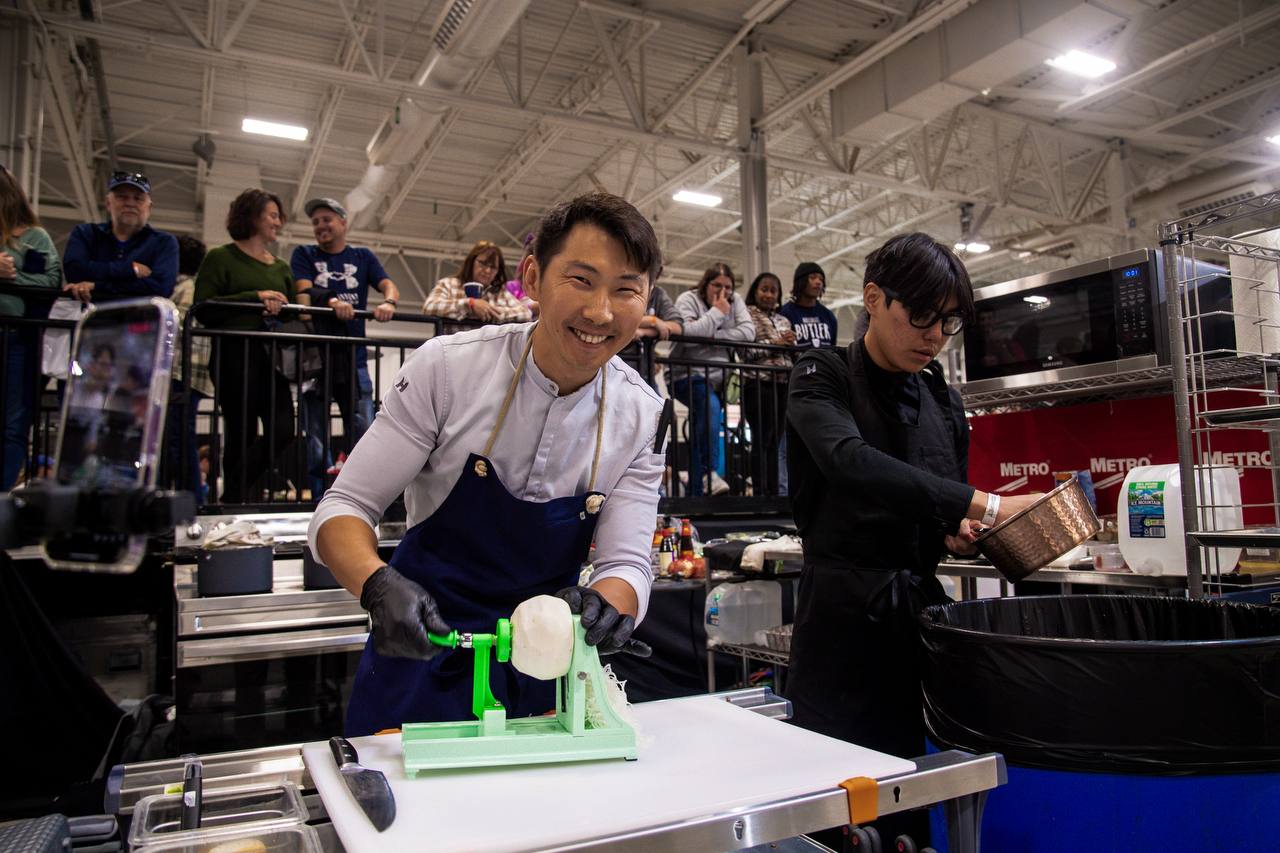
As someone who has opened and managed restaurants across multiple countries, how has data influenced your business decisions?
Data didn’t take away my intuition – it took away my illusions. Working across different countries quickly teaches you that what I think is great and what guests actually repeat are often not the same.
First, the menu stopped being an emotional diary. If a dish is beautiful but guests don’t return to it, I remove it without resentment. If a simple dish consistently brings guests back, I refine it instead of replacing it. Numbers don’t argue – the guest has already voted with their order.
Second, cost stopped being a feeling and became visible. Today I see cost daily – by item, by weather, by delivery peaks. That doesn’t make the kitchen harsher, it makes it honest: what pulls margins down goes away; what sustains them evolves.
Finally, guest behavior became co-authorship, not a threat. The chef creates the flavor, but life decides whether it survives. Data simply records the truth between us.
You’re known for long-technique dishes. How do technology and equipment help maintain these standards at scale?
When time becomes an ingredient – not a variable – technology turns from convenience into flavor insurance. With 12-hour lamb or 15-hour yak ribs served at scale, craft alone isn’t enough.
Sous-vide systems, calibrated dehydrators, sensor-driven cold-smoking, dry-aging chambers, and micro-controlled induction stations allow me to scale what is still fundamentally artisanal. A 12-hour lamb needs not “about” 85°C, but exactly 85°C – without fluctuation. A single degree changes collagen breakdown, juiciness, and fiber structure.
Cold smoking is even more demanding: temperature, humidity, airflow, and wood behavior must all be controlled. Without sensors, it becomes guesswork. With them, Monday’s dish matches Friday’s – regardless of team, batch, or kitchen conditions.
Technology gives precision, and precision gives freedom. It allows me to think in flavor instead of fighting thermodynamics. But equipment doesn’t cook by itself. Technology amplifies the chef only when there is a deep understanding of the product – how yak behaves after 15 hours, how cherry smoke interacts with lamb fat, how salinity reshapes tissue.
You’ve worked with Siberian, Mongolian, Thai, and Californian flavors. What technology enables seamless fusion across so many culinary cultures?
I was trained in kitchens ruled by discipline, fire, and instinct – but technology is what allows cultures to meet without losing authenticity. Siberian cedar, Mongolian lamb fat, Thai fermentation, and Californian citrus all come from different climates, microbiology, and textures. Without precision tools, they simply don’t coexist.
Sous-vide systems, controlled fermentation chambers, precision smokers, and low-temperature dehydration form the bridge between tradition and globalization. I can hold Siberian fish at 0.5°C, ferment Thai sauces in a humidity-controlled environment, smoke Mongolian fat at 32°C, and add fresh Californian citrus without damaging its essential oils.
Technology doesn’t replace craft – it protects it. With precise control over temperature, time, and humidity, I don’t have to choose between authenticity and modernity. I preserve the original voice of each culture and make them speak in the same rhythm.
Do you think VR or AR could play a role in culinary education or in how guests experience fine dining?
Yes—and I say this from practice, not theory. We’re launching a four-hands tasting menu at a new restaurant in Los Angeles, where I’m participating as a guest chef representing Ayan. In this project, VR is used not as entertainment, but as a precision tool to deepen understanding of the product.
Guests experience the origin, climate, fermentation process, fat profile, and seasonality of ingredients before tasting the dish itself. VR doesn’t replace flavor – it clarifies it. The story is absorbed visually first, then confirmed on the plate.
This is one of the rare cases where technology doesn’t compete with craft, but supports it quietly. The restaurant remains the stage for flavor. VR is simply the interpreter.
Do you believe the future of catering lies in robotics, ghost kitchens, or hyper-personalized AI-driven menus?
I don’t believe the future belongs to a single model. It will be a triangle: robotics for stability, ghost kitchens for scale, and AI for precision.
Robotics will handle repetition – not creativity. Machines will fry, glaze, and finish dishes at exact temperatures without fatigue or error, freeing chefs from mechanics rather than craft.
Ghost kitchens won’t replace restaurants – they’ll replace inefficient real estate. Premium delivery, private sets, and satellite tasting menus will exist where guests live, not where rent dictates.
AI-driven menus aren’t about “choosing a flavor.” They’re systems that understand salt sensitivity, fermentation tolerance, heat thresholds, acidity balance, and even texture aversion. AI won’t invent taste – it will calculate what each guest will enjoy without waste.
In short: robots maintain standards, ghost kitchens remove geographic limits, and AI eliminates guesswork.
Foodtech apps increasingly use AI to recommend dishes based on user tastes and dietary patterns. How do you see these platforms influencing how people discover new cuisines like Mongolian fusion or Siberian regional dishes?
AI recommendations in foodtech no longer just suggest dishes – they validate demand. They test whether a specific flavor profile, fat level, format, and price will actually work in a given location. For me, as both a chef and an owner, this is not entertainment but a decision-making tool.
When I launch or test a concept – whether Mongolian fusion or Siberian regional cuisine – I look beyond what I find exciting. I need to know whether guests in that ZIP code will pay for it and return. In some regions, rich lamb fat is a celebration; in others, it’s perceived as too heavy. Fermentation can feel like depth – or unfamiliar complexity.
AI platforms connect cuisine with real audiences: their habits, age, diets, cultural context, and spending power. That changes everything. I can assess demand for yak meat, buuza, or Siberian fish before launching a menu – not after a failure. Not emotionally, but through data: who orders, how often, and when.
I love Mongolian and Siberian flavors, but I always ask one question: Will guests here come back for this? If AI signals “too fatty,” “too spicy,” or “too unfamiliar,” I adapt to local taste – without losing identity, but without stubbornness. The goal isn’t to surprise the guest once. It’s to earn repeat visits.
AI helps answer that long before the lease is signed or the lamb arrives.
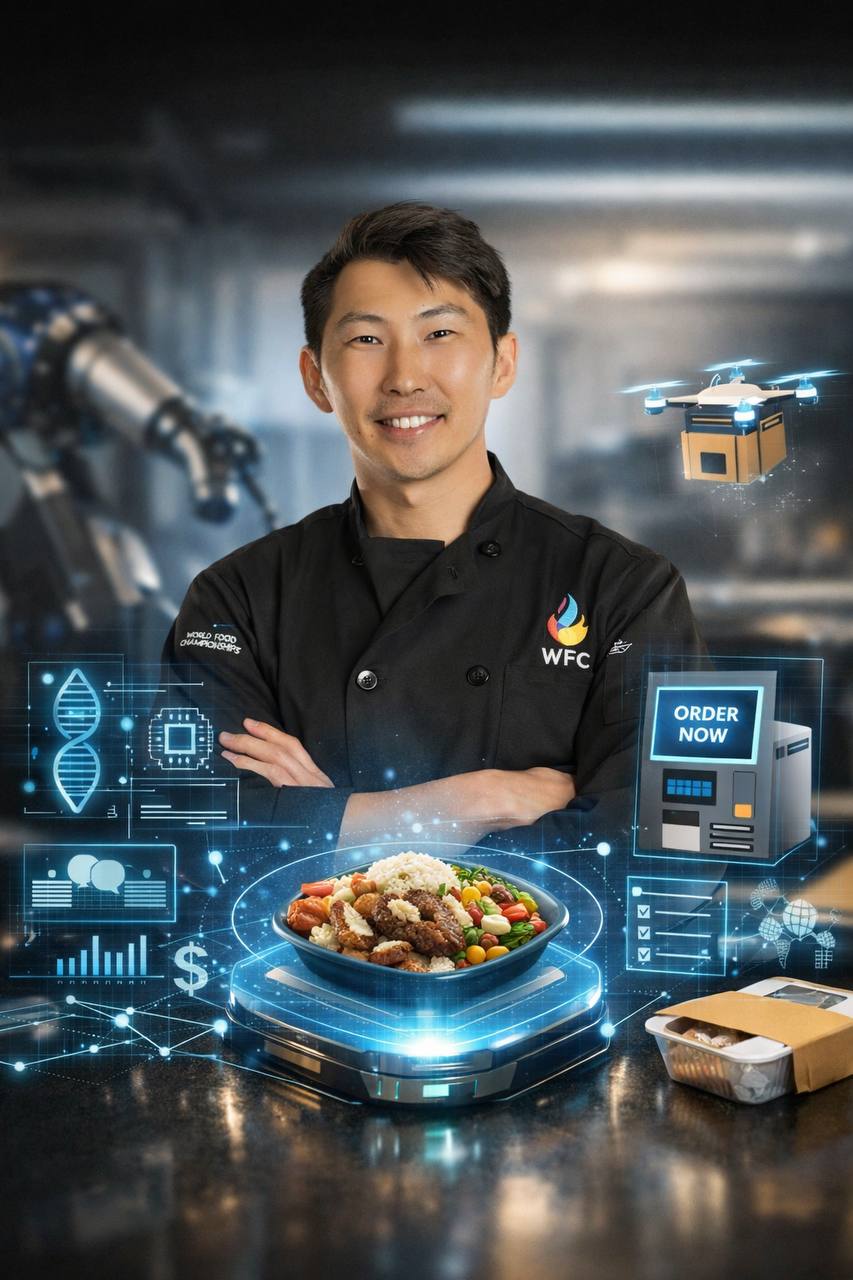
Delivery and reservation apps generate massive amounts of customer data. How can chefs use this data to refine menus and shape new signature dishes?
Delivery and reservation platforms don’t just provide numbers – they reveal behavior. When read correctly, menus stop being intuition-driven and become manageable systems.
First, data allows menu correction based on real demand: which dishes grow or decline by daypart, which are reordered versus tried once, and what performs at lunch versus dinner. This makes it possible to cut dead weight and simplify menus without risk.
Second, data explains why guests drop off – where they abandon reservations, change dishes mid-order, or cancel delivery. That insight lets chefs adjust specific friction points like portion size, fat level, packaging, or price – rather than blindly changing recipes.
Third, signature dishes emerge through repetition, not inspiration. If a guest adds the same dish to their cart multiple times in a month, that’s loyalty. A true signature is defined by return behavior, not complexity.
Finally, data helps predict neighborhood preferences and optimize cost. It shows tolerance for richness, spice, fermentation, and price range – before guessing. Often, a dish doesn’t fail on flavor, but on pricing or portion logic. Data makes those corrections precise.
In short, customer data turns menus into living systems – continuously refined by how guests actually behave, not by assumptions.
Smart cooking apps now offer step-by-step guides and timers. Do they elevate home cooking or oversimplify the craft?
Yes, smart cooking apps genuinely help people cook better. Timers, precise temperatures, and step-by-step guidance reduce fear and guesswork in the kitchen. For many home cooks, this is the first time cooking feels predictable rather than intimidating.
But these tools provide instructions, not product intuition. An app can say “cook for six minutes,” but it can’t hear the fat start to sizzle. It can recommend 58°C for juiciness, but it can’t sense when today’s meat is drier and needs to stop at 56.5°C. It teaches execution, not understanding.
I don’t see this as a threat to the profession. On the contrary, it invites more people to explore food, try new cuisines, and approach complex ingredients with confidence. Smart guides make home cooking more precise – but craft still lives in what you feel without a screen: smell, sound, texture, and the exact moment a dish is ready.