Homes in hot climates face a constant battle against solar heat, glare, and rising cooling costs. Windows allow natural light indoors, but they can also transfer substantial heat into living spaces during the warmest parts of the day. The right coverings can reduce heat gain, improve comfort, and help air conditioning systems work more efficiently. Homeowners can choose from several options, including cellular shades, solar shades, shutters, blinds, curtains, and exterior coverings. Selecting energy-efficient window treatments requires careful consideration of window direction, room function, materials, installation quality, and daily use.
Why Window Treatments Matter in Hot Climates
Windows are often one of the most vulnerable parts of a home’s thermal envelope. Direct sunlight passes through the glass and heats the flooring, furniture, walls, and other interior surfaces. That stored heat can continue warming the room even after the sun moves away from the window. West-facing and south-facing windows typically receive the most intense exposure in many hot regions. Effective window treatments reduce the amount of solar energy entering the home and create an additional barrier between the glass and the room.
Energy performance depends on more than simply covering the window. The treatment must fit correctly, close securely, and be used consistently during periods of direct sunlight. Gaps along the top, sides, or bottom can allow heat and light to enter. Some coverings primarily reduce glare, while others provide meaningful insulation or block sunlight before it reaches the glass. Understanding these differences helps homeowners choose products that meet their comfort and efficiency goals.
Cellular Shades for Added Insulation
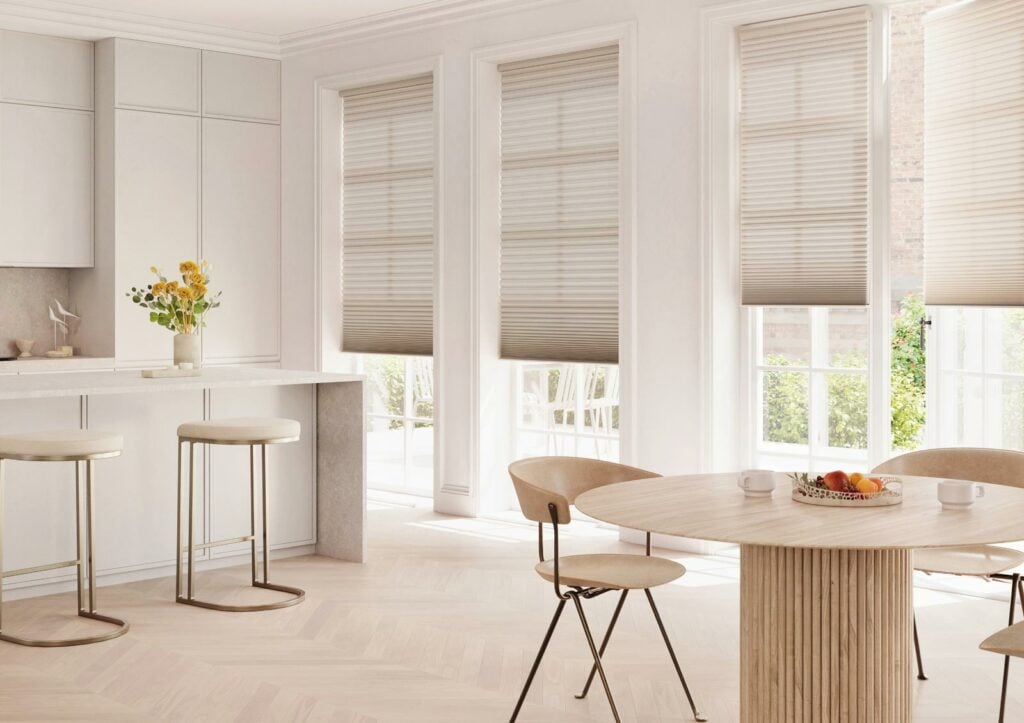
Cellular shades, also known as honeycomb shades, are among the most popular energy-efficient window treatments. Their fabric is formed into pockets that trap air and slow heat transfer between the window and the room. Single-cell models offer basic insulation, while double-cell and triple-cell designs provide additional layers of protection. These shades are available in light-filtering, room-darkening, and blackout materials. Homeowners can choose the level of light control that best suits each space.
A close fit is important for getting the best performance from cellular shades. Custom sizing can reduce gaps and help create a more effective barrier around the window. Side tracks may be available for certain products to limit air movement and light leakage. Top-down, bottom-up models provide privacy while allowing daylight to enter from above. Cellular shades work especially well in bedrooms, offices, and other rooms where insulation and light control are both important.
Solar Shades for Heat and Glare Control
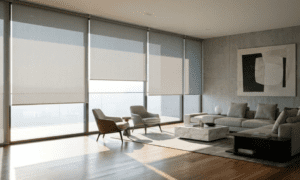
Solar shades use woven screen fabric to filter sunlight and reduce glare without completely blocking the outside view. They are often used in living rooms, home offices, kitchens, and other areas where maintaining visibility is a priority. The openness factor describes how tightly the fabric is woven, with lower percentages providing greater sun protection. Higher openness percentages allow more natural light and a clearer view. Fabric color can also influence glare control, visibility, and heat performance.
Solar shades are most effective when they are lowered before direct sunlight begins heating the room. Motorized versions can be programmed to operate automatically based on the time of day. This is helpful for tall windows, large glass doors, and rooms that are unoccupied during peak sunlight. Interior solar shades reduce heat after sunlight passes through the glass, while exterior versions stop more energy before it reaches the window. Exterior products may offer stronger heat control but must be designed to withstand wind, moisture, and prolonged sun exposure.
Insulated Curtains and Drapery
Curtains and drapery can provide an effective layer of insulation when they are properly selected and installed. Thick fabrics, thermal linings, and blackout materials help reduce sunlight and limit heat movement around the window. Floor-length panels can be useful for large windows and sliding glass doors. Mounting the rod above and beyond the window frame improves coverage. Drapery that fits closely against the wall or window opening generally performs better than loose panels with large gaps.
Layering curtains with another window treatment can improve flexibility and energy performance. For example, homeowners may pair solar shades with lined drapery to manage daytime glare and nighttime privacy. Cellular shades can also be combined with decorative panels for greater insulation and a finished appearance. Curtains should remain closed during periods of direct sunlight and opened when outdoor conditions become cooler. This simple routine can help reduce heat buildup without permanently darkening the room.
Shutters for Durability and Adjustable Control
Interior shutters provide a durable solution for managing light, privacy, and heat. Their adjustable louvers allow homeowners to redirect sunlight without fully covering the window. When the panels and louvers are closed, shutters create a solid barrier that can reduce direct solar exposure. Composite and vinyl materials are often suitable for hot climates because they resist warping, cracking, and fading. Natural wood shutters offer a classic appearance but may require more care in areas with intense sun.
Shutters are easy to clean and can last for many years with basic maintenance. Their fitted design may provide better coverage than standard blinds, especially when they are custom-made for the opening. However, the frames and panels can reduce the amount of visible glass when the shutters are open. They also tend to have a higher initial cost than many fabric shades or basic blinds. Homeowners should compare long-term durability, appearance, and performance when deciding whether shutters are the right investment.
Blinds for Flexible Light Management
Blinds offer precise control over the direction and amount of light entering a room. Horizontal slats can be tilted to reflect sunlight toward the ceiling or away from occupied areas. Faux wood blinds are commonly used in hot climates because they resist heat-related warping better than many natural wood products. Aluminum blinds are lightweight, affordable, and easy to maintain. Vertical blinds are practical for wide windows and sliding patio doors.
Although blinds provide useful light control, they are not usually the strongest option for insulation. Gaps between the slats and around the edges allow some heat to enter the room. Their performance can be improved by pairing them with thermal curtains or another layered treatment. Closing the slats before peak sunlight helps limit direct exposure. Homeowners who value adjustability and affordability may find blinds suitable for rooms with moderate heat gain.
Exterior Shades, Screens, and Awnings
Exterior treatments can be highly effective because they block solar energy before it reaches the window glass. Options include rolling exterior shades, solar screens, fixed awnings, and retractable awnings. These products can reduce heat gain in rooms with strong afternoon or morning exposure. They may also shade walls, patios, and outdoor seating areas. By stopping sunlight outside, exterior treatments can reduce the amount of heat absorbed by the glass.
Materials used outdoors must be able to withstand strong sunlight, dust, moisture, and wind. Professional installation can help ensure that the treatment is securely mounted and operates correctly. Retractable products provide flexibility because they can be extended during hot periods and stored during cooler weather. Motorized systems may include sun and wind sensors for automatic operation. Local building rules or homeowners’ association guidelines should be reviewed before exterior changes are made.
Features to Look for When Comparing Products
The best energy-efficient window treatments combine appropriate materials with a close fit and convenient operation. Homeowners should evaluate how each option handles solar heat, visible light, privacy, and ultraviolet exposure. A treatment that is difficult to operate may not be used consistently enough to deliver meaningful benefits. Custom products often provide better coverage for oversized, arched, or unusually shaped windows. Warranties and resistance to fading are also important in regions with intense sunlight.
Useful features to compare include:
- Insulating fabric or air-pocket construction
- Low openness factors for stronger solar control
- Thermal or blackout linings
- Side tracks or channels that reduce gaps
- Cordless controls for easier operation
- Motorization and programmable schedules
- Fade-resistant and heat-resistant materials
- Ultraviolet light protection
- Easy cleaning and maintenance
- Product and installation warranties
Window orientation should guide the final decision. East-facing windows may require protection from strong morning sun, while west-facing windows often need coverage during the hottest afternoon hours. South-facing windows can receive sustained exposure throughout much of the day. North-facing windows may need less aggressive heat control and can use lighter filtering materials. Matching the treatment to the window’s actual conditions can prevent overspending and improve overall comfort.
Smart Controls and Daily Energy Management
Motorized shades make it easier to use window coverings consistently. Homeowners can schedule treatments to close before sunlight begins heating a room and reopen after the exposure has passed. Smart home integration may allow shades to respond to temperature, sunlight, or occupancy. Automated operation is particularly valuable for hard-to-reach windows and large groups of shades. It can also help manage heat while residents are away from home.
Manual treatments can still provide strong results when they are used strategically. Closing coverings before the direct sun reaches the glass is more effective than waiting until the room is already hot. Opening windows and treatments during cooler periods may help release stored heat when outdoor conditions are favorable. Homeowners should also avoid placing lamps, televisions, or heat-producing equipment near thermostats. Combining sensible daily habits with efficient coverings can improve comfort throughout the home.
Frequently Asked Questions
Which window treatments are the most energy efficient?
Insulated cellular shades, exterior shades, tightly fitted shutters, and thermal drapery are among the strongest options. Actual performance depends on the product, fit, window type, and how consistently the treatment is used.
Do blackout curtains reduce heat?
Yes, blackout curtains can reduce solar heat, especially when they include a thermal lining. They perform best when they extend beyond the window frame and remain fully closed during direct sunlight.
Are solar shades energy efficient?
Solar shades can reduce solar heat and glare while preserving some outward visibility. Lower openness fabrics generally block more sunlight, and exterior solar shades usually provide stronger heat reduction than interior models.
Do blinds help lower cooling costs?
Blinds may reduce direct sunlight and glare, but they offer limited insulation compared with cellular shades or lined curtains. Pairing blinds with another treatment can improve their overall performance.
Are motorized shades worth the investment?
Motorized shades can be worthwhile for large, high, or frequently exposed windows. Scheduling helps ensure that coverings are closed during the hottest parts of the day, which may improve comfort and efficiency.
Should window treatments be installed inside or outside the frame?
Both mounting styles can work, but outside-mounted treatments often provide greater coverage. Inside mounts offer a streamlined appearance, although small edge gaps may allow additional heat and light to enter.
Can different treatments be used in different rooms?
Yes, a room-by-room approach is often the most effective strategy. Bedrooms may need blackout cellular shades, while living areas may benefit from solar shades that preserve the view.
Choosing the Right Treatments for Your Home
Selecting the right window coverings begins with identifying where and when heat enters the home. Rooms with large west-facing windows may benefit from exterior shades, solar screens, or layered interior treatments. Bedrooms may require insulated blackout shades for comfort, privacy, and light control. Living rooms can use solar shades or shutters to balance views with sun protection. Kitchens and bathrooms may need moisture-resistant materials that are easy to clean.
A combination of products often produces better results than using one style throughout the entire house. Cellular shades can improve insulation, while drapery adds another layer of protection and visual softness. Exterior coverings may be reserved for windows with the most severe exposure. Professional measurement and installation can reduce gaps and help each product perform as intended. By choosing energy-efficient window treatments based on climate, orientation, room function, and daily habits, homeowners can create a cooler and more comfortable living environment.