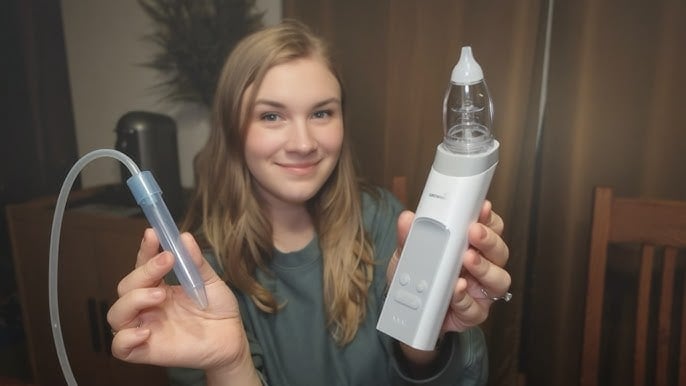
Congestion can derail feeds and overnight sleep faster than almost any other newborn hassle. A practical electric nasal aspirator setup—saline first, then controlled suction—helps caregivers clear mucus at home with less guessing and less force.
Start With Anatomy and Expectations
Infant nasal passages are small, and babies prefer breathing through the nose. Even mild mucus can interrupt latch and fragment sleep. Dry indoor air, seasonal viruses, and reflux can thicken secretions quickly. Not every sniffle needs a device; focus on comfort cues such as struggle during feeds, repeated waking with a blocked sound, or unsettled breathing when lying flat.
Home care supports comfort. It does not replace medical evaluation when breathing looks hard, lips look bluish, fever climbs, wet diapers decrease, or feeding fails for sustained periods.
The Reliable Order of Operations
Soften mucus with infant saline. Wait briefly. Then place a soft tip at the nostril opening—never deep inside—and use short suction passes. Wipe the face, switch sides, and stop if the baby becomes highly distressed. You can always try again after a calming break.
- Wash hands thoroughly.
- Apply infant saline as labeled.
- Support the head; keep the tip shallow.
- Use brief, gentle suction.
- Clean and air-dry parts immediately.
What to Compare in Electric Units
Look for newborn-sized tips, adjustable suction levels, a clear mucus chamber, quiet operation, and parts that disassemble for washing. Battery life matters during multi-day colds. Spray-and-suction combinations can reduce juggling bottles and bulbs at 2 a.m., provided cleaning stays simple.
A model such as the Momcozy BreezyClear 2-in-1 Spray & Suction Electric Nasal Aspirator sits in that product class—judge it by ease of cleaning, suction adjustability, and whether the design fits your real nightly rhythm rather than marketing language alone.
Safety Boundaries Worth Repeating
Do not share unclean tips between children. Do not repurpose adult nasal devices on infants. Follow manufacturer cleaning and battery guidance. If blood-tinged mucus appears after aggressive suction, pause and ask a clinician before continuing. Escalate promptly for labored breathing or other red-flag symptoms.
Feeding, Sleep, and Handoffs
Clearing the nose before nursing or bottle feeding often improves latch endurance. Before sleep, a brief saline-plus-suction routine may reduce waking from blocked airflow—while safe sleep rules still come first. Write a one-page handoff for partners and sitters covering saline brand, drops, tip size, suction level, and when to stop.
Cleaning and Environment
Disassemble tips and cups after each session. Wash with warm soapy water or follow sterilizing instructions if provided. Air-dry completely and inspect silicone for tears. Keep room humidity comfortable without creating damp walls or mold, and avoid smoke exposure. During dry winters or flights, saline alone sometimes helps between suction sessions.
- Prioritize saline before suction
- Keep tips shallow and sessions short
- Clean every time without shortcuts
- Escalate to medical care for hard breathing
Common Mistakes That Make Congestion Worse
Pushing tips too far can irritate tissue. Skipping saline and jumping to strong suction often fails against thick mucus. Sharing tips without washing can move germs around the household. Overusing suction every hour can leave the nose sore without improving overnight sleep. Treating every newborn snort as an emergency also creates unnecessary stress—learn your baby’s baseline first.
Perspective for Long Cold Weeks
An aspirator is a comfort tool, not a scorecard of parenting success. Some nights mucus wins anyway. Rest when you can, rotate caregivers, and keep clinician numbers handy. Track which times of day congestion peaks and store the kit in one bin: saline, tissues, spare tips, charging cable, and a small towel.
The first few attempts may feel clumsy. Keep sessions short, celebrate small wins like a calmer feed afterward, and refine tip size and suction level as your baby grows. Confidence comes from repetition more than from any single device feature.
Stay patient with yourself as much as with your baby. Gentle technique compounds over dozens of small sessions across the season, and that steadiness helps the whole household sleep a little easier. When symptoms escalate beyond ordinary colds, pause home routines and seek professional guidance promptly rather than increasing suction intensity.
During viral waves, ask your care team which symptoms warrant same-day visits in your area. A quick clarifying call often prevents both unnecessary panic and dangerous delays, while a calm home routine covers the ordinary nights in between.
Build the habit before peak season if you can: practice with a calm baby, confirm tip fit, and make sure every caregiver knows the stop rules. Preparation turns congestion nights from chaos into a short, familiar checklist.
A Practical Nighttime Checklist
Before bed, confirm the device is charged, tips are clean and dry, and saline is within reach. Dim lights, keep a burp cloth nearby, and agree who will handle suction while the other soothes. After the session, wipe the face, settle the baby on a flat sleep surface, and wash parts before you forget. Small systems beat late-night improvisation.
If one approach fails, change one variable at a time—more saline dwell time, a softer tip, or a lower suction level—rather than escalating force. Consistency and patience usually outperform stronger settings.
Travel and Daycare Notes
Pack a travel kit with saline, a spare tip, tissues, and a charged device when you leave home for more than a few hours. Daycare handoffs work better when written instructions travel with the bag. Remind caregivers that shallow tips and short sessions matter more than finishing every nostril in one try.
On flights, cabin air can dry nasal passages quickly. Saline alone may help between suction sessions, and a quieter device is easier to use without startling a tired baby. After travel days, clean parts thoroughly before the next bedtime routine so residue does not harden overnight.
Keep expectations realistic: some colds still disrupt sleep even with perfect technique. Your job is steady comfort support, not zero mucus. That mindset reduces frustration and keeps suction gentle when everyone is exhausted.