For years, Durban’s creative industry took a backseat to the agency scene in Cape Town or the corporate design market in Johannesburg. But in 2025 and as it goes into 2026, something far more interesting is going on: Durban is not just keeping up-it is carving out its own identity as the training ground for serious design talent.
Walk around Florida Road, Glenwood, or the small studios scattered across Umhlanga, and you’ll notice the same trend: teams are younger, portfolios look sharper, and many new designers entering the industry have skills that used to take years to develop. The shift isn’t accidental. It’s the result of a noticeable change in how Durban creatives learn.
A new standard for practical training
The track for an aspiring designer was straightforward: apply to college, sit in classes for a year or two, learn the theory, graduate with a certificate, and then figure things out when you hit the real world. That model doesn’t fit how today’s design industry works. Employers want people who can create work on day one, not after months of settling in.
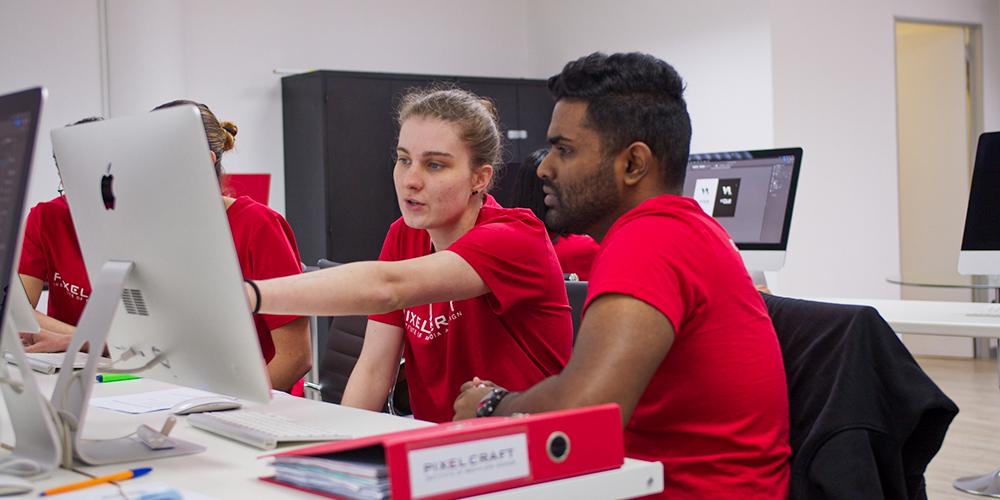
That’s where newer graphic design courses Durban students are choosing come in. These programs are designed around real projects. Instead of spending all their time on abstract principles, students work through brand briefs, layout challenges, animation exercises, web design builds, and client simulations. They learn how to take feedback, revise work, and present ideas professionally.
Studios in Durban are taking notice. When a junior designer is able to show up with a portfolio of actual client-style pieces, rather than class room exercises, it immediately changes how they’re viewed in interviews.
More flexibility is drawing more students
Another factor driving Durban’s design scene forward is how flexible the training has become. Five years ago, the idea of studying design online felt limited or unreliable. Today, it’s a completely different landscape: some schools have built fully structured online graphic design courses that South African learners can complete from anywhere. These aren’t quick tutorials but full programmes comprising mentoring, exercises, feedback loops, and Adobe-based training.
This flexibility has been most attractive to people who cannot commit to a full-time program. Many freelancers, young parents, and people working in other fields often take on a part-time graphic design course to study alongside the demands of managing the rest of their lives. The part-time setup also tends to bring out highly disciplined designers because they are directly applying new skills to small businesses, client work, or side projects they’re running alongside.
For many Durban creatives, the part-time route is also a stepping stone into freelancing. They learn while building up an income stream which creates momentum long before the course ends.
A unique design identity is emerging for Durban.
One of the most encouraging changes is how Durban designers are blending influences. You see Zulu pattern work reinterpreted for modern branding. You see illustration styles influenced by the city’s mix of cultures. You see animation work that feels handmade instead of corporate. This blend is giving Durban creatives something Cape Town and Johannesburg don’t have at the same scale: a cultural fingerprint.
Good training programs don’t suppress this identity. They support it. Students are encouraged to explore their own interests while still learning the fundamentals: typography, layout, colour, software, and conceptual thinking.
Studios want problem-solvers, not shortcut users.
When speaking to local agencies, one theme comes up again and again: they want designers who can think. Anyone can watch a tutorial and copy an effect, but real design work is about making decisions. Choosing the right layout, building a grid that works, pairing typefaces, or preparing artwork for print — all of these are skills that separate amateurs from professionals.
The stronger Durban courses challenge students to justify their decisions, rather than simply execute tasks. It’s the difference between “I made it look nice” and “I used this layout because it improves readability and supports the brand message.” That level of clarity is what agencies trust.
Durban is no longer the “backup option”; it has now become a first choice. What we are seeing now is the beginning of a shift. Students are staying here, instead of relocating. Companies are hiring here, instead of outsourcing. And creatives who have been training online – increasingly choose to build their portfolios in Durban, because the work environment is more collaborative than it is competitive. All the signals point in the same direction: Durban’s design community is heading into its strongest phase in years.
Where to Study Graphic Design in Durban ?
Research quicky reveals that actual quality education in design is not by way of the big institutes but rather cutting edge training centres. At the forefront of answering the call for real skills is Pixel Craft. Their 5-star rated graphic design courses are a shining reminder that education has evolved – the lumbering dinosaurs of old institutions have fallen way behind.
With practical training, flexible study routes, and a culture that encourages experimentation, the city is finally on the map as a genuine hub for emerging creative talent.