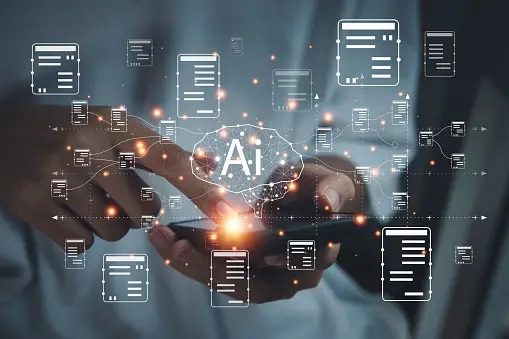
The year 2026 marks the “Year of Truth” for Artificial Intelligence. The novelty of general-purpose chatbots has worn off, and the professional world has demanded something more reliable: Domain-Specific Language Models (DSLMs). These are AI systems trained on curated, high-fidelity datasets within a specific vertical—such as Medicine, Law, Engineering, or Finance. DSLMs are the “Experts” that are finally allowing AI to handle “High-Stakes” decision-making without the risk of hallucination or error.
The Architecture of Accuracy
Why are DSLMs dominating the 2026 Business landscape? Unlike general models, which are trained on the “Noise” of the open web, a DSLM is built on a “Clean Core.”
-
Curated Knowledge Bases: A “Legal DSLM” is trained on millions of case files, statutes, and confidential contracts. This allows it to understand “Legal Precedent” with a granularity that a general model cannot match.
-
Reasoning Layers: DSLMs often use “Neuro-Symbolic” architectures, combining the “Pattern Recognition” of neural networks with the “Rule-Based Logic” of traditional programming. This ensures that the AI’s output always follows the “Laws of Physics” or the “Rules of GAAP Accounting.”
-
On-Device Inference: Because DSLMs are smaller and more efficient, they can run on “Local Hardware.” This is critical for industries like Healthcare, where patient data can never leave the hospital’s private network.
Solving the “Black Box” Problem with Explainable AI (XAI)
A major barrier to AI adoption in 2025 was the “Lack of Explainability.” In 2026, DSLMs have solved this through “Explainable AI” protocols. When a DSLM makes a recommendation—such as a specific surgical path or a complex tax strategy—it provides a “Logic Map.” This map shows the specific data points, regulations, and historical precedents it used to reach its conclusion. This allows the human professional to “Audit” the machine’s reasoning, creating a “Partnership of Accountability.”
The “Inference Economy” and Unit Economics
In 2026, the focus of the AI industry has shifted from “Training” to “Inference.” The “Cost of Intelligence” is now a primary factor in Business profitability. DSLMs are much cheaper to run than massive general models because they require less “Compute” to answer a specific question. This “Efficient Unit Economics” is allowing small and mid-sized enterprises to deploy “World-Class Intelligence” at a fraction of the cost previously required” This is critical for industries like Healthcare, where patient data.
Conclusion: The Expert at Every Desk
By 2026, AI is no longer a “General Assistant”; it is a “Departmental Expert.” The rise of DSLMs means that every employee now has a “Partner” with a Ph.D. in their specific field. This is the Technology that is finally delivering on the promise of the “Augmented Professional.”A major barrier to AI adoption in 2025 was the “Lack of Explainability.” In 2026, DSLMs have solved this through “Explainable AI” protocols. When a DSLM makes a recommendation—such as a specific surgical path or a complex tax strategy—it provides a “Logic Map.” This map shows the specific data points, regulations, and historical precedents it used to reach its conclusion. This allows the human professional to “Audit” the machine’s reasoning, creating a “Partnership of Accountability.”