
DHL Opens Gateway at Shenzhen Airport to Strengthen China’s Global Logistics Connectivity

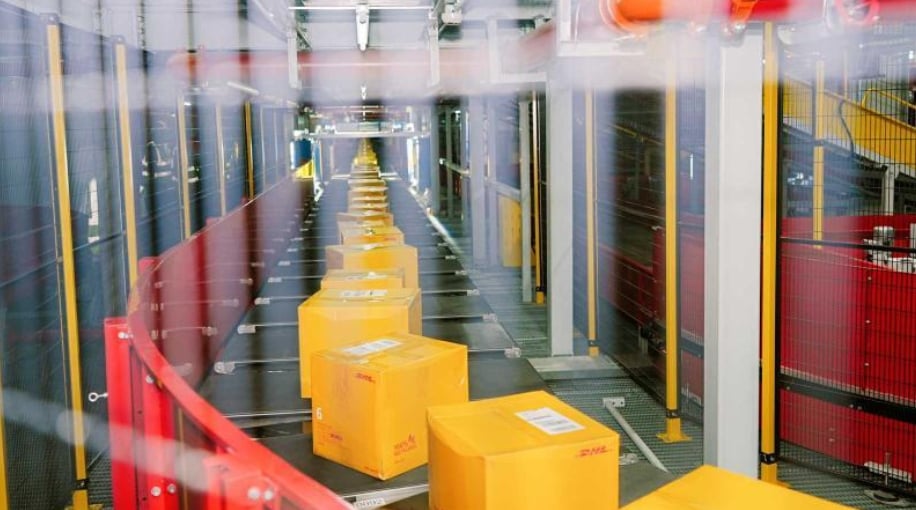
When one of the world’s largest logistics companies pours more than 1.2 billion yuan into a single facility in a single city, it tells you something about the confidence behind that act. DHL Express has officially put its new “super gateway” into operation at Shenzhen Bao’an International Airport. It is a statement of faith in Shenzhen, in South China’s manufacturing heartland, and in the broader trajectory of the Chinese economy.
Inside the New DHL Super Gateway
The numbers behind the upgraded facility speak for themselves. Spanning an operating area of 22,000 square meters within the customs supervision zone of Shenzhen Bao’an International Airport, the DHL super gateway now boasts a daily cargo-handling capacity of 900 metric tons — roughly triple what the site could manage before.
The project, which represents DHL’s largest single investment on the Chinese mainland to date, was built on top of the company’s existing Shenzhen gateway. Construction began in 2022 and took four years to complete, reflecting a sustained, long-term commitment to expanding international logistics capacity in the region.
What makes the facility genuinely modern, however, goes beyond its sheer size. The super gateway is designed around automation, unmanned operations, and intelligent technologies. High-speed sorting systems, automated storage units, robotic arms, and automated guided vehicles work in concert to create an end-to-end intelligent logistics system covering unloading, storage, sorting, handling, inspection, and monitoring.
These capabilities are purpose-built for the kinds of goods now flowing out of South China in ever-increasing volumes — high-value, time-sensitive products such as consumer electronics, lithium batteries, life-sciences equipment, and the booming wave of cross-border e-commerce parcels that have reshaped global shipping patterns in recent years.
John Pearson, CEO of DHL Express, put it: “China’s role has fundamentally changed. It is no longer just the world’s factory — it is increasingly a global hub for innovation and demand.” The new Shenzhen facility, he said, is built to handle exactly that level of sophistication.
Why Shenzhen Airport Is the Right Home for This Hub
The choice of Shenzhen airport as the site for this mega-investment is no accident. Shenzhen airport has steadily grown into one of China’s most important cargo powerhouses, serving as a critical air gateway not just for Shenzhen itself but for the entire Guangdong-Hong Kong-Macao Greater Bay Area. DHL first relocated its Shenzhen operations to the airport’s customs supervision area back in 2007, and the gateway has since served as a linchpin in the company’s logistics network across South China and the wider Asia-Pacific.
Once the super gateway reaches full operational capacity, it will support additional direct cargo flights from Shenzhen to destinations across the Asia-Pacific and beyond. That means premium goods from across the Greater Bay Area — electronics assembled in Shenzhen, cross-border e-commerce parcels originating in Guangzhou, precision components manufactured in Dongguan — will reach overseas consumers faster and more reliably than ever before.
A Signal for Foreign Investment and Economic Growth
DHL’s decision to pour resources into Shenzhen is also a broader signal about foreign business confidence in China. The investment comes at a time when China’s foreign trade continues to show resilient growth — combined imports and exports in the first half of 2026 surged 16.9 percent year-on-year to 25.47 trillion yuan, according to the General Administration of Customs. Trade in hardware supporting computing power alone jumped 56.6 percent during the same period.
For foreign businesses operating in or trading with China, faster and more reliable logistics infrastructure like DHL’s super gateway directly translates into competitive advantage. Shorter transit times, higher handling capacity, and intelligent sorting systems reduce costs, minimize delays, and open up new markets that were previously too slow or too expensive to reach. As supply chains evolve toward greater diversification and resilience, DHL is repositioning its global network to align with shifting trade flows between China and Europe, Southeast Asia, and emerging markets.
Pearson noted that DHL remains optimistic about what he called “China Opportunity 2.0” — a new phase of development defined by innovation-driven growth, rapid infrastructure upgrades, and advances in artificial intelligence and high-end manufacturing. China, he said, will remain one of DHL’s top-priority investment markets globally, and the company plans to continue investing in infrastructure, air network capacity, and last-mile delivery capabilities across the country.
The broader data supports this confidence. Almost 4,800 foreign-funded enterprises made additional investments in China in the first half of 2026, while the number of newly established foreign-invested enterprises rose 5.3 percent year-on-year, according to the Ministry of Commerce. China is also actively optimizing its institutional environment for foreign investment, with recent action plans pledging wider market access in sectors such as services, finance, and pharmaceuticals.
Explore More of Shenzhen’s Growth Story
The DHL super gateway at Shenzhen airport is one more marker of Shenzhen’s evolution into a world-class logistics, trade, and innovation hub. It sits alongside a broader story of infrastructure expansion, manufacturing excellence, and an increasingly open business environment that continues to attract global companies and entrepreneurs alike.
For readers interested in learning more about Shenzhen’s economic development, infrastructure projects, and international business landscape, Amazing Shenzhen offers a comprehensive portal of news, practical guides, and insights into one of the world’s most dynamic cities. Whether you are an investor scouting opportunities, a business owner exploring supply-chain options, or simply curious about the city shaping the future of global trade, Shenzhen’s story is one worth following closely.







Comment