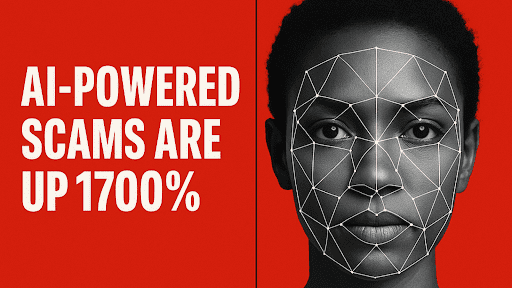
CypherFace, a fintech company specializing in facial biometric authentication, has launched a payment verification system designed to prevent fraudulent transactions before they occur. The platform went into production in early 2024 and is now processing transactions for payment processors and merchants across North America.
The company enters a market facing significant security challenges. Payment fraud in the European Economic Area reached €4.2 billion in 2024, representing a 17% increase from the previous year. Synthetic identity fraud has become particularly problematic, with cases involving false identities increasing by 60% in 2024 compared to 2023.
Real-Time Authentication Technology
CypherFace uses artificial intelligence to verify user identity through facial biometrics during the payment process. The system performs liveness detection to confirm that a physically present individual is authorizing each transaction. Businesses integrate the technology through an API that connects to existing payment infrastructure.
“We built CypherFace because authentication had to happen at the exact moment of transaction, not after the damage is done,” said Syed Samir Hassan, founder and CEO of CypherFace. “Every second of delay creates opportunity for fraud. Our system eliminates that window.”
The platform encrypts facial scans at the point of capture and converts them into non-reversible hashes. Raw biometric data is not stored externally or shared with third parties. The system returns only a pass or fail verification result to the merchant.
Hassan added that the company designed its privacy protocols with regulatory compliance as a priority. “We understood from day one that biometric data requires a different level of protection. The architecture we built ensures that even we cannot reverse engineer the facial data once it’s been processed.“
Early Deployment Results
A payment processor serving e-commerce platforms integrated CypherFace into its checkout infrastructure in late 2024. Within 45 days, the system flagged more than 1,200 transactions involving stolen payment cards and synthetic identities. Many of these transactions had previously bypassed the processor’s existing fraud detection tools.
The integration resulted in a 62% reduction in chargebacks for that segment. Merchant trust scores improved as legitimate transactions moved through the system without additional friction. The processor has since expanded CypherFace deployment across additional merchant accounts.
“The results spoke immediately,” Hassan said. “Fraudsters rely on speed and volume. When you can verify identity in real time, their entire operation model breaks down. They move on to softer targets.”
Global Compliance Standards
CypherFace developed its platform to meet Know Your Customer and Anti-Money Laundering requirements in multiple jurisdictions. The system supports compliance workflows for financial institutions that must verify customer identity as part of regulatory obligations.
The technology addresses emerging threats including deepfake attacks, which have been used to bypass facial recognition systems in recent fraud schemes. In one case reported by Hong Kong police, deepfake technology was used at least 20 times to deceive facial recognition systems using stolen identity cards. CypherFace’s liveness detection technology is designed to identify and block such attempts.
Hassan noted that fraud tactics have become more sophisticated. “Criminals are using the same AI tools that power legitimate businesses. The difference is we’re applying them defensively, at the point where it matters most. Every authentication request goes through multiple verification layers designed to catch spoofing attempts.“
North American Expansion
CypherFace currently serves clients in the United States and plans to expand into Canada and Mexico in 2026. The company is targeting regions with high fraud exposure and strong demand for identity verification solutions.
The fintech sector has increasingly adopted biometric authentication as a primary security measure. Major financial institutions including Wells Fargo, HSBC, and digital banks like Revolut have implemented facial or fingerprint verification for customer login and transaction authorization.
Hassan said CypherFace differentiates itself through its focus on the payment transaction itself rather than account access. “Logging into an app is one thing. Authorizing a payment is another. We’re focused on that critical moment when money actually moves. That’s where fraud happens, and that’s where prevention has to happen.”
The company offers its technology to payment processors, merchant acquirers, and platforms handling high transaction volumes. Implementation typically requires minimal changes to existing systems, with the API designed for integration into standard payment flows.