How Custom Application Development Companies Are Powering Business Transformation in 2025–2026
Every organization today relies on software, from the apps employees use to manage tasks to the systems that power customer interactions. Yet many companies still depend on outdated, fragmented, or generic tools that no longer support their goals. In 2025–2026, when markets evolve rapidly and customer expectations shift overnight, businesses need software built around their workflows, their data, and their growth plans.
This is exactly where a custom application development company becomes essential. Instead of forcing your processes into a generic template, custom software is designed to fit your operations perfectly. It empowers brands to scale, automate, and differentiate.
This article explores why companies are choosing custom software development solutions, what these services include, and how partnering with the right development team unlocks measurable business impact.
What Is Custom Application Development?
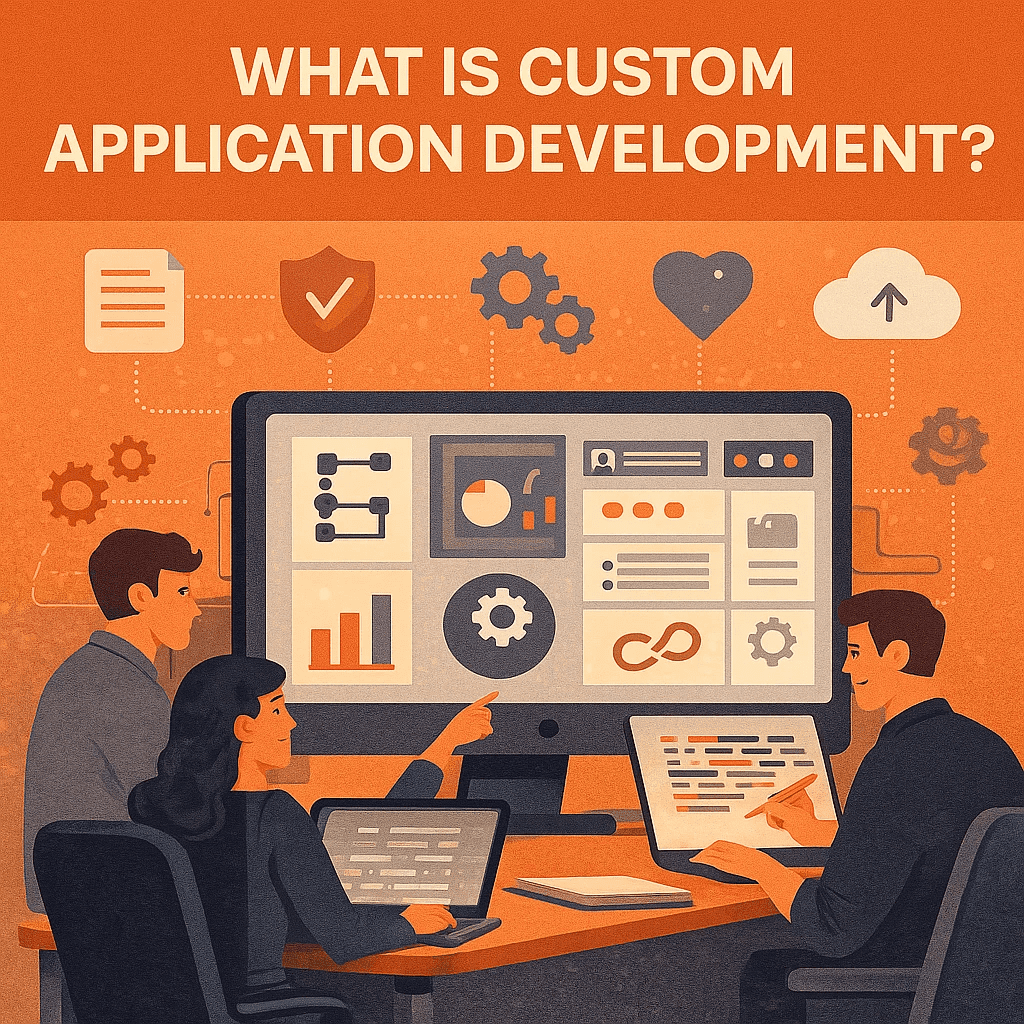
Custom application development is the end-to-end creation of software tailored to a specific organization’s needs. Unlike off-the-shelf products with broad functionality and rigid frameworks, custom solutions are built to align directly with:
- Internal workflows
- Compliance requirements
- Industry-specific processes
- Data structure and analytics needs
- Customer experience goals
- System integration requirements
A custom application development company works closely with stakeholders to design, architect, code, test, deploy, and support a system that solves challenges no generic tool can.
Common examples of custom solutions include:
- Customer portals or internal dashboards
- ERP and CRM platforms tailored to unique operations
- Data analytics and reporting applications
- Industry-specific SaaS products
- Mobile or web apps for customers or employees
- AI-enabled tools for automation and insights
Why Companies Are Moving Away from Generic Software
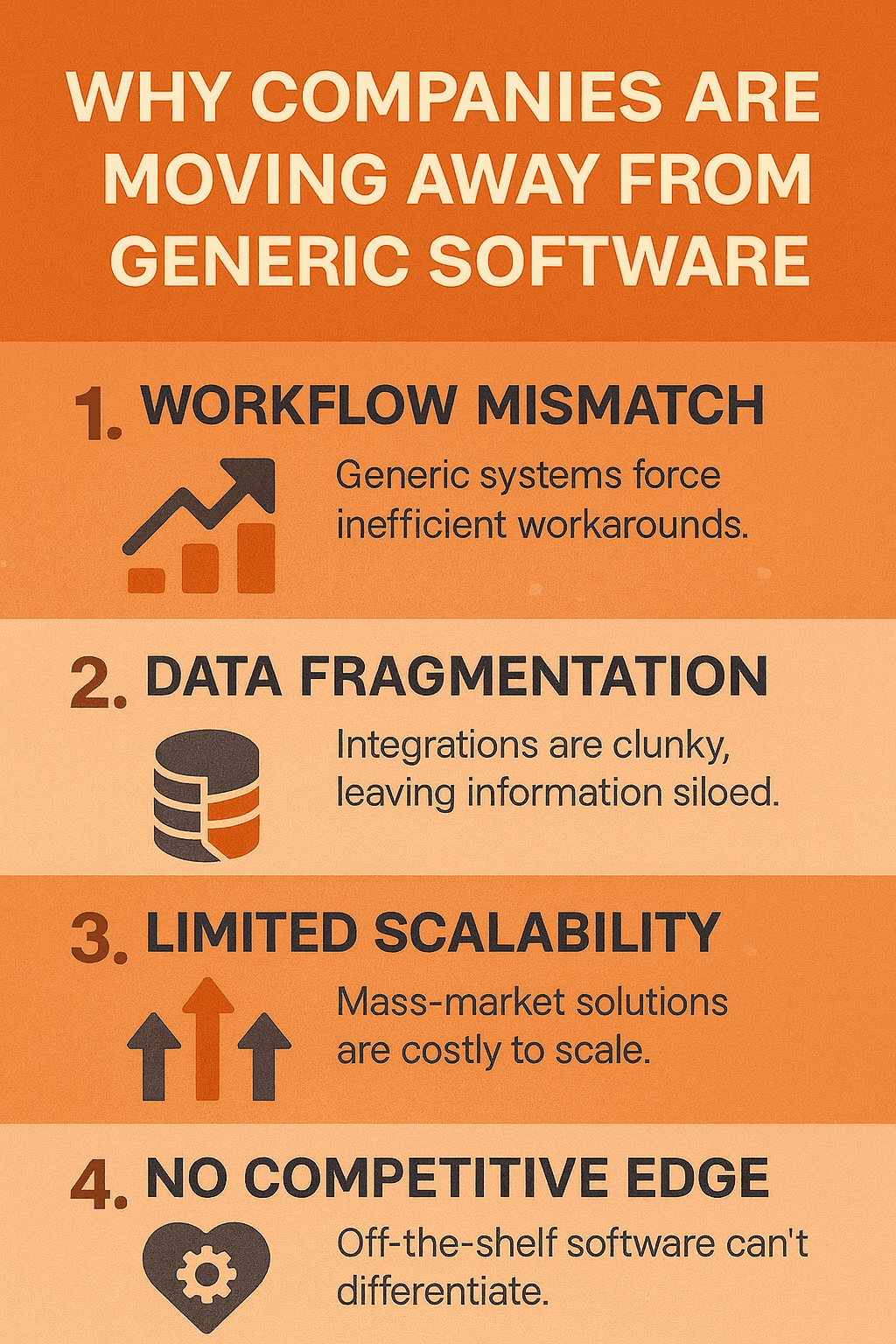
The shift toward tailored digital systems isn’t a fad, it’s a response to real limitations with traditional software products.
1. Workflow Mismatch
Most generic applications are built for mass use. Their features cater to the average user, not the specifics of your organization. That mismatch forces teams to:
- Change their processes
- Create workarounds
- Manage tasks manually
- Use spreadsheets to fill functionality gaps
A custom application development agency eliminates this friction by designing software around your operations, not forcing the business to adapt.
2. Data Fragmentation
Off-the-shelf systems rarely integrate smoothly with other tools. As a result:
- Data is siloed
- Reporting is incomplete
- Decision-making slows down
- Teams waste time reconciling information
Custom solutions create a unified data flow, connecting CRM, ERP, finance, HR, logistics, and customer systems into one cohesive ecosystem.
3. Limited Scalability
Generic platforms scale superficially. Adding users or features may require costly add-ons, higher-tier plans, or separate tools altogether. Over time, the cost becomes unpredictable.
A custom solution scales organically: new modules, APIs, and features can be added as needed, without vendor limitations.
4. No Competitive Edge
If competitors use the same software, no one stands out. Custom software, on the other hand, enables:
- Proprietary workflows
- Unique customer experiences
- Automated processes competitors cannot replicate
This is why growth-focused companies increasingly search for a custom app development company rather than a standard product.
Strategic Benefits of Custom Software Development Solutions
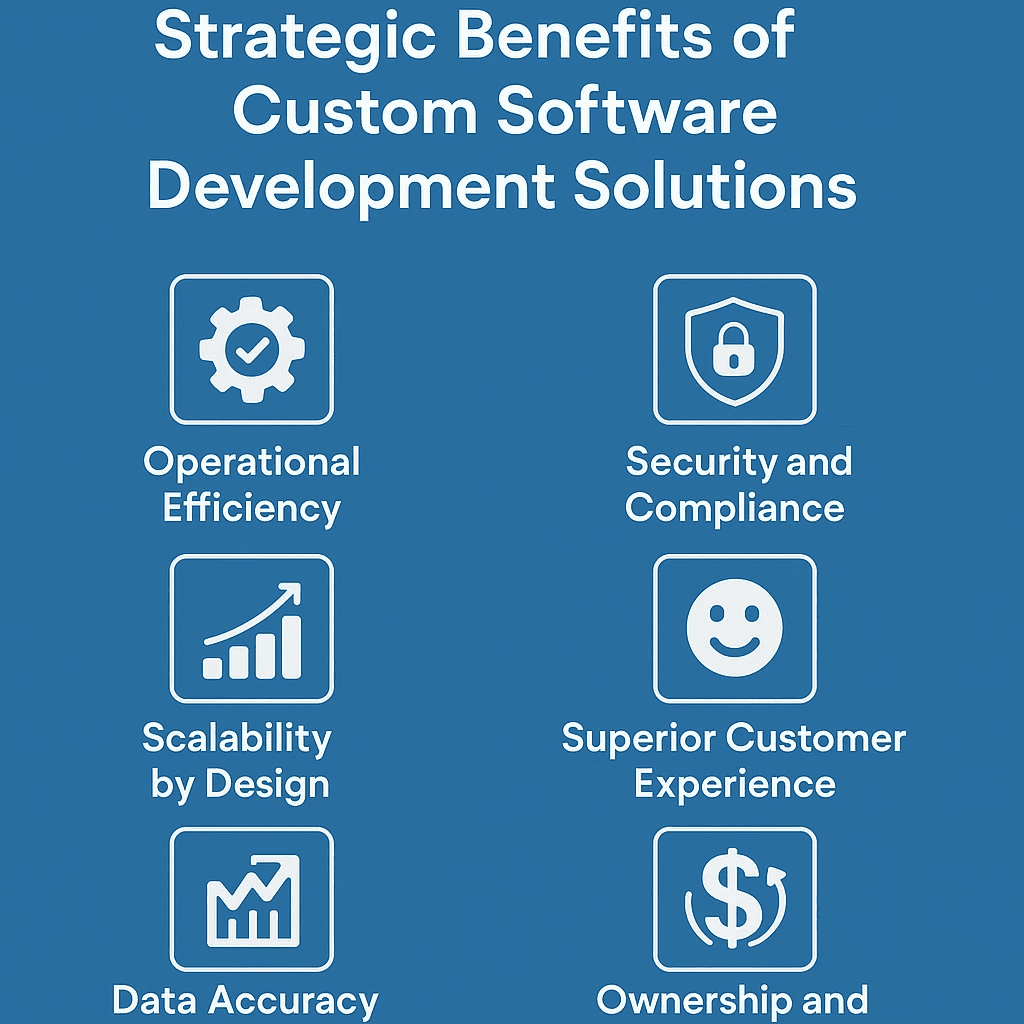
Businesses that invest in custom solutions gain advantages that compound year over year.
1. Operational Efficiency
Automation replaces repetitive tasks, accelerates workflows, and removes unnecessary steps.
Example: A logistics company consolidated billing, scheduling, and tracking into one custom platform, reducing paperwork time by 40%.
2. Scalability by Design
Unlike generic products, custom systems are built from the beginning to scale. This includes:
- Modular architecture
- Cloud-native infrastructure
- Load balancing
- API-first design
As your business grows, the software grows with it.
3. Data Accuracy and Unified Insights
With a centralized source of truth, leaders rely on:
- Consistent reporting
- Real-time dashboards
- Predictive analytics
- Improved forecasting
Better data means better decisions.
4. Security and Compliance
Custom applications support industry-specific standards such as:
- GDPR
- HIPAA
- PCI DSS
- SOC 2
Development teams implement role-based access, audit trails, encryption, and secure coding practices throughout the lifecycle.
5. Superior Customer Experience
Custom systems allow businesses to personalize interactions at scale, from dynamic dashboards to streamlined onboarding.
6. Ownership and Long-Term ROI
While custom development requires investment, long-term value is undeniable:
- No recurring licenses
- No vendor lock-in
- Full control over updates
- Predictable maintenance costs
With targeted automation, companies often see ROI in under 18–24 months.
What Custom Application Development Services Typically Include
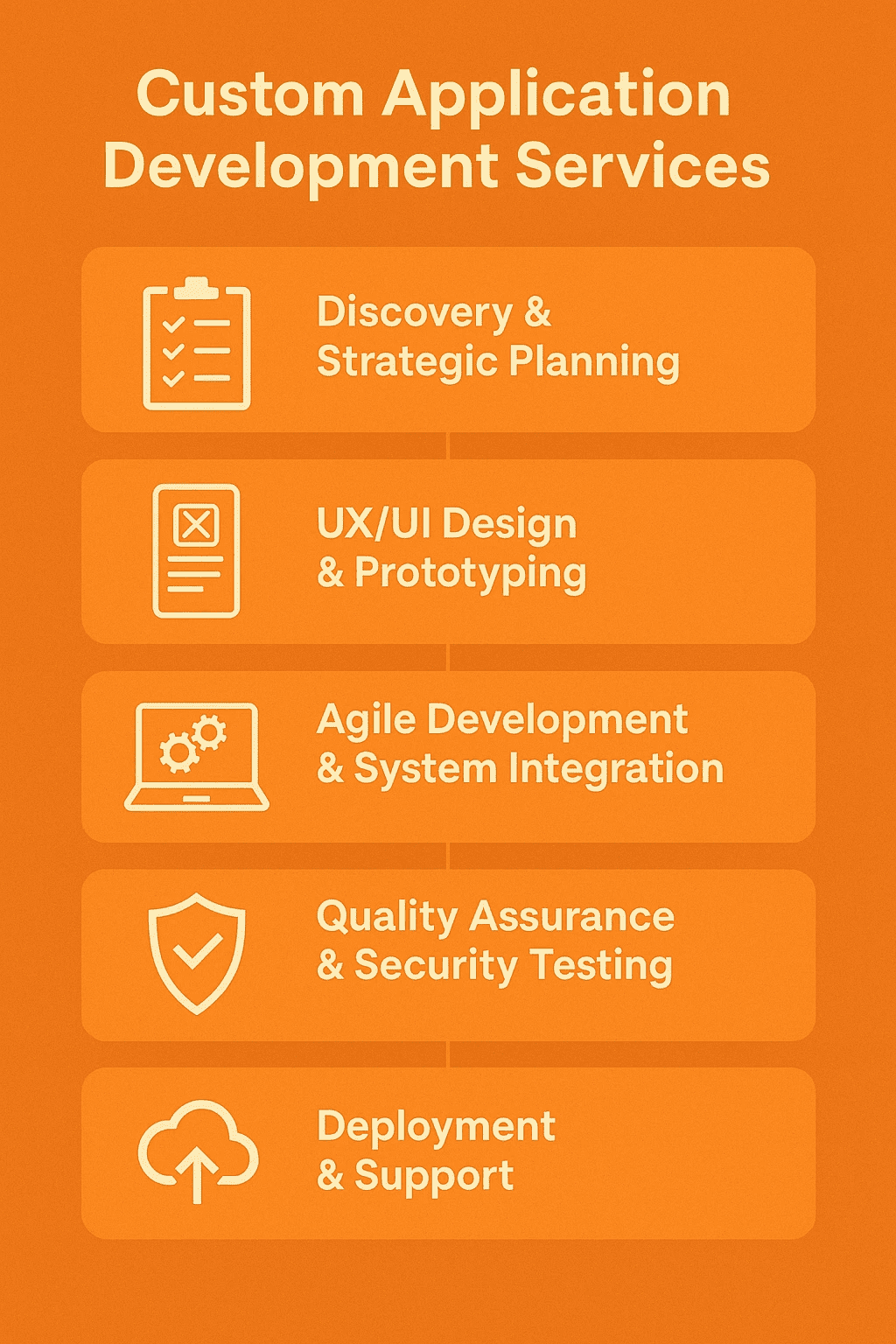
A professional provider delivers an end-to-end process structured around business outcomes.
1. Discovery & Strategic Planning
Specialists analyze existing workflows, conduct interviews, map out requirements, and identify opportunities for automation or integration.
Outputs include:
- System architecture plan
- Feature list and user stories
- Project timeline
- Budget estimate
2. UX/UI Design & Prototyping
Designers create:
- Wireframes
- Interactive prototypes
- UX flows
- High-fidelity mockups
This ensures the application is intuitive, user friendly, and visually aligned with the brand.
3. Agile Development & System Integration
Developers build custom features using iterative sprints. Integrations may include:
- CRM and ERP systems
- Payment gateways
- IoT devices
- Cloud platforms
- Internal databases
A custom software application development company typically uses modern tech stacks like:
Node.js, Python, .NET, React, Angular, AWS, Azure, Docker, and Kubernetes.
4. Quality Assurance & Security Testing
Testing includes:
- Unit testing
- API testing
- Penetration tests
- Performance audits
- Regression testing
This ensures reliability across environments.
5. Deployment & Support
Finally, the application is deployed to production environments with monitoring, analytics, and ongoing maintenance to ensure optimal performance.
A good partner also provides long-term enhancement cycles to adapt to new business requirements.
Industries That Benefit Most From Custom Software Development
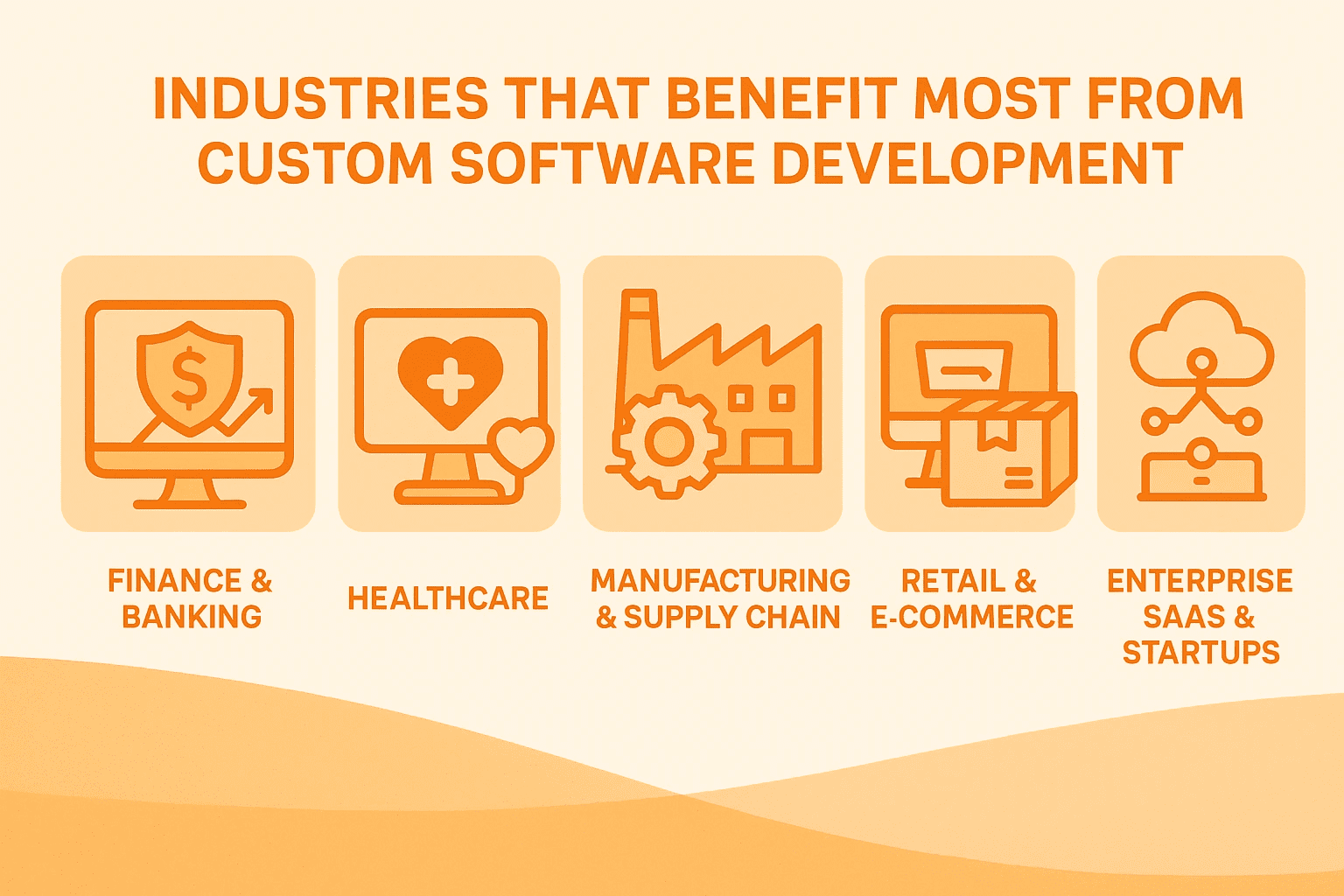
Although every organization can benefit from tailored applications, some industries depend on them for mission-critical operations.
1. Finance & Banking
Use cases:
- Fraud detection tools
- Customer self-service portals
- Compliance dashboards
- AI-powered analytics
2. Healthcare
Use cases:
- Patient portals
- Scheduling systems
- Medical device integrations
- HIPAA-compliant applications
3. Manufacturing & Supply Chain
Use cases:
- Inventory automation
- ERP/CRM integrations
- Predictive maintenance
- IoT-enabled monitoring
4. Retail & E-commerce
Use cases:
- Omnichannel order management
- Inventory syncing
- Custom loyalty systems
- Dynamic pricing engines
5. Enterprise SaaS & Startups
Use cases:
- MVP development
- Industry-specific SaaS products
- Client-facing portals
- Multi-tenant cloud platforms
How to Choose the Right Custom Application Development Company
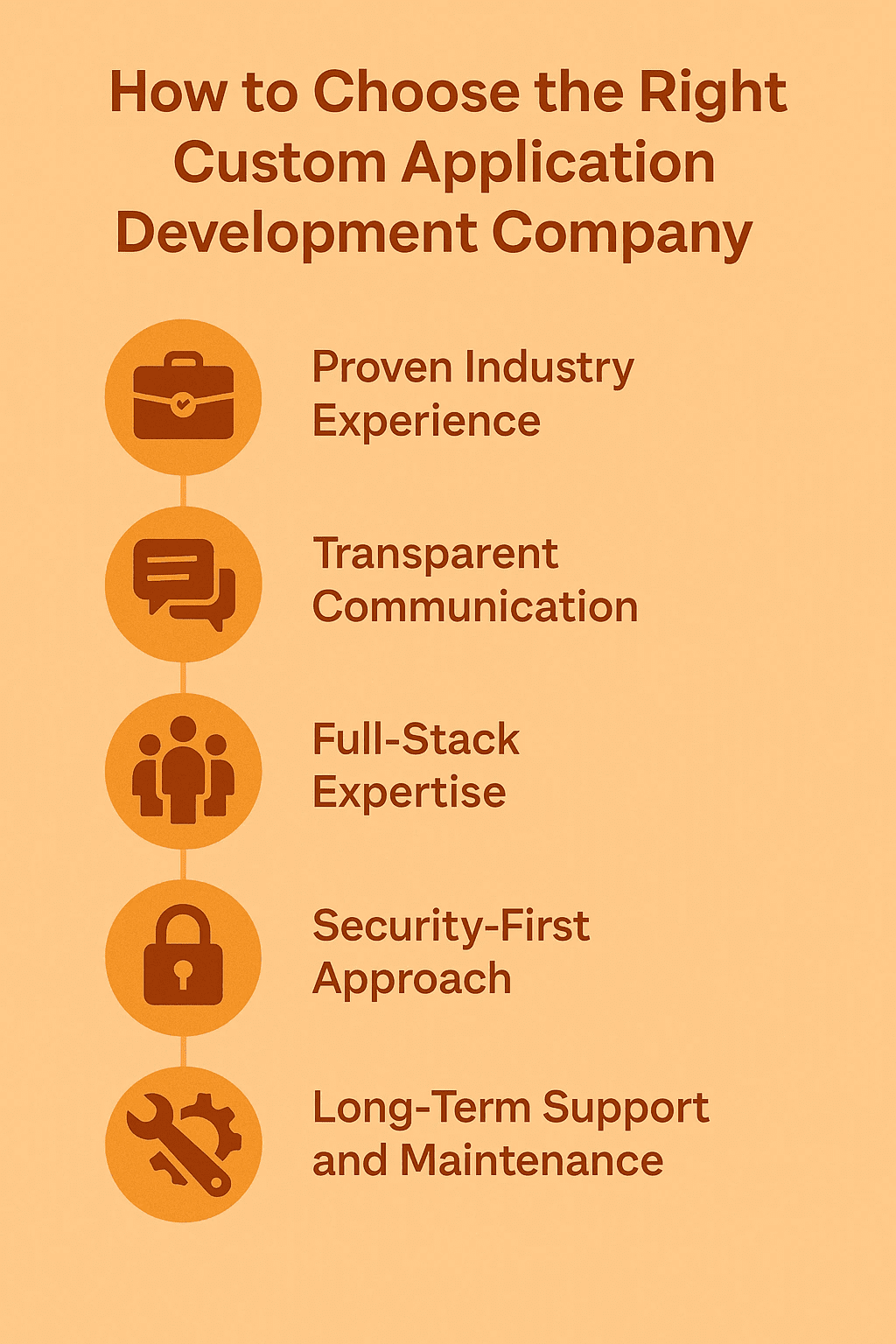
Finding the right partner matters as much as the product itself. Here’s what separates high-performing agencies from the rest:
1. Proven Industry Experience
Look for past work in your industry. A knowledgeable partner reduces risk, accelerates development, and ensures compliance.
2. Transparent Communication
Weekly sprints, clear timelines, and open reporting are essential for predictable delivery.
3. Full-Stack Expertise
A strong team includes:
- Backend developers
- Frontend engineers
- UX/UI designers
- QA testers
- DevOps professionals
- Business analysts
4. Security-First Approach
Security should be embedded from day one — not added later.
5. Long-Term Support and Maintenance
Custom software evolves. Your partner should offer:
- Upgrades
- Monitoring
- Bug fixes
- Feature enhancements
The ROI of Custom Business Application Development
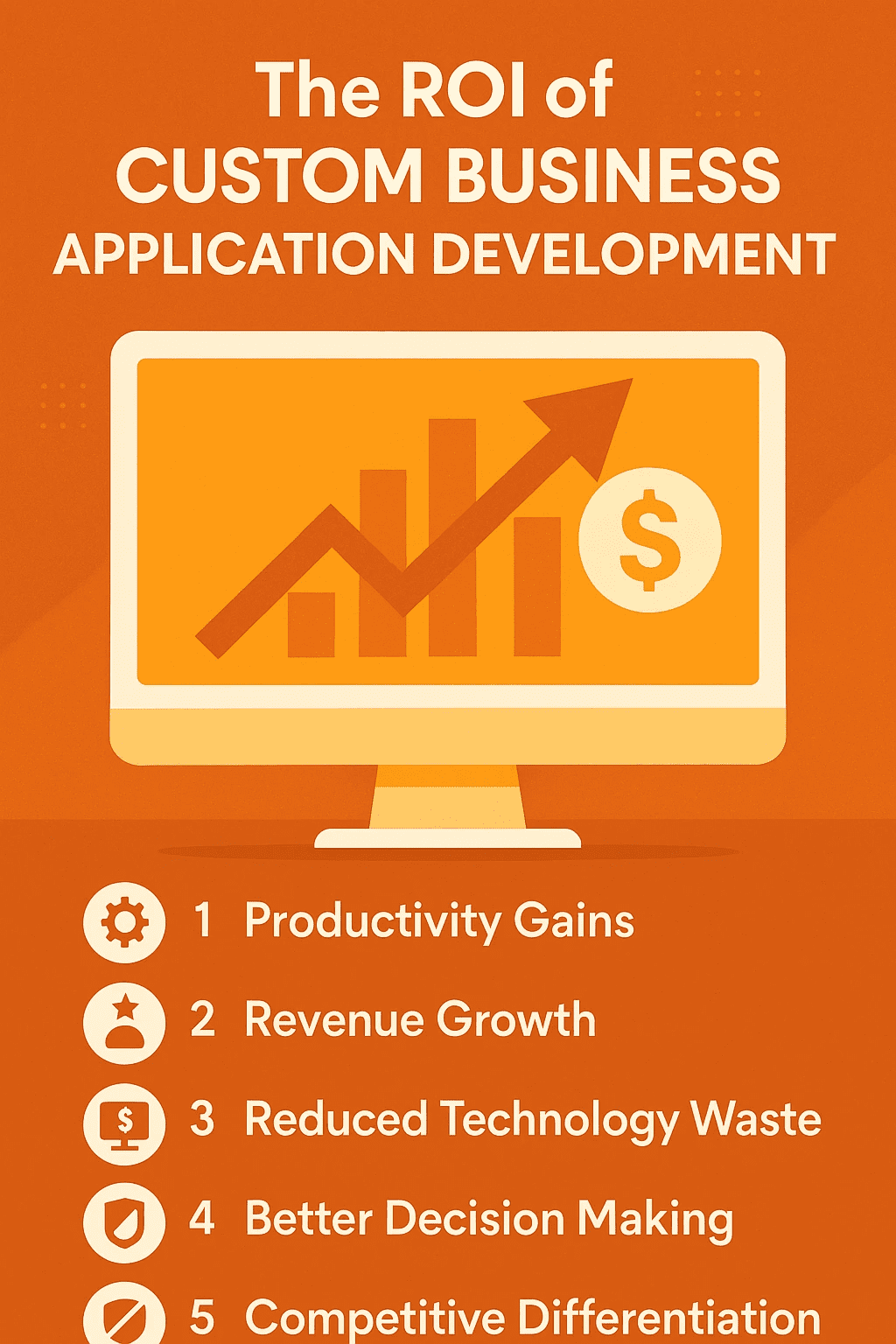
Custom-built solutions generate returns in several measurable ways:
1. Productivity Gains
Automation eliminates manual tasks, lowering labor costs and reducing human error.
2. Revenue Growth
Improved customer experience, faster onboarding, and personalized services increase conversions and retention.
3. Reduced Technology Waste
Instead of paying for features you never use, you invest in what directly supports your goals.
4. Better Decision Making
Unified data accelerates planning and reduces operational uncertainty.
5. Competitive Differentiation
Your competitors can’t replicate software designed specifically for your organization.
The Future of Custom Application Development
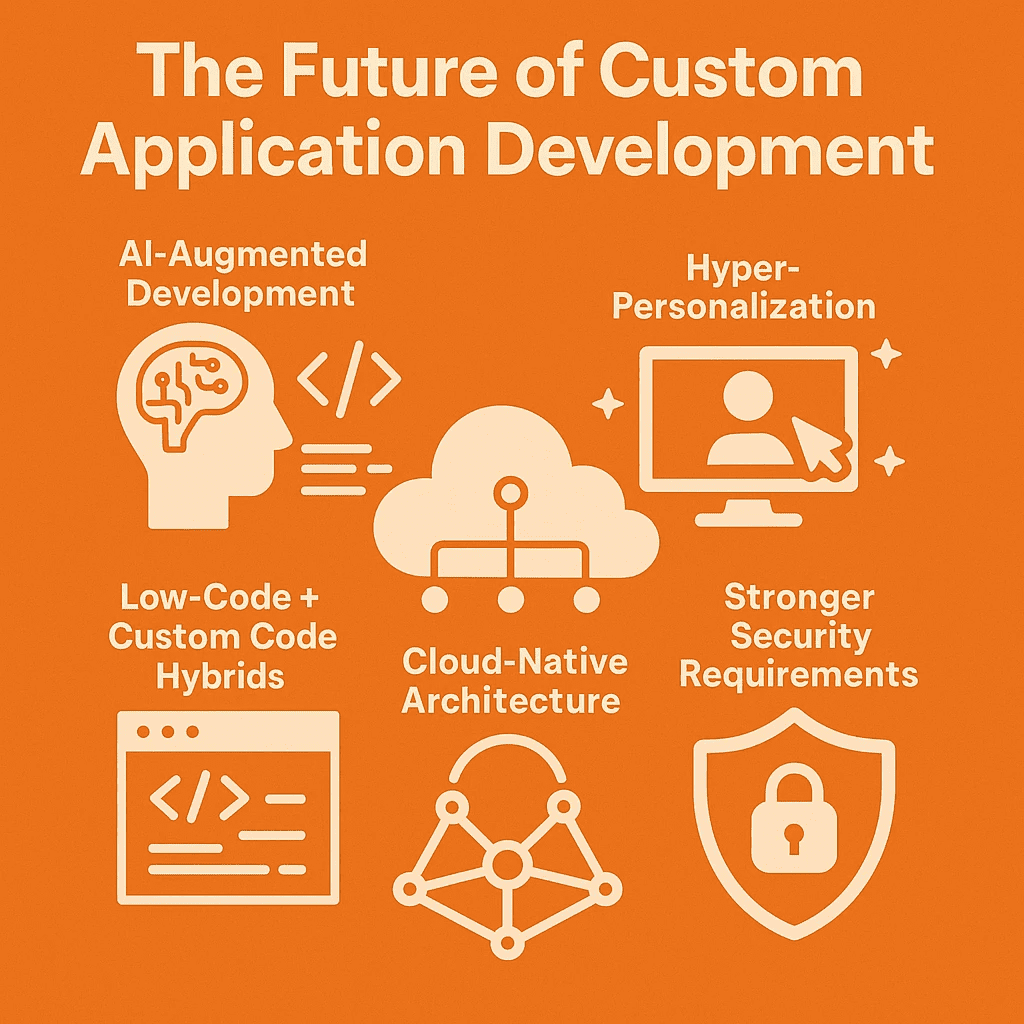
The next two years will redefine how businesses build digital systems. Trends shaping the space include:
- AI-Augmented Development
AI tools help generate code, automate testing, and personalize user experiences.
- Low-Code + Custom Code Hybrids
Development becomes faster as teams combine custom coding with flexible low-code frameworks.
- Cloud-Native Architecture
Modern custom apps run on scalable cloud infrastructure with microservices and containers.
- Hyper-Personalization
Apps adapt to user behavior in real time — essential for finance, retail, and SaaS.
- Stronger Security Requirements
Custom applications will continue to lead in compliance and data protections.
Businesses that embrace these innovations now will stay ahead of shifting customer expectations and industry standards.
Final Thoughts
Custom software has moved from a luxury to a necessity. In an environment where adaptability, automation, and data precision define success, generic tools can no longer support long-term growth.
A custom application development company builds the systems that power the next generation of business and scalable, secure aligned to your strategy. Whether you’re developing an internal dashboard, a full ERP replacement, an industry-specific SaaS product, or a customer-facing mobile app, custom development puts control back in your hands.
Organizations that invest in custom business application development today will operate smarter, move faster, and compete more effectively tomorrow.