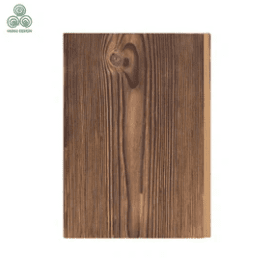
Reclaimed lumber and certified timber compete for dominance as the industry confronts sustainability claims and indoor air quality concerns
Hamburg, Germany— Sawdust and the smell of fresh-cut oak filled the halls of the Grand Elysée Hotel in October as 370 delegates from 28 countries gathered for the 13th European Wood-based Panel Symposium. The event, organized by the European Panel Federation and the Fraunhofer Institute for Wood Research, runs every two years. The 2024 edition arrived at a moment when the wood panel industry faces pressure from two directions: tightening formaldehyde emission rules in North America and Europe, and growing consumer demand for products made from salvaged or sustainably harvested sources.
“The industry is at an inflection point,” says Philipp Sprockhoff, a senior director at Austrian panel manufacturer EGGER and a member of the European Panel Federation’s managing board. “Customers want to know where the wood comes from and what’s in the glue.”
The global Wood Wall Panel based market was valued at 198 billion dollars in 2024, according to Grand View Research, with projections to reach 284 billion by 2030. Plywood holds the largest share at 40.5 percent, followed by particleboard and medium-density fiberboard. Asia Pacific accounts for 55.4 percent of production. The furniture sector consumes 56.5 percent of all panels manufactured worldwide.
Much of that growth depends on how manufacturers navigate the regulatory landscape. The U.S. Environmental Protection Agency’s TSCA Title VI rule, which took full effect in March 2024, requires all laminated products sold in the United States to meet hardwood plywood formaldehyde emission standards and undergo third-party certification. The rule traces back to the Formaldehyde Standards for Composite Wood Products Act of 2010, which Congress passed with bipartisan support.
California’s Air Resources Board pioneered the standards in 2007. The state regulation, known as CARB ATCM Phase II, set emission limits for hardwood plywood, particleboard, and MDF that became the template for the federal rule. Panel producers worldwide now submit to quarterly inspections and testing by EPA-recognized third-party certifiers.
“The TSCA Title VI program and CARB’s ATCM program work in tandem to create what is arguably the most stringent formaldehyde emissions regulatory system in the world,” says a March 2024 statement from the Composite Panel Association, an industry trade group based in Leesburg, Virginia.
Health Canada published its own formaldehyde regulations in July 2021, modeled on the EPA framework. The rules cover particleboard, MDF, hardwood plywood, and laminated products. Manufacturers had 18 months to comply, with laminated product producers given five years.
The certification regime has created a two-tier market. Products bearing the FSC label—indicating origin from forests managed according to Forest Stewardship Council standards—command premium pricing in commercial construction. The U.S. Green Building Council’s LEED program awards credits for FSC-certified wood, and Columbia Forest Products, a North Carolina-based plywood manufacturer, notes that it secured the first FSC chain-of-custody certificate among decorative hardwood plywood producers in North America in 1998.
But certification carries costs. Small-scale mills in developing countries often lack the resources to maintain chain-of-custody documentation. The FSC system requires every participant in the supply chain—from forest to final retailer—to hold certification. A single uncertified link breaks the chain.
The push toward reclaimed wood offers an alternative path. Stikwood, a Texas-based manufacturer of peel-and-stick wood planks, uses lumber salvaged from Wyoming snow fences weathered for up to 10 years in the Rocky Mountain high plains. The company holds both FSC certification and SCS certification from SCS Global Services, which audits environmental and sustainability claims.
“There are a certain code of ethics we follow and this means a lot to us,” says Steve Andrade, who handles commercial inquiries at Stikwood. “This is what Stikwood stands for as a company.”
Room & Board, a Minneapolis furniture retailer, launched its Urban Wood project in partnership with Humanim, a Baltimore nonprofit. The initiative sources lumber from row houses slated for demolition in Detroit, New York, Minneapolis, and Baltimore. Urban trees marked for removal provide additional material.
Artem Kropovinsky, an interior designer and founder of New York studio Arsight, sees the trend continuing. “Eco-luxury is in,” he says. “Combine reclaimed wood with energy-efficient lamps and eco-friendly fabrics to achieve sustainable style.”
The August 2025 SMART conference at Yale University’s Center for Materials Innovation examined another dimension of the wood panel question. Liangbing Hu, the center’s founding director, presented research on engineered wood products including what he calls SuperWood—a densified material he says exceeds steel in strength-to-weight ratio while sequestering carbon.
Yale engineering professor Yuan Yao discussed life-cycle assessments showing that substituting wood panels for concrete and steel in mid-rise construction could reduce embodied carbon by 25 to 50 percent, depending on building design and wood source.
Not everyone accepts such claims at face value. The European Panel Federation’s 2024 symposium included a session on birch plywood imports. Analysis presented at the meeting indicated that 16 percent of birch plywood entering the EU market in 2024 came from sources of uncertain origin, with China emerging as a major exporter while sourcing significant quantities of raw material from Russia.
“Lower prices of illicit plywood give some European companies an unfair advantage, leading to unfair competition and further damage to law-abiding businesses,” one speaker noted, according to the federation’s summary of the proceedings.
Yuriy Rudyuk, a partner at Brussels law firm Van Bael & Bellis, addressed the legal risks of non-compliance with EU sanctions and the European Union Timber Regulation at the same conference.
The Woodrise International Congress, scheduled for September 2025 in Vancouver, will take up the question of mid-rise and high-rise timber construction. The event bills itself as a hub for collaboration among architects, engineers, developers, researchers, and policymakers seeking to expand wood’s role in sustainable urban development.
But the Hamburg symposium ended without consensus on how to verify sustainability claims across global supply chains. Sprockhoff acknowledged the challenge in his keynote address on the first morning. The industry has come far from the days of unregulated formaldehyde emissions, he noted. The path forward on traceability remains less clear.