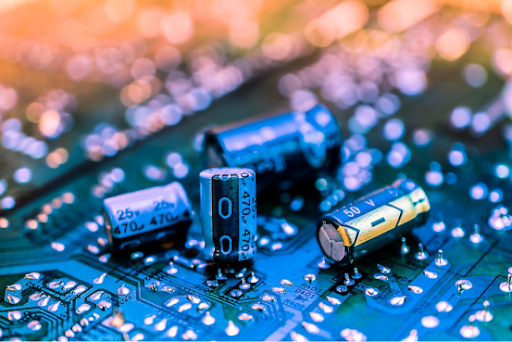
Passive components play a crucial role in electronic and RF systems, from communication devices to power supplies and measurement instruments. Unlike active devices, passive components such as resistors, capacitors, inductors, and RF filters operate without external power, yet their performance directly impacts system reliability, efficiency, and signal integrity.
In this guide, we provide an engineering-focused overview of passive component testing, common failure modes, environmental stress effects, and preventive strategies—critical knowledge for RF engineers, system designers, and quality control professionals.
1. Why Testing RF Passive Components Is Essential
RF passive components are widely used in applications such as:
- Wireless communication and IoT systems
- RF front-end modules and antenna networks
- Power supply filtering and energy storage
- Test and measurement equipment
Testing ensures that passive components meet their specifications, maintain signal integrity, and avoid unexpected system failures. Key purposes include:
- Characterization – understanding S-parameters, insertion loss, and Q-factor across operating frequencies.
- Quality Verification – confirming resistor, capacitor, and inductor specifications before deployment.
- Maintenance / Troubleshooting – detecting aging, drift, or catastrophic failures in deployed systems.
2. Testing Methods for Passive Components
2.1 Basic Testing
Most passive component tests involve injecting a signal and measuring transmission or reflection. Common tools include:
- Vector Network Analyzer (VNA) – measures S-parameters (S11, S21, S12, S22) and frequency response of RF passive components.
- Signal Generator + Power Meter – for approximate measurement when high-power stress prevents VNA usage.
- High-Power Testing Setup – using couplers and amplifiers to simulate real RF operating conditions safely.
2.2 Advanced Testing Parameters
Modern engineering often requires more detailed measurements:
- Insertion Loss / Return Loss / Isolation – key for filters and power dividers.
- Group Delay – critical for phase-sensitive circuits and distribution networks.
- Q-Factor – affects resonators and high-frequency inductors.
- Temperature & Humidity Stress Testing – evaluates passive component reliability under field conditions.
- Multi-Port VNA Automation – Python or LabVIEW can automate testing of multi-port RF passive components.
2.3 Adaptation for Size and Complexity
- Large components may need adapters or custom fixtures for accurate VNA connections.
- Small or complex passive components often require RF probe stations or planar transmission lines to minimize parasitic effects.
3. Common Failure Modes of Passive Components
Although passive components do not actively amplify or switch signals, they are prone to degradation, intermittent failures, or catastrophic events. Typical failure modes include:
- Parameter Drift / Degradation – slow deviation from nominal resistance, capacitance, or inductance.
- Intermittent Failures – temporary opens or shorts.
- Catastrophic Failures – complete short or open circuit, often causing thermal or mechanical damage.
3.1 Resistors
- Resistance drift – caused by thermal stress, overloading, or moisture ingress; may shift circuit bias points or destabilize sensor readings.
- Open-circuit failure – due to surge currents, solder fatigue, or mechanical stress.
- Noise increase – elevated thermal or flicker noise in carbon film resistors under high temperature.
3.2 Capacitors
- Capacitance drift – dielectric aging or environmental stress can reduce filtering or timing accuracy.
- Leakage current increase – common in electrolytic and tantalum capacitors, leading to higher static power and abnormal ripple.
- Dielectric breakdown / short circuit – catastrophic failures caused by overvoltage, reverse voltage, or surge currents.
3.3 Inductors
- Inductance variation – core aging or saturation reduces DC/DC efficiency or EMI suppression.
- Winding open/short – mechanical vibration or insulation failure.
- Q-factor degradation – high-frequency losses increase, reducing filter performance.
3.4 Interconnects and Packaging
- Solder joint fatigue – due to thermal cycling or PCB expansion.
- Component misalignment – during reflow or mechanical stress, causing electrical performance drift.
4. Environmental and Application-Related Stress
| Stress Type | Effect on Passive Components |
| High temperature | Accelerates aging, resistance/capacitance drift |
| High humidity | Insulation degradation, corrosion |
| Voltage surge | Dielectric breakdown, short circuits |
| Thermal cycling | Solder fatigue, mechanical stress |
| Mechanical vibration | Cracks, open circuits |
5. Typical Engineering Failure Cases
- Power supply ripple issues – ESR increase in input electrolytic capacitors leads to MCU resets or system reboot.
- RF module sensitivity loss – matching capacitor drift reduces LNA sensitivity and communication range.
- DC/DC overheat failure – magnetic core saturation in inductors damages MOSFETs.
These cases highlight that passive component failures often propagate to system-level malfunctions.
6. Preventive Strategies for Passive Components
- Derating – select voltage ratings ≥ 1.5× operating voltage, power ratings ≥ 2× actual load.
- Component selection – use high-frequency C0G/NP0 capacitors, metal film resistors, or low-loss inductors.
- Thermal management – avoid hotspots and strengthen heat dissipation paths.
- Supply chain control – choose reliable vendors and avoid counterfeit or refurbished components.
- Redundancy and monitoring – parallel capacitors or current sensing to detect aging early.
- Simulation – SPICE or EM simulations predict impact of drift on circuit performance.
7. Emerging Trends
- High-Q, low-loss passive components for RF/5G applications.
- Miniaturization – multi-layer packaging challenges testing and reliability.
- Automation – multi-port VNA with software-controlled batch testing.
- IoT and 5G systems – require low-loss, highly reliable passive components for long-term performance.
8. Engineering Summary
Passive components are not fail-proof. Their failures are often subtle, but they define the reliability and lifetime of systems. True engineering reliability depends on accurate testing, proper selection, and environment-conscious design. By understanding failure modes, environmental stressors, and preventive strategies, engineers can ensure that RF passive components maintain signal integrity and system stability for years of operation.