A lot of bad information circulates about Simit por placa and Runt por placa, and some of it costs drivers real money. From believing a clean record in one system automatically means a clean record in the other, to assuming fines disappear if ignored long enough, these myths lead to avoidable mistakes. This article clears up the confusion with straightforward, practical explanations.
If you have ever repeated one of these myths yourself, you are not alone. The similarity between Simit por placa and Runt por placa in name and search process makes them easy to mix up, but the consequences of confusing them are anything but minor, especially when a vehicle purchase or license renewal is on the line.
Myth 1: SIMIT and RUNT Are the Same System
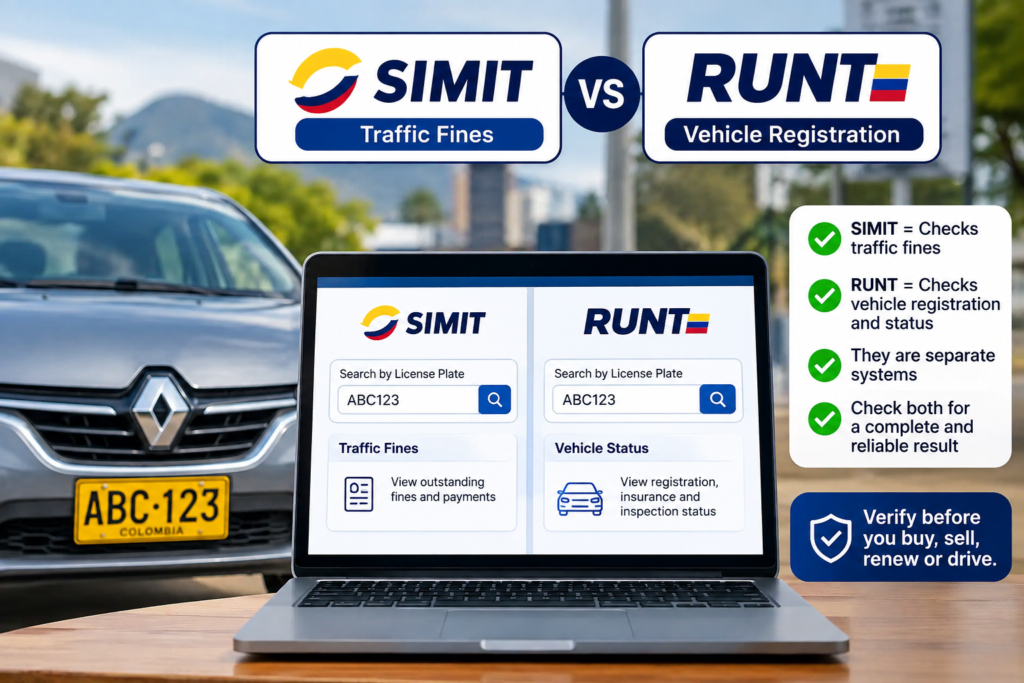
This is the most common misconception. SIMIT tracks traffic fines. RUNT tracks vehicle registration, ownership, insurance, and inspection status. They are connected in practice, since unpaid fines can affect certain RUNT transactions, but they are separate databases built for different purposes.
Myth 2: A Clean RUNT Record Means No Fines
Not true. A vehicle can show a completely clean RUNT report, meaning no liens, no embargoes, and valid insurance, while still carrying unpaid comparendos that only a SIMIT search would reveal. Always check both, not just one.
Myth 3: Ignoring a Fine Long Enough Makes It Disappear
Traffic fines in Colombia do not simply expire from neglect. Unresolved fines can accumulate and later interfere with license renewals or vehicle transfers, often resurfacing at the least convenient moment, such as during an urgent sale or renewal deadline.
Myth 4: Only the Driver at Fault Needs to Worry About the Fine
A Simit por placa search shows every fine tied to the vehicle itself, regardless of who was driving. In households or businesses that share a vehicle among multiple drivers, this means everyone’s fines end up on the same shared record.
Myth 5: Checking Online Is Unreliable Compared to Visiting in Person
Online plate-based lookups pull directly from the same national databases used by government offices. There is no hidden, more accurate version available only in person. The online result and an in-person inquiry should reflect the same underlying record.
Myth 6: A Verbal Promise From a Seller Is as Good as a Clean Record
A seller’s assurance that everything is fine is not a substitute for an independent Runt por placa or Simit por placa check. Sellers are sometimes genuinely unaware of liens or fines attached to their own vehicle, particularly with older cars that changed hands multiple times.
Myth 7: Motorcycles Are Not Tracked as Closely as Cars
Motorcycles are registered in both SIMIT and RUNT exactly like cars, and given how common helmet, reflective-gear, and speed violations are among motorcyclists, checking both systems is arguably even more important for two-wheeled vehicle owners.
Myth 8: Once a Fine Is Paid, the Record Updates Instantly
There is typically a short processing window between payment and the record reflecting that update. Keeping your payment receipt on hand until the change appears online is a smart precaution, especially before any time-sensitive transaction.
Myth 9: Checking Both Systems Is Complicated or Time-Consuming
In reality, both a Simit por placa and a Runt por placa search take only a few minutes each, provided you have the correct license plate number ready. The myth of complexity keeps many drivers from doing a check that would otherwise take less time than a coffee break.
Myth 10: These Checks Are Only Necessary Before Buying a Car
While a vehicle purchase is the most obvious moment to check, license renewals, insurance shopping, and even routine road trips are all situations where confirming your SIMIT and RUNT status in advance can prevent an unwelcome surprise.
The Cost of Believing These Myths
Each myth on this list has a real financial consequence attached to it. Missing a discount window on a fine, buying a vehicle with a hidden lien, or driving with an expired SOAT because someone assumed it was still valid can all cost far more than the few minutes it would have taken to verify the truth directly.
Treating these myths seriously, and correcting them early, is a small investment that pays off every time you drive, sell, buy, or renew paperwork for a vehicle in Colombia.
How to Avoid Falling for These Myths
- Treat SIMIT and RUNT as two separate checks, not one combined report.
- Recheck periodically rather than relying on an old result.
- Never accept a verbal assurance in place of an actual plate search.
- Apply the same diligence to motorcycles as you would to cars.
Where These Myths Tend to Spread
Much of the misinformation around Simit por placa and Runt por placa comes from informal advice passed between friends, secondhand stories about a relative’s experience, or outdated forum posts that no longer reflect how the current systems work. Because both platforms have evolved over the years, advice that was accurate a few years ago may not hold up today.
Relying on a single, verified plate search rather than secondhand stories is always the safer approach. Even well-meaning advice from someone who checked only once does not account for how quickly a vehicle’s fine or registration status can change.
Why Accurate Information Matters More for Vehicle Transactions
Myths about these systems are inconvenient in daily life, but they become genuinely costly during a vehicle purchase or sale. A buyer who believes a clean RUNT report guarantees no fines, or a seller who assumes an old fine simply expired, can both end up in a dispute that a five-minute double-check would have prevented entirely.
Taking a few extra minutes to verify both Simit por placa and Runt por placa directly, rather than relying on assumptions, remains the single most reliable way to avoid every myth covered in this article.
Frequently Asked Questions
Are SIMIT and RUNT run by the same government office?
No. SIMIT is managed by the Federación Colombiana de Municipios, while RUNT operates under the oversight of the Ministry of Transport.
Can a fine really affect me years after the violation happened?
Yes, an unresolved fine can remain on record and resurface during a later license renewal or vehicle transaction if it was never paid.
Is it true that only the person who committed the violation is responsible?
Not exactly. A plate-based SIMIT search shows fines tied to the vehicle itself, which can matter for shared or company vehicles.
Does an online check show outdated information?
Online plate lookups draw from the same national records used by government offices, so the information should match what an in-person inquiry would show.
Should I trust a seller who says the vehicle has no fines?
It is safer to independently verify with a Simit por placa search rather than relying solely on the seller’s statement, even if they believe it to be true.
Are motorcycle owners really at similar risk as car owners?
Yes, motorcycles are tracked in both databases the same way cars are, and equipment or safety violations are common among riders.
How quickly does a paid fine update in the system?
There is usually a short delay between payment and the record updating, so keeping proof of payment is a sensible precaution.
Is checking both systems really necessary for a quick road trip?
For longer trips especially, confirming valid SOAT insurance through RUNT is worthwhile, since driving without it carries its own risk.
Do these checks cost money to perform?
Basic plate-based lookups for fines and registration status are generally free of charge as public information checks.
What is the single biggest myth to unlearn first?
That SIMIT and RUNT are the same thing. Once that distinction is clear, most of the other myths naturally fall apart.