Owning land comes with a certain kind of promise. That wooded lot you purchased, the overgrown acreage behind the house, the tangled stretch of brush choking out your usable space—each one represents potential. A future home site. A pasture. A hunting trail. A cleaner, safer, more beautiful piece of property. But standing between you and that vision is often a dense wall of unwanted trees, invasive undergrowth, and stubborn vegetation that seems determined to stay put.
For generations, the answer to that problem was brute force: bulldozers, excavators, chains, burn piles, and hauling truckload after truckload of debris off-site. It worked, more or less, but it left behind scarred earth, torn-up soil, ugly stumps, and a hefty bill. Fortunately, there’s a smarter, cleaner, and far more efficient way to reclaim your land—and once you understand how it works, you may never look at traditional land clearing the same way again.
A Better Approach to Taming Wild Land
The modern solution turns a messy, multi-step process into a single elegant operation. Instead of cutting, dragging, piling, and burning, a specialized machine grinds unwanted trees, brush, and vegetation directly where they stand, transforming them into a fine layer of nutrient-rich mulch that stays right on the ground.
That’s the essence of professional forestry mulching services—a method that clears land quickly while actually improving the soil it leaves behind. Rather than leaving your property looking like a construction demolition site, this approach leaves a clean, even carpet of mulch that protects the earth, suppresses regrowth, and blends naturally into the landscape. It’s the difference between destruction and cultivation. And for landowners who care about both results and responsibility, it’s a game-changer.
How It Actually Works
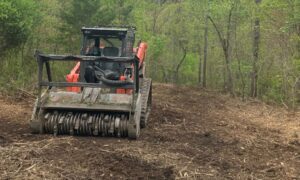
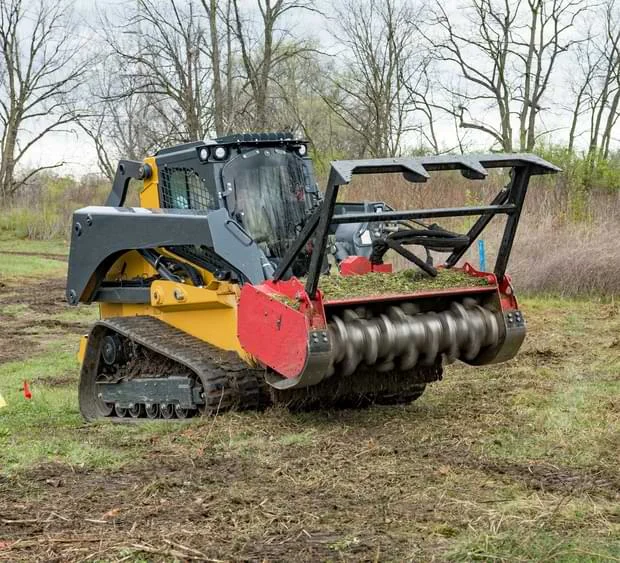
The process centers on a powerful piece of equipment—typically a compact track loader or excavator fitted with a rotating drum mulching head lined with hardened teeth. As the operator guides the machine across the property, this drum shreds standing trees, saplings, brush, and undergrowth into small wood chips in a single pass.
There’s no separate cutting crew. No pile of logs waiting to be hauled away. No burn permits or smoke billowing across the neighborhood. The material that once stood in your way becomes the very mulch that nourishes and protects your soil. One machine, one operator, one pass—and what was once impassable becomes open, usable land. Because the equipment is designed to maneuver in tight spaces and across uneven terrain, it can selectively clear exactly what you want gone while leaving desirable mature trees untouched. That level of precision isn’t possible with a bulldozer.
The Advantages That Make It a Clear Winner
- It’s remarkably efficient. What might take a traditional crew days or weeks—cutting, hauling, and disposing of debris—can often be accomplished in a fraction of the time. Fewer machines, fewer steps, and no off-site hauling translate into faster completion and lower costs.
- It protects your soil. Heavy equipment like bulldozers rips up the ground, disturbs the root structure that holds soil in place, and dramatically increases the risk of erosion. Mulching, by contrast, leaves the earth largely intact. The layer of mulch it produces acts as a protective blanket, shielding the soil from wind and rain.
- It fights erosion and runoff. That mulch layer does more than look tidy. It absorbs rainfall, slows runoff, and helps prevent the kind of erosion that can wash away topsoil and clog waterways. On sloped or sensitive terrain, this benefit is enormous.
- It returns nutrients to the land. As the mulch breaks down over time, it enriches the soil with organic matter, feeding the ground and encouraging healthy new growth of the plants you do want. You’re not just removing vegetation—you’re building better soil for the future.
- It suppresses unwanted regrowth. A thick layer of mulch blocks sunlight from reaching the seeds and roots of invasive plants, slowing their return and giving you a longer-lasting result.
- It’s environmentally responsible. No burning means no smoke and no air-quality concerns. No hauling means fewer trucks, less fuel, and a smaller footprint. Nothing leaves the site; everything is recycled in place. For landowners who value stewardship, it’s a method that respects the land even as it clears it.
- It leaves a clean, finished look. Perhaps the most immediately satisfying benefit: the difference is dramatic. Where there was once an impenetrable tangle, you’re left with an open, park-like expanse covered in a neat layer of mulch—ready to use and genuinely pleasant to look at.
Who Benefits Most?
The versatility of this approach makes it valuable across a wide range of needs:
- Homeowners reclaiming overgrown yards, clearing space for additions, or opening up scenic views.
- Rural property owners creating pastures, food plots, or grazing land.
- Hunters and outdoor enthusiasts cutting trails, shooting lanes, and access paths through dense woods.
- Developers and builders preparing sites efficiently without the mess and expense of traditional clearing.
- Ranchers and farmers managing invasive species and maintaining fence lines.
- Anyone concerned with fire safety, since removing dense underbrush and creating defensible space around structures is one of the most effective ways to reduce wildfire risk.
That last point deserves special emphasis. In areas prone to wildfire, thick undergrowth acts as fuel, allowing fires to spread rapidly and climb into the tree canopy. Clearing that underbrush creates critical breaks that can slow a fire’s advance and protect homes, outbuildings, and lives.
Why Professional Expertise Matters?
While the concept is simple, doing it well is not. The right approach depends on the terrain, the type of vegetation, the condition of the soil, and your ultimate goals for the property. An experienced operator knows how to read the land—selecting which growth to remove and which to preserve, adjusting technique for slopes and wet areas, and delivering a result that’s both immediately usable and beneficial over the long term.
The equipment itself is powerful and demands skill to operate safely and effectively. In capable hands, it’s a precision tool. In inexperienced ones, it can damage desirable trees or leave an uneven, unsatisfying result. This is exactly why so many landowners choose to bring in professionals rather than attempting to tackle dense clearing on their own.
Reclaim What’s Yours
Somewhere beneath that overgrowth is the property you always envisioned—open, usable, and beautiful. You don’t have to settle for a tangled mess of brush, and you certainly don’t have to accept the scarred, torn-up aftermath of old-fashioned land clearing.
If you’re ready to transform an overgrown lot into land you can actually use—cleanly, efficiently, and responsibly—it’s worth exploring what modern forestry mulching services can do for your property. The vision you’ve been holding onto might be far closer to reality than you think.