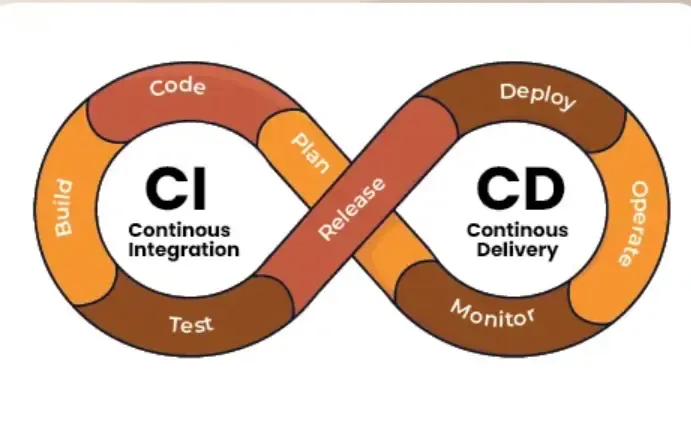
Software teams today are moving at a pace that would have been unthinkable just a few years ago. Code ships daily. Features roll out weekly. Products evolve in near real time, shaped by constant user feedback and business demands. But shipping faster, on its own, does not earn trust.
The teams that truly stand out are not the ones pushing the most releases. They are the ones delivering dependable, high-quality software while still keeping momentum. That kind of consistency does not happen by accident. It comes from getting CI/CD integration right.
Not as a box to check. Not as a pipeline that runs a few automated jobs and calls it done. Real CI/CD integration treats quality as a core part of delivery, one that grows alongside the product, the pipeline, and the business itself.
After working with enterprise teams across industries, one reality keeps showing up. CI/CD integration is no longer just about automation. It is about intentionally weaving quality into every stage of the delivery lifecycle. This article explores what that looks like in practice, where teams commonly get stuck, and how modern QA platforms are helping organizations move fast without sacrificing confidence.
What CI/CD Integration Really Means Today
At its core, CI/CD integration connects code changes to automated builds, tests, and deployments. But that definition barely scratches the surface.
In mature organizations, CI/CD integration means:
- Quality checks triggered automatically at every meaningful change
- Intelligent test selection instead of brute-force execution
- Feedback delivered in minutes, not hours
- Risk visibility before defects reach production
- Continuous learning from production behavior
In other words, CI/CD integration is not just about moving code forward. It is about creating trust at every stage of delivery.
This is where many teams hit friction.
The Hidden Gaps in Most CI/CD Pipelines
Most pipelines look impressive on paper. Multiple stages. Automated jobs. Green checkmarks everywhere.
But when you dig deeper, cracks start to show.
1. Tests That Run, But Do Not Inform
Many pipelines run thousands of tests, yet provide little insight. Failures are noisy. Root cause analysis takes time. Developers lose confidence in test results.
Automation becomes something teams tolerate instead of trust.
2. Slow Feedback Loops
When pipelines take hours to complete, teams stop paying attention. Developers merge changes before results arrive. QA becomes reactive instead of preventive.
Speed without feedback is just guesswork.
3. Environment Fragility
Tests fail not because the product is broken, but because environments are unstable. Flaky tests erode confidence and reduce adoption of CI/CD practices.
4. One-Size-Fits-All Automation
Every commit triggers the same test suite, regardless of impact. This wastes resources and slows delivery without improving coverage.
5. QA Operating Outside the Pipeline
In many organizations, QA still runs parallel to CI/CD instead of inside it. Manual validations, late-stage approvals, and siloed tools break the flow.
These challenges are not tooling problems. They are integration problems.
CI/CD Integration Is a Quality Strategy, Not a DevOps Task
The biggest misconception is that CI/CD integration belongs solely to DevOps teams.
In reality, it sits at the intersection of:
- Development
- Quality Engineering
- DevOps
- Product
- Business risk management
High-performing teams treat CI/CD as a shared responsibility where quality is embedded, not inspected later.
This requires three fundamental shifts.
Shift 1: From Test Automation to Test Intelligence
Automation alone is no longer enough.
Modern pipelines need to answer smarter questions:
- Which tests matter for this change?
- What areas of the application are most at risk?
- How has this code behaved in production before?
- What failures should we prioritize?
This is where intelligent test orchestration becomes critical.
Platforms like Qyrus focus on this exact problem by combining automation with contextual awareness. Instead of blindly running everything, teams can align testing effort with real business risk.
When pipelines run the right tests at the right time, CI/CD becomes faster and more reliable without sacrificing coverage.
Shift 2: From Pipeline Visibility to Decision Visibility
Many teams know whether a build passed or failed. Few know what that result actually means.
Effective CI/CD integration provides clarity, not just status.
That includes:
- Clear impact analysis when a test fails
- Traceability between requirements, tests, and code
- Real-time dashboards showing quality trends
- Insights that help teams decide whether to release or pause
When quality data is actionable, it empowers teams to make confident decisions instead of relying on gut instinct.
This is a core principle behind enterprise QA platforms that integrate deeply with CI/CD systems rather than operating as standalone tools.
Shift 3: From Reactive QA to Preventive Quality
Traditional QA finds defects after code is written.
CI/CD-integrated quality prevents defects from reaching users in the first place.
That means:
- Validating changes as early as possible
- Catching data issues before functional tests fail
- Monitoring APIs, UIs, and integrations continuously
- Learning from production incidents and feeding that insight back into testing
When QA becomes preventive, release cycles speed up naturally because teams spend less time fixing avoidable issues.
What Modern CI/CD Integration Looks Like in Practice
A mature CI/CD-integrated quality workflow typically includes:
Pre-Commit and Early Validation
- Static analysis and lightweight checks before code is merged
- API and contract testing triggered by schema changes
- Immediate feedback to developers
Smart Build-Level Testing
- Impact-based test selection
- Parallel execution across environments
- Fail-fast mechanisms that stop risky builds early
End-to-End Confidence Without Bottlenecks
- Automated UI and integration tests executed strategically
- Real device and browser coverage where it matters most
- Data validation baked into workflows
Production-Aware Quality Loops
- Monitoring production behavior
- Feeding real usage patterns back into test design
- Continuously refining test suites based on risk
Platforms like Qyrus are built to support this end-to-end approach by unifying functional, API, data, and UI testing under a single quality lens that integrates seamlessly with CI/CD pipelines.
Why CI/CD Integration Matters More at Enterprise Scale
Startups can afford some inefficiency. Enterprises cannot.
At scale, small gaps in CI/CD integration lead to:
- Expensive production incidents
- Regulatory compliance risks
- Slower innovation cycles
- Loss of customer trust
Enterprise teams need CI/CD pipelines that are not just automated, but governed, observable, and adaptive.
That is why more organizations are moving toward unified quality platforms instead of stitching together disconnected tools.
They want fewer blind spots, faster insights, and consistent quality signals across teams and products.
Measuring the Success of CI/CD Integration
CI/CD integration success is not measured by how many tools you use or how complex your pipeline looks.
It is measured by outcomes.
Strong indicators include:
- Reduced production defects
- Faster mean time to feedback
- Higher developer confidence in test results
- Shorter release cycles without increased risk
- Fewer last-minute rollbacks
When quality improves and speed increases together, CI/CD integration is working.
Final Thoughts: CI/CD Integration Is a Competitive Advantage
CI/CD integration is no longer optional. But doing it poorly can be worse than not doing it at all.
The teams that win are the ones that treat CI/CD as a quality-driven system, not just an automation pipeline.
They invest in intelligence over volume.
They prioritize insight over noise.
They integrate quality deeply instead of bolting it on.
As software becomes more complex and customer expectations rise, CI/CD integration will increasingly define how fast organizations can innovate without breaking trust.
And that is where thoughtful, unified quality platforms like Qyrus are helping teams move beyond automation toward truly confident delivery.