
How to Prepare Your Product Packaging for the Christmas Rush: A Practical Guide for E-Commerce Brands

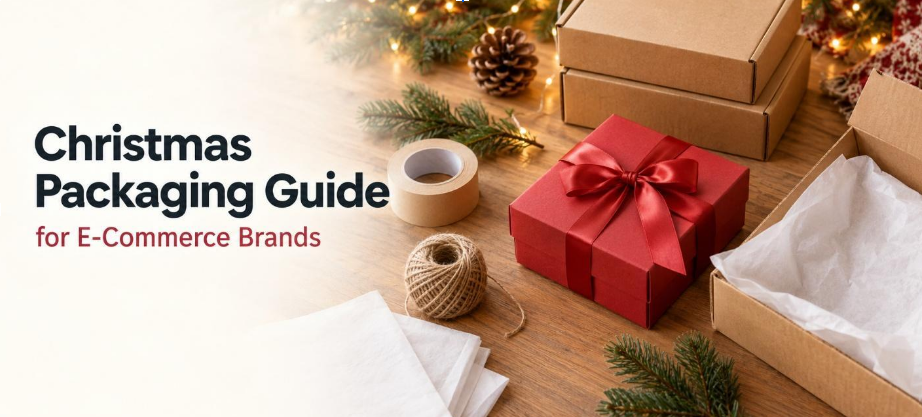
How to Prepare Your Product Packaging for the Christmas Rush
For most online stores, the weeks between Black Friday and Christmas are the busiest of the year. Orders climb, carriers run at full capacity, and a large share of what you ship is meant as a gift. That puts extra pressure on your Christmas packaging. Boxes need to arrive intact, look good enough to hand to someone, and still fit your margins.
I’ve watched plenty of small shops scramble for boxes in mid-December, and the pattern is almost always the same: most December packaging problems start as October planning problems. With a clear plan for box styles, production timing, protection, presentation, and cost, you can head into the rush with the right boxes on the shelf. This guide walks through each step and ends with a checklist you can use this season.
In 2026, Black Friday falls on November 27, Cyber Monday on November 30, and Christmas Day on Friday, December 25. Work backward from those dates as you plan.
1. Choose the right box styles for holiday orders
Start with what you sell and how it travels. Holiday Christmas packaging usually does two jobs: protecting the product in transit and presenting it as a gift. Some formats handle both; others work best as a pair.
| Box style | Best for | Holiday strengths | Watch out for |
| Corrugated mailer box | Most ecommerce orders, apparel, beauty, bundles | Ships without an outer carton, opens like a gift, prints inside and out | Choose the right flute for heavier items |
| Shipping carton + inner product box | Fragile, premium, or retail-ready items | Two layers of protection, inner box stays clean for gifting | Higher material and packing time |
| Rigid gift box | Luxury items, gift sets, corporate gifts | Premium feel, often kept and reused | Doesn’t fold flat, usually needs an outer shipper |
| Folding carton | Cosmetics, candles, small goods | Lightweight, cost-effective, good print surface | Needs a shipper for parcel delivery |
| Paper or poly mailer | Soft goods, apparel, flat items | Light and cheap to ship | Little protection, less of a gift moment |
A practical rule: keep your range to two or three standard sizes that fit your best sellers and most common bundles. Fewer sizes make packing faster during peak weeks, and right-sized boxes cut filler and dimensional-weight charges.
If you’re reusing your everyday packaging, you don’t need a new box to feel festive. A printed sleeve, a seasonal sticker, or holiday tissue paper can turn a standard mailer into a limited-edition gift box with no extra structure to order.
2. Plan packaging production and inventory early
Custom packaging takes time to design, proof, produce, and deliver, and fourth-quarter production schedules fill fast. Running out of boxes in mid-December is far more expensive than holding a few extra cases into January. A simple backward plan from Black Friday looks like this:
- Early October: Review last year’s holiday order volume and this year’s campaign plans. Confirm box sizes, quantities, and any seasonal design.
- Mid-October: Approve artwork and proofs, then place your order. Ask your supplier for realistic lead times for each item.
- Early to mid-November: Receive packaging. Check counts and quality against the order, and prepare inserts and printed cards.
- Week before Black Friday: Pre-fold boxes where possible, pre-stuff thank-you cards, and set up packing stations with a visual packing guide for temporary staff.
- December: Track stock weekly. Reorder fast-turn items like stickers, tape, and tissue before you hit a safety level of about one to two weeks of stock.
How much to order. Start from your forecast holiday orders by product or bundle, map each to a box size, then add a buffer for damaged stock, replacements, and late campaign wins. If your forecast is uncertain, keep the main box design evergreen so any leftovers stay usable after December. Put the festive touch on cheaper add-ons you can order in smaller quantities.
Check carrier cut-offs. UPS, USPS, and FedEx publish their own holiday shipping deadlines each year. Add them to your calendar, show them on your store, and make sure your packing capacity can handle the final rush before each one.
3. Protect products during peak-season shipping
During the holidays, parcels pass through more hands, sort centers, and trucks than usual. Damage is costly at any time, but at Christmas it can also mean a missed gift and a lost customer. Build protection into your Christmas packaging rather than adding it at the packing table.
- Fit the box to the product. Measure products as they’re packed, including inner pouches or cartons, then allow a small margin on each side. A snug fit protects better than a big box full of filler.
- Pick the right board. E-flute corrugated suits most lightweight e-commerce items. Heavier or fragile products may need B-flute or double-wall board.
- Use inserts for fragile items and bundles. Corrugated, paperboard, or molded pulp inserts hold glass, ceramics, candles, and multi-item sets in place.
- Seal it properly. Use quality tape across all seams. Tamper-evident tape or tear strips reassure customers that a high-value gift arrived untouched.
- Do a drop test. Pack a sample exactly as you would a real order and drop it from table height onto a hard floor, onto its corners and edges. Fix what breaks before peak season, not during it.
- Keep gifts discreet. If customers may ship to the recipient, avoid printing product names or photos on the outside of the shipper.
4. Create a gift-ready unboxing experience
Many holiday buyers are shopping for someone else, and plenty will hand over your box as it arrives. The more gift-ready it is, the less work they have to do, which customers notice and remember.
- Keep the outside clean, put the magic inside. A logo and one short line outside are enough. Inside, a printed lid message, a seasonal pattern, or a simple “Made for giving” line turns opening the box into a moment.
- Add tissue and a printed card. Branded or holiday tissue paper and a thank-you card cost little and lift the whole presentation.
- Offer a gift option at checkout. Gift wrap, a gift message card, and a packing slip without prices. Some customers will happily pay a small fee for it.
- Design bundles that look complete. A die-cut insert for gift sets keeps every item in position, so the box feels curated instead of packed.
- Give a reason to come back. A card with a discount valid in January or February helps turn holiday buyers and gift recipients into repeat customers.
- Make it easy to share. A clean interior and a small handle or hashtag on the card encourage customers to post their unboxing.
You don’t have to say “Christmas” in large letters. A winter or neutral seasonal theme works from Black Friday through New Year, and it gives one print run a longer life.
5. Manage seasonal packaging costs
Christmas packaging should support your margins, not eat them. Judge it on total cost per order (box, insert, filler, printed extras, labor, and shipping) rather than the price of the box alone.
- Right-size first. Carriers often price parcels by dimensional weight, so a slightly smaller box can lower shipping costs on every order. Right-sizing also cuts filler.
- Spend where customers look. Interior printing, a sleeve, or a sticker often delivers more impact than a premium finish on every surface.
- Use premium finishes selectively. Foil, embossing, or soft-touch work best on a hero product or gift set, not your whole range.
- Order larger runs of evergreen items. Per-unit prices usually fall as quantities rise. Keep the main box design timeless and add seasonal touches through cheaper extras.
- Avoid rush charges. Late orders are the most expensive kind. A firm October deadline protects your budget.
- Choose simple, recyclable materials. Paper-based mailers, paper tape, and paper void fill are easy for customers to recycle and avoid the extra cost of mixed materials.
6. Christmas packaging examples by product category
| Category | Suggested setup | Holiday touch |
| Apparel and accessories | Printed E-flute mailer or paper mailer | Holiday tissue, gift card, no-price packing slip |
| Beauty and skincare | Mailer with paperboard insert, or folding carton in a shipper | Inside-lid message, gift set insert |
| Candles and home goods | B-flute mailer with corrugated or molded pulp inserts | Seasonal sleeve, scent card |
| Food, treats, and coffee | Food-safe inner packaging in a printed mailer | Winter-themed sticker, recipe or tasting card |
| Jewelry and luxury items | Rigid gift box inside a shipping carton | Ribbon, magnetic closure, keepsake box |
| Subscription brands | Double-sided printed mailer with flexible insert | Limited-edition December design, gift subscription card |
Food sellers deserve a special mention, because baked goods are among the most popular holiday gifts and the hardest to ship well. If you sell cookies, cupcakes, or pastries, food-safe Christmas bakery boxes with a window or a snug insert keep treats fresh and on display, and they’re ready to hand over as a gift.
7. Holiday packaging checklist
- Forecast holiday order volume by product and bundle
- Confirm two or three standard box sizes that fit best sellers
- Choose board strength and inserts for fragile items
- Approve artwork and proofs, and order by mid-October
- Drop test a packed sample of each box size
- Order seasonal extras: sleeves, stickers, tissue, cards, tape
- Set up a gift option at checkout and a no-price packing slip
- Print a “come back in January” offer card with a unique code
- Add carrier holiday deadlines to your calendar and your store
- Pre-fold boxes and set up packing stations before Black Friday
- Track packaging stock weekly through December
- After the season, review damage rates, code redemptions, and costs
FAQs – Frequently asked questions
When should I order Christmas packaging?
Aim to place custom box orders about six to eight weeks before Black Friday, so mid-October for most brands. Stickers, sleeves, and cards can often be produced faster.
What is the best box for holiday ecommerce orders?
For most stores, a printed corrugated mailer box. It ships without an outer carton, protects products, and can be branded inside and out.
Do I need a special Christmas box design?
Not necessarily. Seasonal sleeves, stickers, tissue, and inserts on your standard boxes create a limited-edition feel without a new print run.
How can I reduce holiday shipping costs?
Right-size every box, limit your range to a few standard sizes, replace loose filler with inserts, and check dimensional weight rules with your carrier.
How do I make packaging gift-ready?
Keep the exterior clean and discreet, add tissue and a card inside, and offer gift wrap and a no-price packing slip at checkout.
Get ready before the rush
The brands that handle the Christmas rush smoothly are rarely the ones with the most elaborate boxes. They’re the ones that planned early, kept their range simple, protected fragile items, and gave customers a gift-ready moment at a sensible cost. Start with the checklist above, lock in your order dates, and your Christmas packaging will be one less thing to worry about in December.







Comment