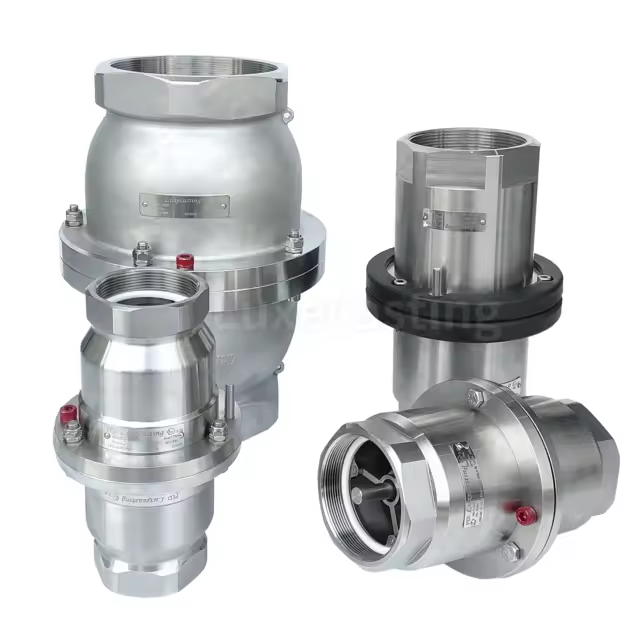
Choosing the right marine breakaway couplings for your ship-to-shore transfer system is one of the most important decisions you’ll make for the safety and performance of your operations. You work in a demanding marine environment, where vessel movement, pressure surge, and undue tensile load can place real strain on your hoses. You want a coupling that activates at the right moment, shuts the flow cleanly, and prevents spillage, oil spills, downtime, and environmental damage.
You also want a design that supports operational efficiency, protects personnel, and keeps your transfer system stable during live transfers. This guide gives you simple, expert-led steps that help you choose a coupling that suits your work, your site, and your real-world operating conditions.
Start by Understanding the Risks in Your Transfer System
Your hose transfer systems operate in a world where tension, pressure, and movement change quickly. Marine breakaway couplings protect you from the risks linked to:
- Vessel movement during loading
- Tanker breakouts caused by drift
- Pressure surge from upstream activity
- Sudden strain on hoses during rough marine events
- Uncontrolled flow during an emergency
- Environmental damage caused by spillage or oil spills
By understanding the risks across your ship-to-shore installation, you can choose a model designed to activate, separate, and shut both sides of the system before damage spreads.
Match the Coupling to the Fluids Being Transferred
Different fluids transferred through your system behave differently. LPG and similar products may demand tighter protection. Lighter fluids may respond strongly to pressure changes. Heavy fluids may create more tension across hoses.
To choose a suitable model, think about:
- Flow rate
- Effects on downstream flow
- Temperature range
- Viscosity
- How the product responds under pressure
A well-matched coupling improves safety and reduces risk while maintaining flow and performance across your operations.
Look at Headloss and Flow Performance
Marine breakaway couplings with low headloss or zero headloss help you maintain consistent flow. This is vital in ship-to-shore operations, where long hoses and vessel movement already influence performance.
A low-resistance coupling means:
- More stable downstream flow
- Better control during start-up
- Reduced strain across the system
- Improved overall efficiency
This also reduces wear on the hoses and keeps the transfer system operating smoothly.
Check Activation Load and Separation Behaviour
Activation is at the heart of protection. You want a coupling designed to:
- Activate at a precise tension or pressure threshold
- Separate cleanly
- Shut upstream and downstream sides instantly
- Prevent spillage during high-risk events
- Reduce injury risk to personnel
- Minimise damage to assets
A proven activation method protects your hose and environment during difficult marine conditions.
Consider Installation Requirements and Operating Conditions
Each site has its own operating conditions. You may transfer product beside a busy shore installation or work offshore with supply vessels approaching from multiple angles. Your coupling must suit the specific case you face.
Think about:
- Expected vessel movement
- Location of the hose along the ship-to-shore route
- Sea state and wind conditions
- Hose geometry and length
- Space available for compact installation
- How the model is manufactured and designed
Matching the coupling to real operating conditions improves performance and protection across your system.
Practical Scenarios to Help You Visualise the Benefits
Scenario 1 — Vessel Movement Under Load
A ship shifts during transfer. Tension builds. The coupling activates before the hose tears. Both sides shut instantly. You avoid downtime, damage, and spillage.
Scenario 2 — Pressure Surge from Upstream
A sudden change in upstream flow creates a spike. The coupling separates cleanly and protects the hose. Your operation returns to service quickly after inspection.
Scenario 3 — Unexpected Tanker Breakout
Rough sea conditions push a vessel out of alignment. Your coupling prevents undue tensile load from reaching the hose. This reduces the risk of oil spills and protects the environment.
How a Breakaway Coupling Activates — Step-by-Step
- Tension in the hose increases due to load or movement.
- Pressure surge may also contribute to rising internal force.
- The coupling reaches its designed activation point.
- The mechanism releases and the coupling separates.
- Both sides shut quickly to protect the system.
- Flow stops instantly, reducing environmental risk.
- You inspect, complete refurbishment if required, and return to service.
What to Look for When Choosing the Right Model
Use this checklist to guide your selection:
- A suitable activation range for your vessel movement and tension profile.
- Low or zero headloss to protect flow and efficiency.
- A design manufactured for marine applications and harsh operating conditions.
- Clear, proven performance across similar offshore platforms or shore-based sites.
- A compact design for installations with limited room.
- A model that supports easy maintenance and refurbishment.
- The ability to protect both upstream and downstream sides during separation.
- Features designed to reduce risk, protect personnel, and prevent environmental damage.
Common Mistakes to Avoid
Many operators make the same mistakes when selecting breakaway couplings. You can avoid them by keeping these points in mind:
- Ignoring activation loads and choosing a model unsuitable for your tension range.
- Overlooking the behaviour of the fluids transferred through your system.
- Choosing a coupling unsuitable for LPG applications.
- Positioning the coupling in a location that restricts movement.
- Forgetting maintenance schedules, which may reduce performance.
- Assuming that all breakaway couplings suit all operating conditions.
A little care at the start prevents damage, spillage, and downtime later.
Maintenance, Refurbishment, and Long-Term Use
A Marine breakaway coupling is designed for repeated use, though refurbishment is vital for long-term reliability. Regular maintenance helps you:
- Maintain activation accuracy
- Protect the system from ongoing wear
- Extend the life of your installation
- Reduce the chance of unplanned downtime
Simple checks after events and planned servicing throughout the year keep performance predictable.
How to Choose the Correct Activation Load
Choosing the right activation load helps you balance safety and operational efficiency.
Consider the following:
- Expected vessel movement during typical transfers
- Tension created by long hoses moving at sea
- Weight of the product transferred
- Pressure variations caused by start-up
- Seasonal operating conditions on your site
The right activation load protects the system without disrupting normal use.
Why This Matters to You
A well-chosen coupling protects more than just your hoses. It protects personnel, assets, and the environment. It reduces downtime, improves the performance of your transfer system, and gives you more confidence when operating in demanding marine conditions.
Most importantly, it reduces the risk of events that could harm your site, your team, or your world.
Final Thoughts
Your ship-to-shore transfer system needs strong protection in a marine environment where tension, movement, and pressure surge can build quickly. Marine breakaway couplings give you this protection by activating at the right moment, separating cleanly, and shutting both sides of the system.
By thinking about your fluids, operating conditions, flow requirements, installation layout, and maintenance expectations, you can choose a model that suits your operations and improves both safety and performance across your entire transfer system.
FAQs
1. How do Marine breakaway couplings reduce environmental damage?
They separate cleanly under undue tensile load or pressure, shutting both sides to prevent spillage or oil spills.
2. Are they suitable for LPG and other specialised fluids?
Yes. You simply choose a model designed for the fluids transferred through your system.
3. Do they cause long downtime after activation?
Downtime is minimal. You inspect the coupling, complete refurbishment if required, and return to operations quickly.
4. Do I need different couplings for different operating conditions?
Your operating conditions guide the model you choose. Your activation load, hose length, and vessel movement all influence selection.
5. Why is low headloss important?
Low or zero headloss improves flow, reduces strain, and boosts operational efficiency.