
Checked Bag or Carry-On? How to Decide and Pack Smarter for Your Next Flight

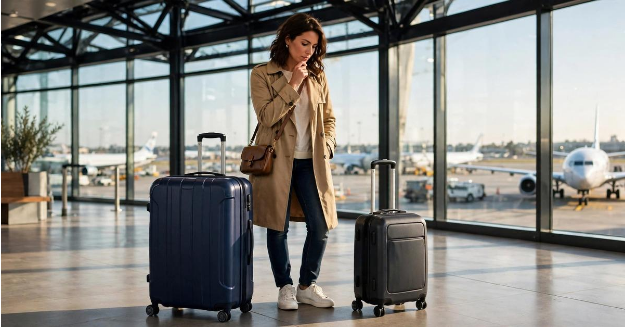
Most travelers have stood over an open suitcase wondering whether to squeeze everything into a carry-on or pay to check a bag. The wrong call can cost you baggage fees, a sore shoulder in a long gate queue, or a trip’s worth of clothes you never wore.
This guide gives you a practical way to decide. It also covers the size and weight limits to watch for both types of bag, what should never go in the hold, and how to pack a bag that arrives in good shape.
Checked Bag or Carry-On? Start With the Trip, Not the Suitcase
The right choice depends on trip length, destination, what you need to bring, and how much hassle you can tolerate at the airport. A few questions settle it quickly:
- How long are you away? Past about a week, most people find a carry-on limiting, especially with varied weather or formal occasions.
- Are you carrying bulky items? Winter coats, hiking boots, gifts and sports gear take up space fast.
- Do you have connections? A carry-on avoids waiting at baggage claim and removes the worry about a bag missing a tight transfer.
- Will you shop? If you expect to bring things home, a checked bag with spare room is easier than repacking a full carry-on.
| Factor | Carry-On | Checked Bag |
| Best for | Weekend trips, business travel, tight connections | Trips over a week, family travel, cold-weather or multi-climate trips |
| Capacity | Limited by cabin size rules | Much larger, within airline size and weight limits |
| Fees | Often free, though some basic fares restrict it | Often charged per bag, depending on airline, route and fare |
| Airport time | No baggage claim wait | Drop-off and claim add time |
| Risk of delay or loss | Stays with you | Out of your hands during transit |
| Access during flight | Full | None |
Many trips call for both: a checked bag for the bulk of your belongings and a carry-on for essentials and anything valuable.
If your itinerary points toward the hold, look for checked luggage that stays within the 62-inch limit without weighing too much on its own. A light but tough shell, smooth spinner wheels and a TSA-recognized lock will matter more on travel day than extra pockets, because the wrong case eats into your allowance and takes the worst of baggage handling before your belongings ever do.
Know the Limits Before You Pack
How Checked Bag Size Is Measured
Airlines measure checked bags in linear inches, meaning length plus width plus height. A suitcase measuring 26 by 20 by 16 inches totals 62 linear inches, which is the ceiling at many airlines. Measure the whole bag, including wheels and handles, since those parts count at the counter.
Most airlines allow checked bags up to 62 linear inches and 50 pounds, but the limits differ by airline and route. Some carriers allow heavier bags on certain routes, and oversize fees apply once a bag passes the standard limit, so always confirm the exact figures for your own flight before you pack.
How Carry-On Size Is Measured
Carry-on limits are tighter and less forgiving, because the bag has to fit in an overhead bin or under the seat in front of you. Many major U.S. airlines cap a carry-on at 22 by 14 by 9 inches, including wheels and handles. The smaller personal item that goes under the seat is typically limited to about 18 by 14 by 8 inches.
Those figures are a guide, not a guarantee. Some airlines allow a slightly larger cabin bag, some set a carry-on weight limit, and some basic fares include only the personal item, with the overhead-bin bag charged as an extra. If your bag is measured at the gate and does not fit the sizer, it may be checked at the gate, sometimes for a fee.
Weight Matters Twice
The 50-pound (23 kg) figure is common in economy, but it is not universal. Some low-cost carriers set a lower checked-bag weight limit than the common 50-pound (23 kg) allowance, so check your airline’s current baggage policy before packing. Premium cabins at some airlines allow heavier bags.
Weight also means the suitcase itself. A heavy empty case eats into your allowance before you have packed a sock, so check the bag’s own weight when comparing options.
What Going Over Costs
Oversize charges can be steep. American Airlines publishes its current baggage fees and policies on its official site. For travel between the U.S., Puerto Rico, the U.S. Virgin Islands and Canada, a bag over 62 and up to 65 inches is charged $30, while one over 65 and up to 115 inches is charged $200. Those figures were current on the airline’s page when this article was researched. Fees change, so confirm your own airline’s numbers before you fly.
What Belongs in Your Checked Bag, and What Does Not
Pack in the hold the items you will not need during the journey and that can survive rough handling:
- Clothing, shoes and heavier layers
- Full-size toiletries, subject to the carrier’s rules on liquids and aerosols
- Plug-in chargers and cables. The spare batteries themselves are a different matter, covered below
- Gifts and souvenirs that are not fragile
Keep these with you in the cabin:
- Passport, wallet, medication and travel documents
- Laptops, cameras and other valuables
- One change of clothes and basic toiletries, in case the bag is delayed
- Power banks and spare lithium batteries
That last item is a hard rule rather than a tip. Under the FAA guidance on airline passengers and batteries, spare lithium-ion and lithium-metal batteries, including power banks and charging cases, must travel in carry-on baggage only, and each spare battery should be protected against short circuits. Lithium-ion batteries are generally limited to 100 watt-hours each, with up to two larger batteries of 101 to 160 watt-hours allowed with airline approval. Devices with batteries installed can usually travel in checked bags if they are powered off and protected, but keeping them in the cabin is the safer habit.
How to Pack a Checked Bag So It Arrives Intact

Good packing protects your belongings and keeps you under the weight limit. These habits help:
- Weigh the bag at home. A hanging luggage scale costs little and removes the guesswork at check-in.
- Pack heavy items near the wheels. This keeps the case stable when it stands upright.
- Use packing cubes. They keep categories together and let soft items compress.
- Fill gaps with soft items. Socks and underwear tucked into shoes use space that would otherwise go to waste.
- Leave room for the return trip. About 10 percent spare space makes souvenirs painless.
- Put an ID tag inside as well as outside. External tags can tear off.
- Photograph your bag before you leave. If it goes astray, a clear picture speeds up the claim.
A practical example: a family of three flying for ten days might check two bags and carry on three small backpacks. If one checked bag is heavy and the other light, redistributing weight can avoid an overweight fee on the first.
Packing a Carry-On That Works Just as Hard
A carry-on rewards a different discipline, because space and security rules are both tighter:
- Follow the 3-1-1 liquids rule. In the cabin, liquids, gels and aerosols must be in containers of 3.4 ounces (100 ml) or less, packed in one clear, quart-size, resealable bag, with one bag per passenger. Anything larger belongs in your checked bag, where permitted.
- Keep flight essentials at the top. Documents, medication, a charger and your liquids bag should be reachable without unpacking the whole case at security.
- Wear your bulkiest items. Boots and a heavy coat worn on board free up the space they would take inside the bag.
- Roll soft clothing and compress it. Rolled clothes and a small packing cube leave room for the items only you can carry on, such as batteries and a change of clothes.
Locks, Inspections and Security
Airport security screens checked bags, and sometimes opens them. TSA works with lock manufacturers on locks that officers can open with master keys, so a lock may not have to be cut, and the lock’s packaging shows whether it qualifies. If a lock cannot be opened, it may be cut, and a Notice of Baggage Inspection is left in the bag when an officer searches it.
That is why a TSA-recognized lock is a sensible choice for a checked bag. Treat it as a deterrent rather than real security, and do not leave valuables in the hold.
The Final Check Before You Zip Up
Choosing between a carry-on and a checked bag comes down to trip length, what you need to bring, and your tolerance for airport logistics. Whichever you choose, measure the bag, weigh it, check your airline’s current rules, and keep batteries, documents and valuables with you. A few minutes of preparation before leaving home saves money and stress at the counter.
Checked Bag and Carry-On Questions, Answered
Are checked bag size and weight limits the same on every airline?
No. Many airlines use 62 linear inches and 50 pounds as a baseline, but limits and fees vary by airline, route, fare type and cabin. Some carriers set lower weight limits, and others allow larger dimensions on certain routes. Always check your airline’s official baggage page before packing.
How big can a carry-on bag be?
Many major U.S. airlines limit a carry-on to 22 by 14 by 9 inches, including wheels and handles, plus a smaller personal item of about 18 by 14 by 8 inches that fits under the seat. Some airlines allow slightly more, some charge for the overhead-bin bag on basic fares, and some set a weight limit, so treat those numbers as a starting point and confirm your own airline’s rules.
What should I never pack in a checked bag?
Spare lithium batteries and power banks must go in your carry-on. Also keep passports, medication, laptops and other valuables with you. Airlines and security agencies maintain restricted-item lists for flammables and similar goods, so check them if you are unsure.
Should I lock my checked bag?
You can, but use a TSA-recognized lock so officers can open it without cutting it if an inspection is needed. A lock deters casual tampering but is not a high-security device, so keep valuables in your carry-on.






Comment