Consumers in the United States have never had the variety and customizability in beverage choices that they have today. A family orders dinner from a delivery app and their options include coffee, tea, soda, refreshers with additional selection of different flavors and functional ingredients. A college student can choose regular coffee or a low-calorie fruit-flavored energy drink between classes. A guest at a local cinema can experiment with a variety of combinations at the self-serve touchscreen fountain. These small, repeated choices are reshaping how Americans discover and value beverages.
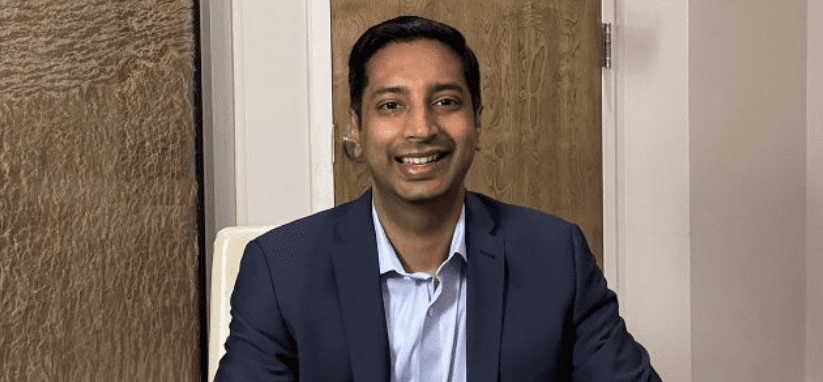
Noufal Mohamed Basheer, Senior Manager, Away From Home strategy at PepsiCo and previously Project Leader at Boston Consulting Group, has built his recent work around understanding those shifts. His principle is direct: identify signals that indicate trends early on, then translate those signals into actionable strategies.
Those quick moments of choice now drive the next decade of beverage growth. The U.S. non-alcoholic beverages market was valued at about $178 billion in 2025 and is projected to reach roughly $247 billion by 2032 as consumers demand greater personalization and health-conscious options. Much of that expansion is happening in restaurants and entertainment spaces rather than grocery aisles. “Away From Home is where consumers discover new tastes before they become habits”, says Basheer reinforcing the importance of the channel in propagating new beverage trends. Away From Home refers to all food and beverage consumption that occurs outside the consumer’s home, across restaurants, workplace, travel, recreation, and other on-premise venues.
Local Businesses drive National Growth
Within this context, Basheer believes that driving beverage volumes at local businesses is important for scaled growth. Local restaurants have become central to both growth and social impact. Small businesses employ about 59 million people and contribute roughly 43.5% of the U.S. GDP, making their success vital to community stability. When local businesses thrive, communities become stronger. “When you spend time with a small-business owner and understand their slow days, their guests, and their goals, the numbers start to tell a different story,” Basheer notes. “Partnership becomes the growth model, not just the sales pitch.”
During his tenure as a strategist at both PepsiCo and previously Boston Consulting Group, he built analytical models that can help sales team target the right local customers, pricing models specifically for local restaurants, strengthened frontline CRM tools, rolled out digital menu support for local restaurants and focused activation campaigns customized for local communities. The Menu Pro program at PepsiCo has supported more than 200,000 restaurants and optimized over one million online menus. The initiative became an example of how corporate strategy and community benefit can align without compromise.
“Strategy is not about the slide deck,” Basheer says. “It’s about which streets you show up on, which customers you bet on, and how you prove that those choices create real value.”
Customization is Disrupting the Beverage Landscape
As local partnerships stabilize, attention turns to the drinks themselves. The global crafted beverages market is worth hundreds of billions of dollars and is poised to grow at double digit rates in the coming years. The category is no longer a niche confined to Pumpkin Spice Latte at Starbucks.
Recognizing that shift, Basheer led the development of PepsiCo’s strategy to capitalize on the $30-$40 billion US Crafted Beverages market. The work produced DRIPS by Pepsi, a crafted beverages platform that one might have run into at Regal cinemas or during showcase events at Super Bowl LIX or more recently at Formula 1 Vegas Grand Prix. “At the core, Crafted Beverages cater to consumer need for customization”, he says. “And customization is not just limited to indulgent ingredients such as whipped cream or boba but also to functional needs such as immunity and energy boost”
Online Ordering Brings Convenience to Consumers
For most beverages, discovery increasingly starts online. The global online food delivery market was worth about $222 billion in 2025 and is expected to reach roughly $541 billion by 2035, with DoorDash and Uber Eats dominating U.S. sales. As consumers seek more convenience through digital ordering, visibility in these channels is becoming as critical as shelf placement once was.
Basheer treated that shift as part of the core Away From Home strategy rather than a side project. His work has involved strategic rethinking of digital shelf placement; simply listing drinks as an afterthought at the bottom of an online menu results in missed opportunities and lower attachment rates. Basheer partnered with PepsiCo’s digital marketing team to introduce ‘Local Eats Hubs’ on digital platforms, prominently highlighting local restaurants that serve Pepsi beverages. Elevating beverages from a buried category to context-aware suggestions has been a win-win for PepsiCo and customers, driving revenue and brand visibility.
“In the post-pandemic landscape, online ordering has evolved from a safety necessity into a permanent driver of revenue, fueled by a consumer base that now prioritizes hyper-convenience”, Basheer remarks.
Looking Ahead, Where Beverage Growth Rewards Sound Strategy
These connected programs show how growth comes from building a coherent strategy that seamlessly integrates various initiatives. The global non-alcoholic drinks market is projected to reach about $2.2 trillion by 2030 as consumers seek healthful, flavorful, and convenient options across channels. In that world, brands that treat local partners as co-creators and connect physical and digital journeys will define the next wave of loyalty.
Basheer’s career follows that path. Beyond his work at PepsiCo, he serves as a judge for the Globee Awards for Leadership, reviewing how companies translate strategy into evidence-based growth. As a Chartered Financial Analyst, his strategic approach combines financial discipline with field-level understanding of how trends become habits.
“Trends start as whispers,” he says. “If you listen closely, support the right partners, and let data and experience guide each other, you can turn those whispers into momentum.”