Caring for New Vitiligo: A Practical Guide for the First Months

A point-by-point routine for someone whose vitiligo has only just appeared — what is happening under the skin, and how to protect it while the patches are still active.
1. What “new” vitiligo means
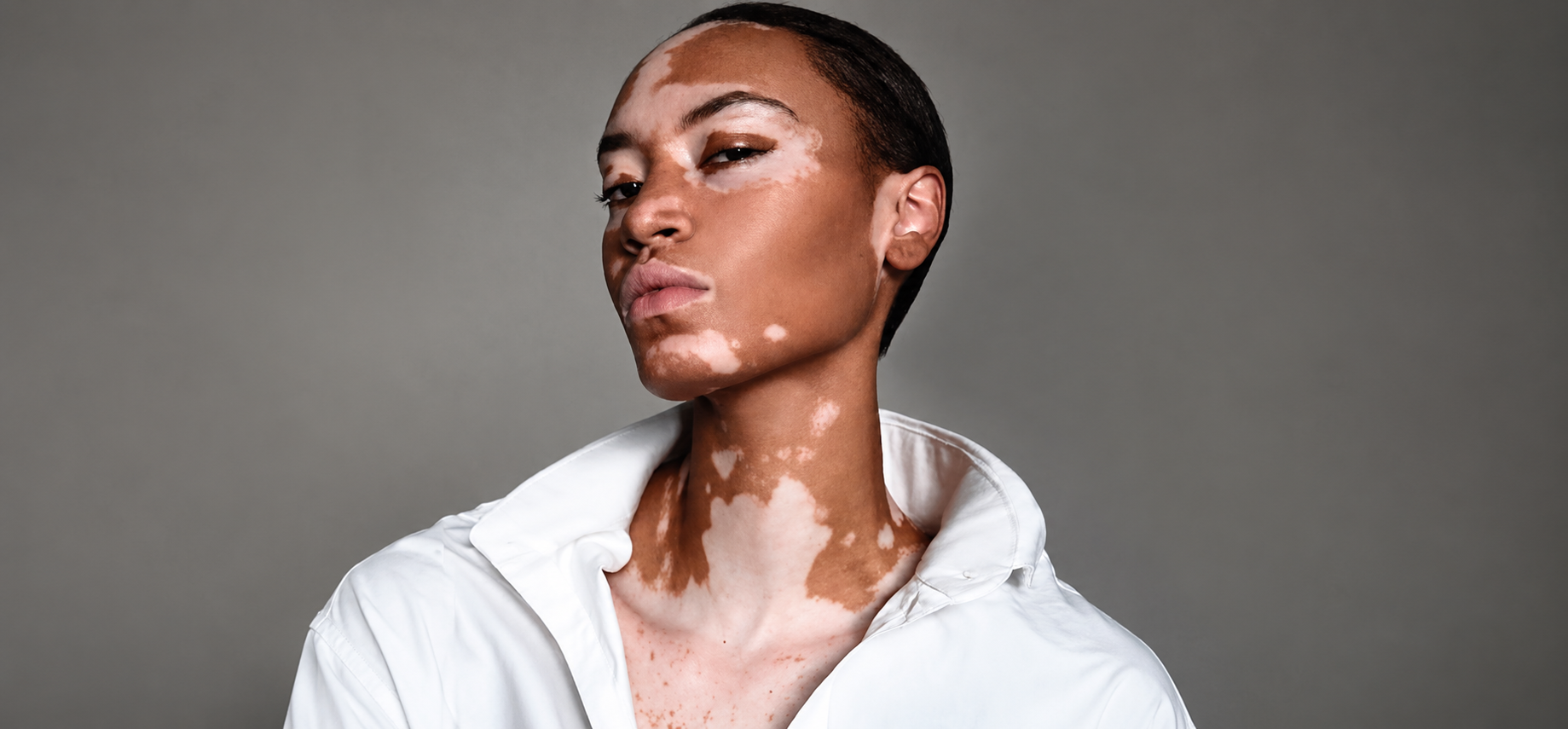
- Vitiligo is an autoimmune condition. The body’s immune system turns on its own pigment cells (melanocytes) and destroys them, so the skin loses colour in patches.
- When the condition is new or spreading, the immune attack is still active. The person may feel itching or burning on the new patches, and on skin where the next patches are about to appear.
- The affected skin has lost its pigment and its barrier is weak. It is thinner, more sensitive and far more easily damaged by sun, heat, soap, friction and rough fabric.
- Once the patches stop growing and the condition becomes stable, most of these precautions can be relaxed. Until then, they matter.
2. Sunlight: avoid 10 am to 4 pm
- Sunlight is good and is needed — but not at this stage, and not at these hours.
- Between 10 am and 4 pm the person should stay out of the sun entirely. That includes indirect sunlight coming through windows: keep curtains or blinds drawn on the sunny side of the house during these hours.
- Early morning and late afternoon light is gentler and can be enjoyed.
- If the person must go out, cover the patches: long soft cotton sleeves, and a cotton hat or scarf if the vitiligo is on the scalp or face (see Section 8).
3. The oil-first rule
The single most important habit. Because the skin barrier is weak, hot water and soap must never touch the vitiligo area directly. Oil goes on first and acts as the barrier that the skin can no longer provide.
- Use plain coconut oil, or whatever oil the dermatologist has recommended.
- Apply it to every vitiligo patch and to the surrounding skin before any water touches the body.
- Use only lukewarm water on those areas — never hot.
- Use a mild soap or no soap at all on those areas. Even a mild soap is never rubbed directly on the skin: make the foam in the hands first, then apply only the foam.
- Skin without vitiligo can be washed as normal. The oil-first rule is for the affected areas and the skin around them.
4. Washing the face — the exact sequence
1. Oil first
2. Foam in hands
3. Apply foam
4. Lukewarm rinse
5. Pat dry
5. Bathing — the exact sequence
- Oil first. Coconut oil on all vitiligo patches and the skin around them, before entering the bathroom.
- Lukewarm water only on the patches. Hot water can be used on unaffected skin if the person prefers, but not where the pigment is gone.
- Foam in the hands. Mild soap lathered between the palms.
- Foam only on the patches. Laid on gently, no scrubbing.
- Rinse with lukewarm water.
- Pat dry — see below.
- Re-oil or apply the dermatologist’s cream once the skin is dry.
6. After bathing: pat, never rub
This deserves its own paragraph because it is the step most people forget. After washing, the person should use a soft towel or a clean cotton napkin and gently press it against the vitiligo areas until they are dry. Do not rub. Do not wipe. Rubbing drags across skin that has no barrier, and friction on active vitiligo can trigger new patches.
7. Night-time waking, burning and stress
Waking around 1:30–2:30 am
- With an active autoimmune condition, the body commonly generates a wave of stress in the small hours — typically around 1:30 to 2:30 am — and the person may wake.
- This is normal. The routine is simple: apply oil to the feet and massage them for a minute, sip some water, and go back to sleep.
If a patch burns at night
- Apply coconut oil, or the cream prescribed by the dermatologist, to the area and try to sleep again.
Stress
- Stress is a natural part of any autoimmune condition — the person has not caused it and should not feel guilty about it.
- The aim is to stay emotionally light: listen to something funny, watch a comedy, talk to someone easy. Then sleep. Sleep is treatment.
Keep a simple log
- Note whether the person woke in the night, and at what time. A pattern over a few weeks is useful information for the dermatologist.
8. Clothing: the most important physical protection
- No tight clothes. Anything that presses, rubs or holds heat against the skin can provoke new patches.
- Wear only soft, breathable cotton — mulmul (fine muslin) or soft cotton. No synthetics, no rough weaves, no wool directly on the skin.
- No collars if there is vitiligo on the neck. A collar scratches with every turn of the head. Choose round-neck or open-neck cotton tops instead.
- If vitiligo is on the scalp or face, always wear a cotton hat or a cotton scarf when going outdoors. The pigment is gone, the barrier is thin, and that skin has no defence of its own.
- Loose sleeves and loose waistbands. Elastic should not bite.
9. Everything that touches the skin
Because the barrier is thin, the person should check every single thing that comes into contact with the affected skin:
| Item | Rule |
|---|---|
| Creams and lotions | Only what the dermatologist has approved. No fragranced or “whitening” products. |
| Soap | Mild or none. Foam in the hands first. Never directly on the patch. |
| Oil | Coconut oil, applied cool or at room temperature — never hot oil. |
| Water | Lukewarm on the patches. Never hot. |
| Clothes and fabric | Soft cotton only; loose; no collars on an affected neck. |
| Bedsheets and pillowcases | Clean cotton, changed often, so no dust or grit particles lie against the skin all night. |
| Towels | Soft, clean; used to pat, never to rub. |
10. Air, heat and ventilation
- The person should spend the day in a well-ventilated space, out of direct and indirect sun.
- Heat adds stress to skin that is already under attack. If the weather is hot, using air conditioning at night and through the midday hours is sensible, not indulgent.
11. See a dermatologist — do not self-treat
- Everything above is protective care, not treatment. The person should see a dermatologist at least once, early.
- What looks like vitiligo can sometimes be a different autoimmune condition, or vitiligo can come alongside another one. Only a doctor can tell.
- Any prescribed cream or oil takes priority over the general suggestions in this guide.
12. Diet: millets as the staple
Dr Khadar Vali (Khadar Valli Dudekula), the agricultural scientist known as India’s “Millet Man” and awarded the Padma Shri in 2023, recommends replacing wheat and rice with the traditional small millets. In his view, kodo millet in particular supports the blood and bone marrow, and he advises rotating the millets rather than relying on one.
Suggested weekly rotation (as recommended by Dr Khadar Vali)
| Millet | Times per week | What it is said to support |
|---|---|---|
| Kodo millet (kodra / varagu) | 3–5 | Blood, bone marrow and immune balance — the one he calls essential for autoimmune conditions |
| Browntop millet (chhoti kangni / hara kangni) | 3 | The whole digestive tract; skin; highest fibre of the five (12.5%) |
| Foxtail millet (kangni / thinai) | 3–4 | Nerves, joints and skin; high protein |
How to cook them
- Always soak first — 6 to 8 hours for most millets, 8 to 10 hours for browntop. Millets are high in fibre and are not pleasant, or properly digestible, unsoaked.
- Then cook exactly as rice: as plain grain with dal and vegetables, as khichdi, as upma, or as a porridge (ambali).
- Rotate every two days rather than eating the same millet daily.
- The whole family can eat this way, not only the patient. Replace wheat with millets at the household level.
- Millets are soft on the teeth, which makes them ideal for older people who struggle to chew.
13. Older people: nutrition, teeth and buttermilk
- In older people vitiligo often appears alongside nutritional deficiency. Many have lost teeth, cannot chew properly, and so do not absorb what they eat.
- A common habit makes this worse: drinking too much water with meals. Water dilutes the digestive juices, food is not fully digested, and vitamins and minerals are not absorbed.
- Replace water at mealtimes with buttermilk (chaas). Buttermilk aids digestion rather than diluting it, and its probiotic cultures help the gut take up nutrients.
- To repeat, because it is easy to overlook: older people without teeth should not drink large amounts of water with food. Chewing is already compromised; flooding the stomach with water finishes the job. Buttermilk with meals, water between them.
- Soaked, soft-cooked millets (Section 12) are the natural companion — easy to eat, easy to absorb.
14. Sea buckthorn juice
- Sea buckthorn is one of the few plant sources of omega-7, alongside omegas 3, 6 and 9.
- Omega-7 is valued for skin and mucous-membrane health and is widely used by people with autoimmune skin conditions and allergies. Many cancer patients also take it for relief from oxidative stress.
- A small glass of sea buckthorn juice can replace the morning tea, or be taken after lunch in place of green tea.
The daily routine at a glance
| When | What |
|---|---|
| Morning | Oil the patches → foam in hands → lukewarm rinse → pat dry → dermatologist’s cream. Sea buckthorn juice instead of tea. Soft loose cotton, no collar. |
| 10 am – 4 pm | Indoors, curtains drawn on the sunny side, ventilated room, AC if hot. Cotton hat or scarf if going out is unavoidable. |
| Meals | Soaked millets in rotation with dal and vegetables. Buttermilk with meals, not water (especially for older people). |
| Evening | Bathe with the oil-first sequence. Pat dry. Clean cotton bedsheet. |
| Night | If awake at 1:30–2:30: oil and massage the feet, sip water, sleep. If a patch burns: oil or cream, sleep. Note the time in the log. |
| Once, early | See a dermatologist. Do not self-treat. |
This guide describes protective everyday care for newly appearing vitiligo and reflects traditional and practitioner-recommended approaches, including those of Dr Khadar Vali. It does not replace medical advice. Anyone with new or spreading patches should be seen by a dermatologist, and any prescribed treatment takes priority over the suggestions here.