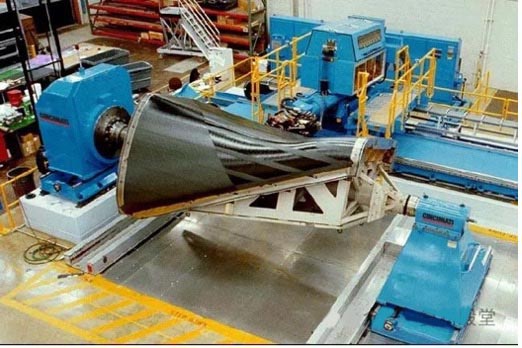
Carbon fiber is changing the game. You see it in airplanes, race cars, and even bikes. But how do companies actually make these super-strong, lightweight parts? Three main methods stand out: Resin Transfer Molding (RTM), Autoclave Curing, and Prepreg Compression Molding (PCM).Let’s cut through the confusion and explain each one.
What Makes Carbon Fiber So Special?
Before we dive into the manufacturing processes, you need to understand what makes carbon fiber different. Carbon Fiber Reinforced Polymer (CFRP) is lighter than aluminum but stronger than steel. That’s why Boeing uses it in the 787 Dreamliner and BMW builds entire car frames with it.carbon fiber manufacturing processes carbon fiber manufacturing processes carbon fiber manufacturing processesThe secret? Tiny carbon strands woven together and held in place by resin. But getting that resin into the fiber perfectly—that’s where RTM, Autoclave, and PCM come in.
Resin Transfer Molding (RTM): The Smart Middle Ground
How RTM Works
RTM is like making a sandwich. You place dry carbon fiber weaves into a mold. Then you inject liquid epoxy resin under pressure (usually 10-100 psi). The resin flows through every gap in the fiber. Finally, you heat everything up so the resin hardens.
Here’s the step-by-step process:
- Layup: Workers place dry carbon fiber preforms in the mold
- Injection: Resin gets pumped in under pressure
- Curing: Heat transforms the liquid into solid plastic
- Demolding: You pop out a finished part
The whole cycle takes 30 minutes to 4 hours, depending on part size.
Why Companies Choose RTM
Automotive manufacturers love RTM. The BMW i3 uses this method for body panels. Why? Lower costs than autoclave manufacturing. You can make the same mold work for 10,000+ cycles.
RTM gives you near-net-shape parts. That means minimal sanding or trimming afterward. The surface finish looks great right out of the mold—assuming you polished that mold properly first.
Another advantage: fiber volume fraction hits 50-60%. That’s the percentage of the part that’s actual carbon fiber versus resin. More fiber equals more strength.
The Downsides of RTM
Nothing’s perfect. RTM struggles with really complex shapes. Those tight corners and deep channels? Resin might not flow into every spot. You end up with void content (tiny air pockets) of 2-5% in older systems. Modern RTM equipment brings that under 1%, but you need precise control.
Siemens Gamesa uses RTM for wind turbine blades. These parts are huge but relatively simple shapes. Perfect for RTM.
RTM in Real Numbers
| What You Measure | RTM Specs |
| Cost per part | $50–$200 |
| Cycle time | 30 min – 4 hrs |
| Fiber volume | 50-60% |
| Void content | 2-5% (modern: <1%) |
| Surface finish | Very good |
The resin infusion process requires careful monitoring. Temperature, pressure, and injection speed all matter. Get one wrong and you waste expensive carbon fiber prepreg materials.
Autoclave Curing: The Gold Standard
The Autoclave Process Explained
Think of an autoclave as a giant pressure cooker for composites. But instead of making dinner, you’re creating parts for the F-35 fighter jet.
Here’s how it works:
- Prepreg Layup: Workers stack sheets of carbon fiber prepreg (fiber pre-soaked in partially cured resin)
- Vacuum Bagging: They seal everything in a plastic bag and suck out the air
- High Pressure Curing: The part goes into the autoclave at 100 psi and 350°F
- Controlled Cooling: Temperature drops slowly to prevent warping
The pressure squeezes out almost every air bubble. The result? Parts with less than 1% porosity. That’s why aerospace composites almost always use autoclaves.
Why Autoclave Parts Perform Better
Lockheed Martin makes F-35 wing skins in autoclaves. These parts need to handle extreme stress. The autoclave’s high pressure creates the tightest fiber-matrix bond possible.
The tensile strength of autoclave parts beats both RTM and PCM. Fatigue resistance is unmatched. When a single failure could crash a plane, you use an autoclave.
Hexcel Corporation and Toray Industries supply most of the prepreg material for aerospace. Their data sheets show autoclave parts consistently hit 60-70% fiber volume—higher than RTM.
The Autoclave’s Big Problem: Cost
Here’s the catch. Autoclaves cost $500,000 to $2 million. Each cycle burns 40 kWh per kilogram of parts. That electricity bill adds up fast.
Labor costs spike too. Hand layup of prepreg takes skilled workers hours or days. Then you wait another 1-8 hours for the cure cycle. Part costs range from $500 to $5,000 each.
Out-of-autoclave (OoA) manufacturing tries to solve this. Companies are developing resins that cure properly without the pressure cooker. But OoA parts still can’t match autoclave quality for critical applications.
Who Uses Autoclaves?
- Boeing 787: 50% of the plane’s structure is CFRP
- Airbus A350 XWB: Wings and fuselage sections
- Formula 1 teams: Monocoques and body panels
- Lamborghini: Entire carbon fiber chassis
The National Composites Centre in the UK runs massive autoclaves for research. They’re testing faster cure cycles and cheaper thermoplastic composites that might reshape the industry.
Prepreg Compression Molding (PCM): Speed Wins
PCM’s Fast Process
PCM takes the best ideas from RTM and autoclave, then speeds everything up. Instead of a pressure cooker, you use a compression press like a giant panini maker.
The process:
- Prepreg Stacking: Cut pieces of carbon fiber prepreg go into the mold
- Pressing: The press closes with over 1,000 psi of force
- Quick Cure: Heat and pressure work together for 2-10 minutes
- Part Ejection: The finished piece comes out ready to use
Ten minutes. That’s faster than making a pizza.
Why PCM Works for High Volume
Tesla uses PCM for carbon fiber components in the Model S. When you need thousands of parts per year, speed matters more than absolute peak performance.
Bicycle frames from companies like Specialized come from PCM. These parts need good strength but not aerospace-level perfection. The 2-10 minute cycle time lets manufacturers pump out frames fast.
PCM hits impressive numbers: 60-65% fiber volume fraction, only 1-3% void content. Not quite autoclave territory, but close enough for most uses.
PCM’s Limitations
The prepreg material needs cold storage at -20°C. That supply chain challenge adds cost. The resins also have a limited shelf life—use them within months or they’re garbage.
Complex geometries don’t work well. The press comes straight down, so parts need fairly simple shapes. Deep draws and sharp angles cause problems.
PCM vs. The Competition
For making more than 10,000 parts yearly, PCM beats RTM on labor costs by 30%. The automated nature means fewer workers and faster output.
Compare these three methods:
| Factor | RTM | Autoclave | PCM |
| Cost per part | $50–$200 | $500–$5,000 | $100–$400 |
| Cycle time | 30 min–4 hrs | 1–8+ hrs | 2–10 min |
| Fiber volume | 50-60% | 60-70% | 60-65% |
| Void content | 2-5% (modern: <1%) | <1% | 1-3% |
| Best for | Medium volumes | High-performance | High volumes |
The sports equipment manufacturing industry loves PCM. Hockey sticks, golf club shafts, and bike components all come from this process.
How to Pick the Right Method
Choosing between RTM, autoclave, and PCM isn’t random. Ask yourself these questions:
Is Performance Critical?
If you’re building military aircraft or medical devices where failure isn’t an option, use an autoclave. The quality control and non-destructive testing will thank you later.
Defense contractors don’t cut corners. They need parts certified to AS9100 standards and NADCAP specifications. Only autoclaves deliver that consistency.
Do You Need High Volume?
Automotive carbon fiber parts for passenger cars? PCM is your friend. The cost-benefit analysis works when you’re stamping out thousands of door panels or roof sections.
Continuous fiber reinforcement in PCM gives you strength without the autoclave’s time penalty. Your production rate skyrockets.
What’s Your Budget?
Starting a new business with limited capital? RTM makes sense. You can set up a vacuum-assisted resin transfer molding (VARTM) system for under $100,000. Try that with an autoclave.
Small aerospace suppliers often start with RTM, then upgrade to autoclaves as they grow. The tooling for composites is similar, so you’re learning transferable skills.
Real-World Case Studies
BMW i3: RTM for Car Bodies
BMW needed lightweight structural components for their electric car. They chose RTM to make the passenger cell. The process creates complex 3D shapes that traditional stamping couldn’t match.
Results? A 30% weight reduction compared to steel. Better range for the electric battery. The i3’s carbon fiber monocoque became a selling point.
Boeing 787: Autoclave for Wings
The 787’s wings need to flex without breaking through millions of flight cycles. Boeing uses autoclave-cured carbon fiber reinforced polymer for these critical parts.
The wings weigh 20% less than aluminum equivalents. That saves fuel on every flight. But each wing takes days to lay up and cure—acceptable for a $150 million airplane.
Specialized Bicycles: PCM for Frames
Specialized manufactures thousands of high-end bike frames yearly. They need strength for racing but also reasonable prices. PCM hits that sweet spot.
Their S-Works frames come out of the mold in under 10 minutes. Surface finishing requires minimal work. The frames pass impact resistance testing while keeping costs manageable for serious cyclists.
The Technology Behind the Magic
Resin Chemistry
All three methods rely on epoxy resins or similar thermoplastic materials. These liquid plastics harden when heated. The chemistry involves curing agents that trigger a reaction.
Solvay and Hexcel develop specialized resin systems for each process. RTM uses low-viscosity resins that flow easily. Autoclave prepregs have partially cured resin. PCM needs fast-curing formulas.
The resin provides the matrix that holds carbon fibers in place. It transfers loads between fibers and protects them from damage.
Fiber Architecture
Carbon fiber weaves come in different patterns: plain weave, twill, and satin. Each affects how easily resin flows through and how strong the final part becomes.
Toray Industries produces some of the highest-quality fibers. Their T800 and T1100 grades go into Formula 1 cars and military jets. The fibers are only 5-7 microns thick—thinner than human hair.
Fiber volume fraction determines final properties. More fiber means more strength but harder manufacturing. Finding the right balance separates good parts from great ones.
Simulation and Testing
Modern manufacturing uses resin flow simulation software like ANSYS to predict how resin moves through the mold. This prevents dry spots and voids before you waste materials.
Non-destructive testing (NDT) catches defects after manufacturing. Ultrasonic inspection sends sound waves through the part. Voids and delaminations show up as weird echoes.
ASTM D3039 defines how to test tensile strength. Thermal stability matters for parts near engines. Every property gets measured and documented.
Quality Control Challenges
Void Formation
Air bubbles trapped in the part create weak spots. RTM fights this with careful vacuum bagging and injection speed control. Autoclaves squeeze voids down to nearly zero. PCM uses high pressure to collapse bubbles.
Delamination happens when fiber layers separate. This catastrophic failure mode requires prevention through proper curing time and temperature control.
Surface Imperfections
The mold’s surface transfers directly to the part. Any scratch or dent becomes permanent. Mold design optimization includes polishing to a mirror finish.
Post-curing processes sometimes improve properties. Heating parts again after demolding can increase glass transition temperature and strength.
Defect Detection
Machine learning and AI now help spot defects. Cameras watch the manufacturing process and flag anomalies. Predictive maintenance on equipment prevents problems before they start.
The Fraunhofer Institute researches automated inspection systems. Their digital twin technology simulates every manufacturing step virtually before making real parts.
Industry Applications Across Sectors
Aerospace Composites
Commercial aircraft use composites to reduce weight and improve fuel efficiency. Airbus and Boeing compete on who can use more carbon fiber. The 787 and A350 both exceed 50% composite structures.
Military applications demand even higher performance. Stealth aircraft like the F-22 use composites for radar transparency and strength.
Automotive Innovation
Beyond BMW, Lamborghini builds entire monocoques from carbon fiber. The Aventador and Huracán use PCM and autoclave methods depending on the part.
Tesla experiments with 3D printing carbon fiber for custom components. This additive manufacturing approach might revolutionize low-volume production.
Wind Energy
Wind turbine blades keep getting longer—some exceed 100 meters. RTM and vacuum infusion create these massive structures. The low cost per pound makes wind power economically viable.
Sustainable manufacturing matters here. Recycled carbon fiber from Vartega and ELG Carbon Fiber helps reduce the environmental impact.
Sports and Recreation
Beyond bikes, think drone manufacturing for racing quads. Marine composites for yacht masts and hulls. Hockey sticks and tennis rackets all use these processes.
The sports equipment market drives innovation in fast, cheap manufacturing. What works for a $500 bike frame might scale up to car parts.
Environmental and Economic Factors
Carbon Footprint
Making carbon fiber is energy-intensive. The precursor material (usually polyacrylonitrile) requires high temperatures to convert into carbon. Autoclaves add even more energy use.
Life cycle assessment (LCA) shows the full picture. A carbon fiber car part might cost more energy to make but saves fuel over the vehicle’s lifetime.
Recycling Challenges
Traditional carbon fiber can’t be melted and reformed like aluminum. Composite recycling involves burning off the resin and recovering fibers. These reclaimed fibers work well for less critical parts.
Carbon Conversions and other companies develop pyrolysis methods to recover fiber without degradation. This circular economy approach could slash material costs.
Market Growth
The carbon fiber market grows at 10-12% yearly. Aerospace remains the biggest customer, but automotive use is exploding. Electric vehicles need lightweight materials to maximize battery range.
Government incentives and regulations push adoption. European Union fuel economy standards force automakers toward composites. Department of Energy funding supports low-cost carbon fiber research.
Future Technologies on the Horizon
Automated Fiber Placement
Automated Fiber Placement (AFP) machines lay carbon fiber tape precisely where needed. Coriolis Composites and Automated Dynamics build robots that work faster than humans.
This Industry 4.0 approach combines robotics, AI, and real-time monitoring. Labor costs plummet while consistency improves.
Thermoplastic Revolution
Thermoplastic composites can be reheated and reformed. This makes them recyclable and faster to process. Engel manufactures injection molding machines adapted for carbon fiber thermoplastics.
The trade-off? Slightly lower temperature resistance than thermoset epoxies. But for most automotive uses, thermoplastics work fine.
Smart Composites
Imagine parts that monitor themselves. Embed sensors in the carbon fiber during layup. The part reports stress, damage, and fatigue in real-time.
Self-healing composites use special resins that repair small cracks automatically. The University of Manchester researches graphene additives that might enable this.
Bio-Based Materials
Bio-based resins from plant oils could replace petroleum-based epoxies. These sustainable raw materials reduce the environmental impact without sacrificing strength.
Oak Ridge National Laboratory develops lignin-based carbon fiber precursors. These could cut costs and carbon emissions simultaneously.
Making Your Decision
No single process is universally superior; optimal selection depends on production volume, risk tolerance, certification requirements, and lifecycle considerations.
In practice, many advanced composite programs rely on manufacturing partners that support multiple processes—such as RTM, autoclave curing, and compression molding—so different components can be matched to the most appropriate technology across a product platform, leveraging established carbon fiber manufacturing processes.
With that in mind, let’s summarize the decision logic using a simple decision tree:
Need the absolute best performance?
- Yes → Autoclave
- No → Keep reading
Making more than 10,000 parts per year?
- Yes → PCM
- No → Keep reading
Budget under $200,000 for equipment?
- Yes → RTM
- No → Reconsider your business plan
Part has complex 3D geometry?
- Yes → RTM or Autoclave
- No → Any method works
This isn’t just about picking a process. You’re choosing your supply chain, training requirements, and quality standards. Companies like Supreem Carbon often use multiple methods—autoclave for critical parts, RTM for secondary structures.
Conclusion
Carbon fiber manufacturing isn’t magic. RTM gives you flexibility and reasonable costs. Autoclave delivers unmatched quality for critical applications. PCM excels at high-volume production.
Toray, Hexcel, and other material suppliers keep improving resins and fibers. Manufacturing technology evolves rapidly. What cost $5,000 per part five years ago might cost $500 today.
The composite industry stands at an inflection point. Electric vehicles, renewable energy, and weight-critical applications all demand more carbon fiber. The companies that master these three manufacturing technologies will lead the next industrial revolution.
Whether you’re an engineer choosing a process, an investor evaluating companies, or just curious about how things are made, understanding RTM, autoclave, and PCM gives you the foundation. These aren’t competing technologies—they’re tools in the toolbox. Pick the right one for your job.
The future of manufacturing is light, strong, and increasingly affordable. Carbon fiber is just getting started.