The concept of business change used to be treated as a simple one-off project: a company would identify a problem, hire a consultant, implement a plan, and eventually declare the transformation complete (and, hopefully, a success). However, in the age of rapidly advancing AI, that model no longer fits.
Markets shift, customer expectations move quickly, technology evolves, and decision cycles are shorter than ever before. In this environment, transformation cannot be viewed as something with a distinct beginning and end. Evolution must be continuous, and business systems need to follow suit.
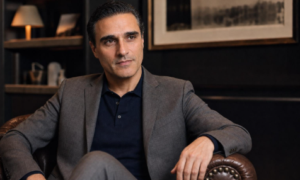
This is the idea behind konsultora. An evolution consultancy founded by Edwin Miranda, an entrepreneur with 25 years of experience across marketing, communications, technology, and operations, konsultora was built on the philosophy that transformation always has an endpoint, but evolution continues.
“Businesses don’t simply need another transformation project,” Miranda says. “They need the ability to keep evolving as conditions change.”
Instead of helping companies execute one-time changes, konsultora helps them create adaptive operating environments where strategy, technology, agentic AI, real-time data, human judgment, and execution work together.
Tossing the old playbook: A different model for the AI era
Knowing through experience that traditional consulting models were built for a slower business environment, Miranda set out to build konsultora to fit with a different reality.
“Traditionally, consultations began with analysis, moved to recommendations, and ended with implementation,” he explains. “But that approach can still often leave companies needing to consider periodic reinvention.”
Through konsultora, companies can move away from fragmented workflows, siloed systems, and static strategies toward a more adaptive business infrastructure. The work centers on operational intelligence, agentic intelligence systems, workflow coordination, the customer experience, and human creativity converging around the latest intelligent technology.
Miranda’s background in building and scaling companies across multiple industries has shaped the way he thinks about AI.
“I built konsultora from lived experience,” Miranda says. “After years of building companies and seeing the same operational patterns repeat across industries, it became clear to me that businesses didn’t only need better tools, but also better operating systems.”
Business singularity in a post-legacy world
At the center of konsultora’s philosophy is a framework that Miranda calls “business singularity” — a concept built around “Four Forces” that include intelligent technology, agentic AI systems, real-time operational data, and amplified human judgment.
“We aren’t looking to replace people with machines,” Miranda explains. “We want to help design organizations where technology and human judgment work together more intelligently.”
Within this model, AI isn’t just a nice-to-have add-on; it becomes an integral part of how the business thinks, operates, responds, and improves over time. AI is the tool that provides speed and pattern recognition, but human judgment still provides context, ethics, creativity, and strategic direction.
This balance is central to konsultora’s positioning in the marketplace. The team doesn’t view AI as a replacement for human leadership or creative thought, but instead as a way to enhance the human attributes that matter the most in business, including judgment, imagination, decision-making, empathy, and vision.
Scale is no longer just about size
For generations, the concept of scale was defined by headcount, departments, vendors, systems, and overall organizational complexity. Larger companies often held a noticeable advantage over their smaller counterparts simply because they had more people, more resources, and greater infrastructure. However, AI is changing that equation.
Small to midsize companies can now use AI technology to coordinate their work, accelerate execution, improve decision-making, and operate at a level of sophistication that was once reserved only for larger enterprise organizations. Through konsultora, Miranda and his team help companies design leaner, more intelligent operating models that bring AI technology and human teams together in one working environment to seamlessly execute strategy, operations, customer experience, communications, and workflow.
“We want companies to reach a level of efficiency and agility they may not have believed was possible before,” Miranda says.
The goal isn’t simply automation for automation’s sake, but redesigning how a business operates so that intelligence, coordination, and adaptation are built into the business environment itself.
An evolutionary consultant for the new landscape of business
Many firms are addressing the sharp rise in AI technology by simply adding AI tools to business systems that were built before the technology existed. However, konsultora sees a different path. Rather than treating AI as an add-on, Miranda and his team view it as an operational layer that can be used to support modern enterprises. Through clear governance, connected workflows, data visibility, human oversight, and adaptable systems, konsultora helps businesses build systems where artificial intelligence and human judgment work together seamlessly.
For Miranda, operational intelligence is the key to success. “It connects different parts of the business so the organization can have a full picture of what’s happening, make informed decisions, coordinate efforts, and respond in real time,” he explains.
As markets become more dynamic, static strategies will be seen as less effective. “Evolution is no longer optional,” says Miranda. “It’s now the baseline for remaining relevant.”
For organizations ready to move beyond legacy thinking, konsultora is building a new model at the intersection of strategy, creativity, technology, operations, and human judgment.