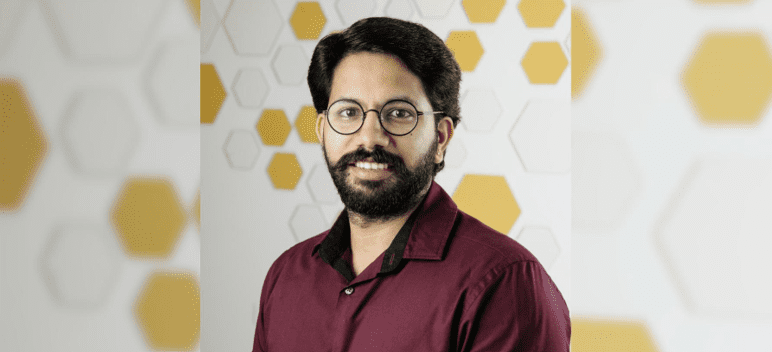
In today’s data-driven economy, the ability to turn information into insight defines not just competitive advantage but also organizational agility. Enterprises that can process, analyze, and act on real-time data are shaping the future of decision-making across every industry—from finance to genomics. Standing at this intersection of data, technology, and business strategy is Rajaganapathi Rangdale Srinivasa Rao, a Senior Staff Data Architect at a leading biotech firm and Globee Awards Judge in Business, whose work is redefining the scale and sophistication of modern data platforms.
With more than fifteen years of experience architecting enterprise-scale data ecosystems, and as a certified SAP HANA Data Engineer and Certified Snowflake Developer (SnowPro Core and Snowflake Pro Advanced Data Engineer), Rajaganapathi has earned a reputation as one of the most forward-thinking architects in the field of data modernization and analytics transformation. His work bridges deep technical mastery with strategic business alignment, translating complex system challenges into scalable solutions that deliver measurable results.
At his company—a global leader in genomics—his contributions have been instrumental in modernizing the organization’s data infrastructure and enabling real-time analytics capabilities that accelerate decision-making and operational performance. Through projects such as the Enterprise Data Warehouse (EDW) to HANA migration, Rajaganapathi has laid the foundation for transforming data from a static repository into a living, strategic asset—an achievement that earned him both executive leadership and personal commendation from the Chief Global Operations following the project’s successful go-live.
Redefining Enterprise Data Architecture
As a Senior Staff Data Architect, Rajaganapathi leads the strategic design and execution of high-performance, cloud-optimized data systems that support critical business functions across his company’s operations. His expertise spans SAP HANA, Snowflake, DBT, Control-M, Tableau, and Python—an end-to-end toolkit for building data ecosystems that are fast, secure, and resilient.
“Data architecture today is not just about storage or processing,” he explains. “It’s about enabling business agility. My goal is to make sure every decision-maker in the organization has access to accurate, real-time information when they need it most.”
Through his leadership, his company’s data environment now supports a fully integrated analytics framework where teams can visualize, model, and analyze data across multiple systems seamlessly. His work ensures that the company’s digital backbone remains both robust and adaptable to evolving demands in a fast-moving industry.
The EDW to HANA Migration: Transforming Data Speed and Strategy
One of Rajaganapathi’s most impactful initiatives was the Enterprise Data Warehouse (EDW) to SAP HANA migration, a cornerstone project that redefined how data was processed, stored, and consumed within the organization.
Over an 18-month period, Rajaganapathi led the technical migration of legacy systems to SAP HANA’s in-memory computing platform, enabling real-time reporting and analytics. Prior to this initiative, data reporting was heavily batch-based, resulting in significant latency and limited decision agility.
By re-engineering complex ETL transformations into HANA Calculation Views and SQLScript procedures, he successfully reduced reporting latency from hours to seconds. He also introduced partitioning, push-down logic, and window functions to maximize HANA’s in-memory capabilities—delivering performance improvements that were both immediate and sustainable.
“I was the first HANA developer at the company,” he recalls. “That meant not just building the system but also setting the standard—creating the frameworks, best practices, and performance guidelines that the entire organization would follow.”
Methodology, Innovation, and Overcoming Challenges
The migration followed a hybrid methodology—combining Waterfall for long-term planning with Agile sprint cycles for iterative delivery. Each month, his team re-engineered legacy data models into optimized HANA equivalents, aligning them with emerging business needs and scalability requirements.
The challenges were immense. Migrating years of accumulated business logic, ensuring data consistency, and retraining teams on entirely new systems required deep collaboration and technical creativity.
“We were transitioning from a row-based legacy system to a columnar, in-memory environment,” he explains. “That’s not just a technical migration—it’s a cultural one. We had to bring everyone along, from engineers to business users.”
By implementing rigorous performance standards and modular design patterns, Rajaganapathi ensured that every component of the new system could scale independently, paving the way for future innovations.
His work also emphasized cross-functional collaboration—partnering with Security, Compliance, and Finance teams to develop role-based access controls, automated audit trails, and SOX-compliant reporting mechanisms that aligned with the company’s governance and data protection frameworks.
Real-Time Impact Across the Enterprise
The impact of Rajaganapathi’s work has been transformative. The new architecture reduced report generation time from hours to minutes, introduced self-service analytics capabilities for non-technical users, and cut manual data intervention by over 70 percent.
For employees, that meant greater autonomy and productivity. For leadership, it meant faster decision-making and improved operational transparency. For the organization, it meant millions saved through reduced maintenance overhead and infrastructure costs.
Beyond efficiency gains, the project fundamentally changed how data was viewed within his company—from a passive record of past events to a dynamic, predictive engine for business strategy.
“This wasn’t just a migration—it was a modernization,” Rajaganapathi notes. “We built a data foundation that will serve as the backbone for advanced analytics, AI, and next-generation reporting for years to come.”
Recognized Leadership and Lasting Contribution
For his contributions, Rajaganapathi received a Spot Bonus Award. His technical leadership and mentorship helped upskill junior engineers and establish data modeling best practices that continue to guide the organization’s analytics initiatives.
As a Globee Awards Judge in Leadership, Rajaganapathi also contributes his expertise to the global data and technology community, offering thought leadership on emerging trends in data governance, architecture design, and AI-driven analytics.
His published work and industry engagements reflect a consistent theme: bridging innovation with integrity. Whether building real-time analytics pipelines, designing enterprise-wide data frameworks, or shaping governance strategy, his work exemplifies the balance of technical depth and ethical responsibility.
The Future of Data-Driven Innovation
Looking ahead, Rajaganapathi envisions a world where data platforms evolve into autonomous ecosystems—self-optimizing, self-healing, and seamlessly integrated across hybrid cloud environments.
“The next generation of data systems won’t just store information—they’ll understand it,” he says. “Our role as architects is to make that intelligence accessible, actionable, and accountable.”
Through his vision and leadership, Rajaganapathi continues to push the boundaries of what enterprise data architecture can achieve—transforming not only how organizations operate but also how they think, adapt, and innovate in a data-driven world.